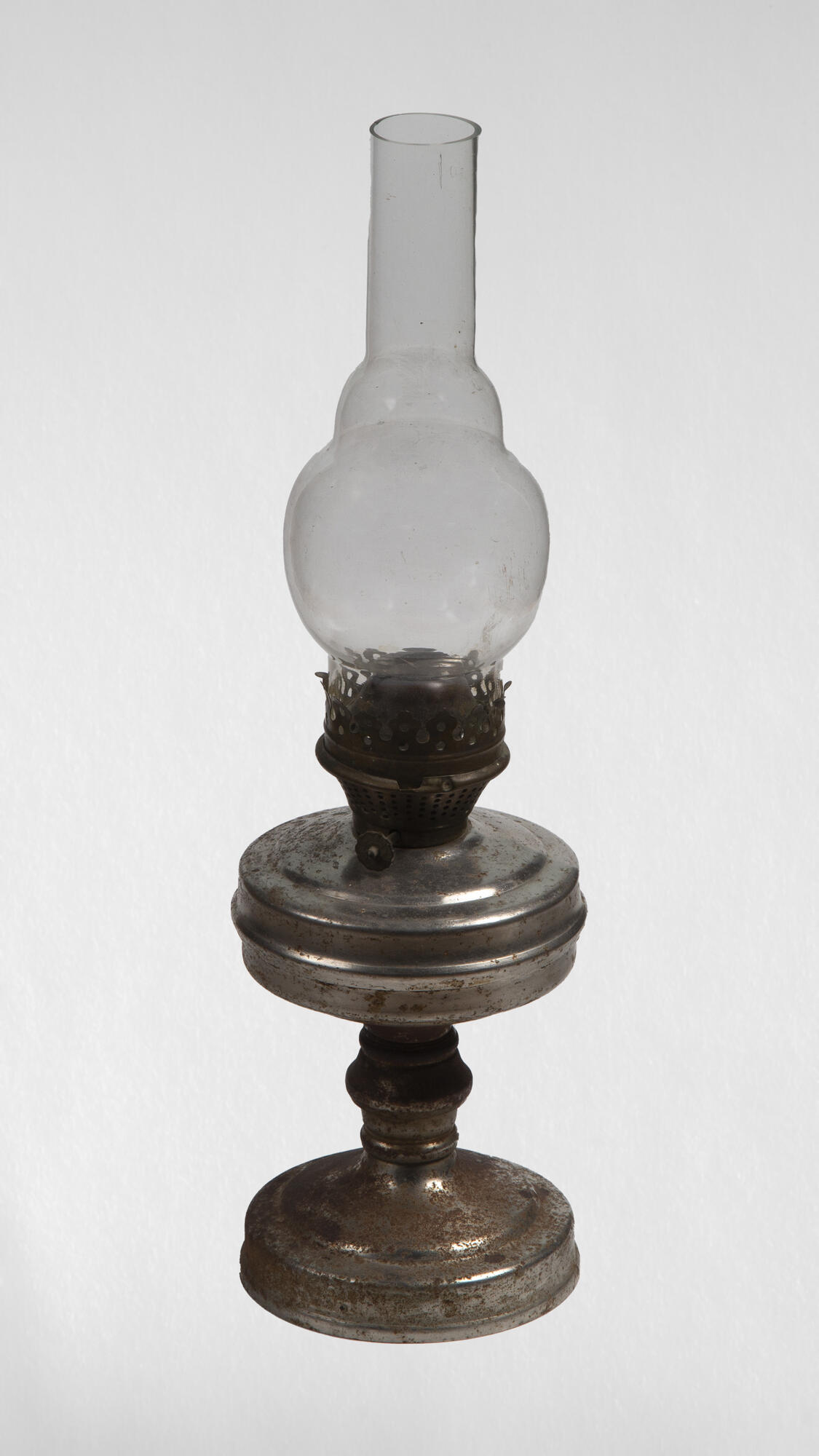


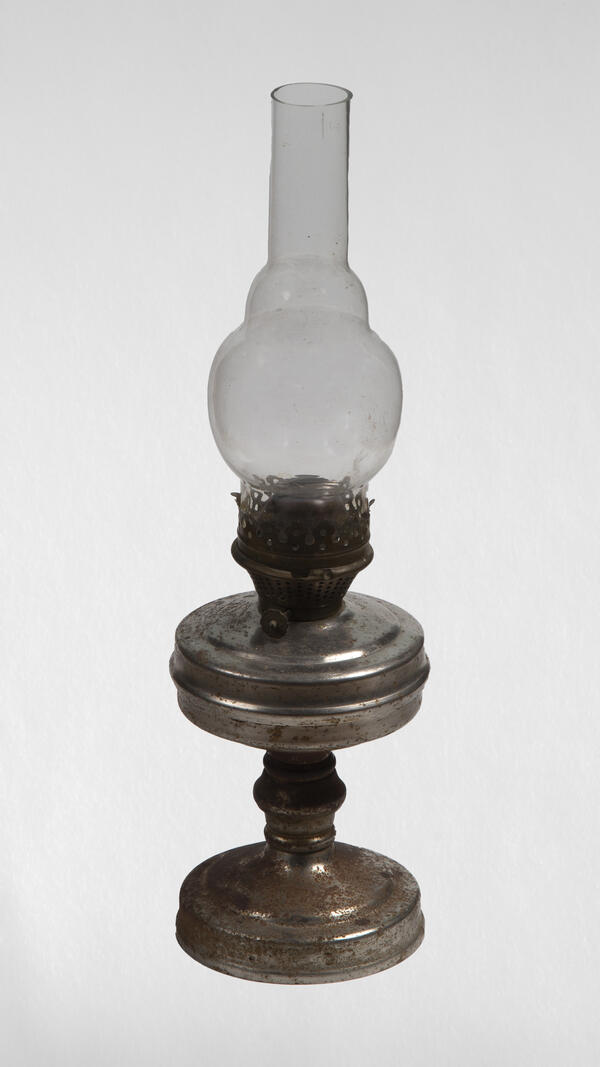
A kerosene lamp of the 20th century is housed in the Zimovniki Museum of Local History. It consists of a metal base, a wick, and a glass lamp chimney. In the lower part, there is a bowl for a combustible substance.
Lviv pharmacists invented kerosene lamps in the 19th century. Ignatiy Lukasevich was considered the ‘father’ of the lamp, since he invented a method of producing kerosene, and then figured out how to use it to illuminate rooms.
In the lower part of the lamp, there was a special bowl, where a flammable liquid was poured. A wick came out of this bowl; its upper end was set on fire and closed with a special glass cap with a hole for air access.
Residents of Lviv appreciated such a light source and by the end of the 19 century, large manufacturing plants were built, producing lamps and spare parts for them. Like many other household items, kerosene lamps were decorated. Decorating elements were produced by the famous Meissen and Sevres enterprises that specialized in porcelain.
Kerosene lamps illuminated not only apartments but city streets as well. However, among the disadvantages of such lamps was the fire hazard — kerosene was easily ignited, and the fire spread in the blink of an eye. For example, at the end of the 19th century, a fire broke out in Chicago. A cow accidentally pushed a lamp in the barn, it broke into pieces, and the fire began. As a result, the city was burning for three days, and hundreds of residents died.
Despite the fire hazard, kerosene lamps were popular until the beginning of the 20th century. When electric lights became available, the usage of kerosene lamps was drastically reduced. However, people living in small towns and villages had been using these lamps for a long time.
During World War I, kerosene lamps again came into use in field conditions. They were used in hospitals and infirmaries, sometimes during surgical operations. Nurses used kerosene lamps as a lantern when looking for wounded soldiers on battlefields.
During the Great Patriotic War, the blackout of settlements was mandatory in order not to give landmarks to enemy bombers. Therefore, the windowpanes were sealed with black paper, the curtains were tightly closed. Kerosene lamps were often used inside the apartments — they symbolized the difficulties of wartime.
Lviv pharmacists invented kerosene lamps in the 19th century. Ignatiy Lukasevich was considered the ‘father’ of the lamp, since he invented a method of producing kerosene, and then figured out how to use it to illuminate rooms.
In the lower part of the lamp, there was a special bowl, where a flammable liquid was poured. A wick came out of this bowl; its upper end was set on fire and closed with a special glass cap with a hole for air access.
Residents of Lviv appreciated such a light source and by the end of the 19 century, large manufacturing plants were built, producing lamps and spare parts for them. Like many other household items, kerosene lamps were decorated. Decorating elements were produced by the famous Meissen and Sevres enterprises that specialized in porcelain.
Kerosene lamps illuminated not only apartments but city streets as well. However, among the disadvantages of such lamps was the fire hazard — kerosene was easily ignited, and the fire spread in the blink of an eye. For example, at the end of the 19th century, a fire broke out in Chicago. A cow accidentally pushed a lamp in the barn, it broke into pieces, and the fire began. As a result, the city was burning for three days, and hundreds of residents died.
Despite the fire hazard, kerosene lamps were popular until the beginning of the 20th century. When electric lights became available, the usage of kerosene lamps was drastically reduced. However, people living in small towns and villages had been using these lamps for a long time.
During World War I, kerosene lamps again came into use in field conditions. They were used in hospitals and infirmaries, sometimes during surgical operations. Nurses used kerosene lamps as a lantern when looking for wounded soldiers on battlefields.
During the Great Patriotic War, the blackout of settlements was mandatory in order not to give landmarks to enemy bombers. Therefore, the windowpanes were sealed with black paper, the curtains were tightly closed. Kerosene lamps were often used inside the apartments — they symbolized the difficulties of wartime.