

In August 1942, German soldiers occupied Zimovniki. The small village opened the road to Stalingrad that is why it was so important for the fascist troops to seize and keep the settlement. During the 5-month occupation, enemy divisions destroyed important village buildings, bridges, and communication lines.
In January 1943, Soviet troops entered Zimovniki and liberated the village.
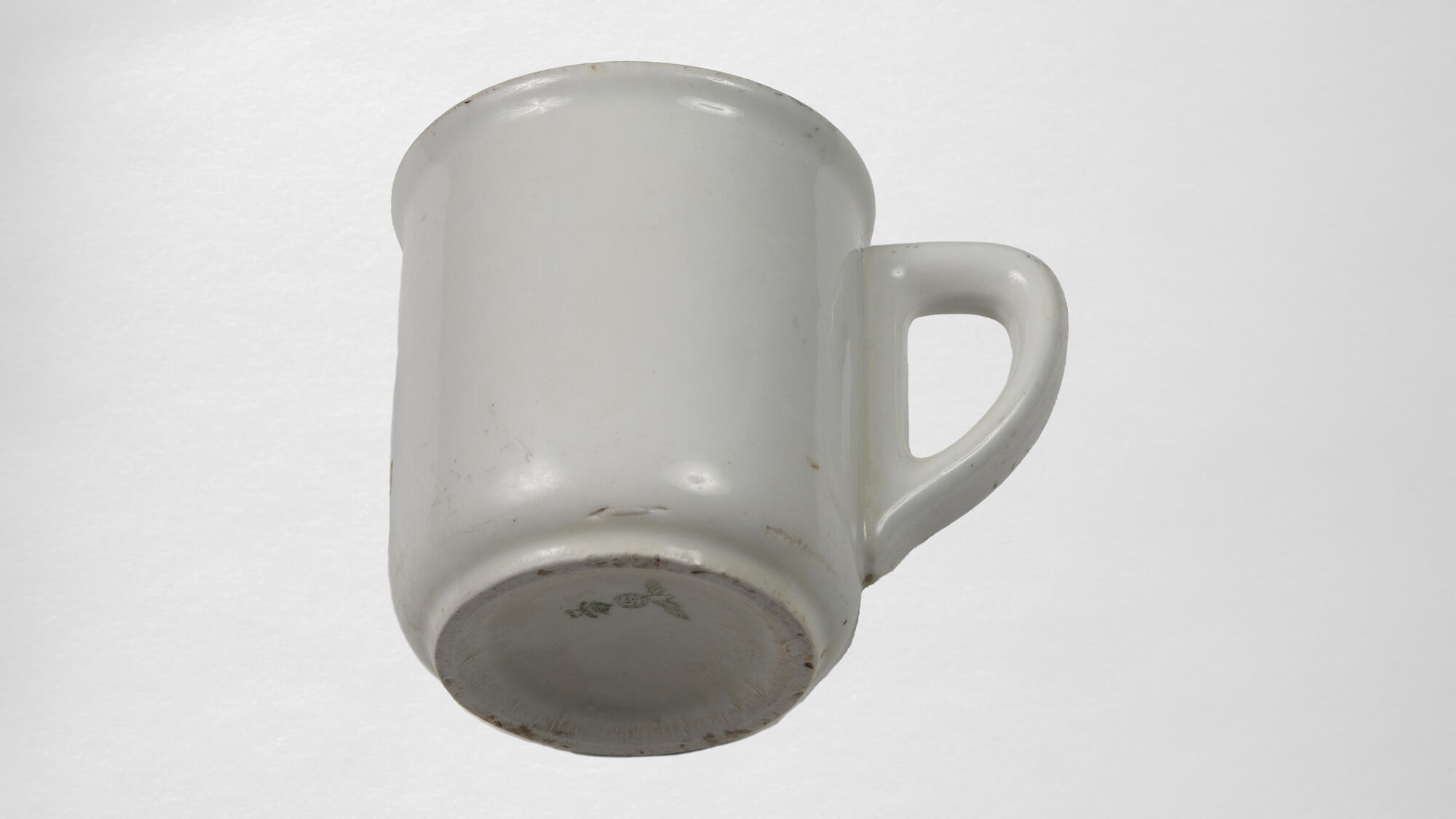
The Germans — especially the officers — carried not only the things necessary for the war, but also many household items: figurines, lamps, and ceramic tableware. Decades later, during the construction of a new grain elevator in Zimovniki, workers found many artifacts of the Great Patriotic War times, including household items that used to belong to the Germans. One of them is a ceramic mug, which is now housed in the collection of the Zimovniki Museum of Local History. The item is well preserved, so you can see the details on the bottom — the Imperial Coat of Arms, the stamp, and the release date — 1943.
In Germany ceramic ware started to be produced in the Middle Ages. In the 17th century, German porcelain factories became famous throughout Europe. An imitation of Italian majolica and stone ceramics out of siliceous clay were created — Rhine wine was stored in such ceramic jugs. Beer mugs which were decorated with scenes of battles and German landscapes were most popular.
In the 1930s and 1940s, during the Third Reich, pottery art in Germany was going through a new stage. Artists created new forms and added symbolic images that were in line with the ideology. As a rule, it was the coat of arms of the Third Reich — the Imperial Eagle. All tableware items were necessarily marked with the brand names of the manufacturing factories.
Manufacturers produced a large number of products: water glasses, plates, cups, tureens. The standard color was white. Tableware was inexpensive and was produced in huge quantities; therefore, ceramics were easily available and were popular among the Germans.
In January 1943, Soviet troops entered Zimovniki and liberated the village.
The Germans — especially the officers — carried not only the things necessary for the war, but also many household items: figurines, lamps, and ceramic tableware. Decades later, during the construction of a new grain elevator in Zimovniki, workers found many artifacts of the Great Patriotic War times, including household items that used to belong to the Germans. One of them is a ceramic mug, which is now housed in the collection of the Zimovniki Museum of Local History. The item is well preserved, so you can see the details on the bottom — the Imperial Coat of Arms, the stamp, and the release date — 1943.
In Germany ceramic ware started to be produced in the Middle Ages. In the 17th century, German porcelain factories became famous throughout Europe. An imitation of Italian majolica and stone ceramics out of siliceous clay were created — Rhine wine was stored in such ceramic jugs. Beer mugs which were decorated with scenes of battles and German landscapes were most popular.
In the 1930s and 1940s, during the Third Reich, pottery art in Germany was going through a new stage. Artists created new forms and added symbolic images that were in line with the ideology. As a rule, it was the coat of arms of the Third Reich — the Imperial Eagle. All tableware items were necessarily marked with the brand names of the manufacturing factories.
Manufacturers produced a large number of products: water glasses, plates, cups, tureens. The standard color was white. Tableware was inexpensive and was produced in huge quantities; therefore, ceramics were easily available and were popular among the Germans.


