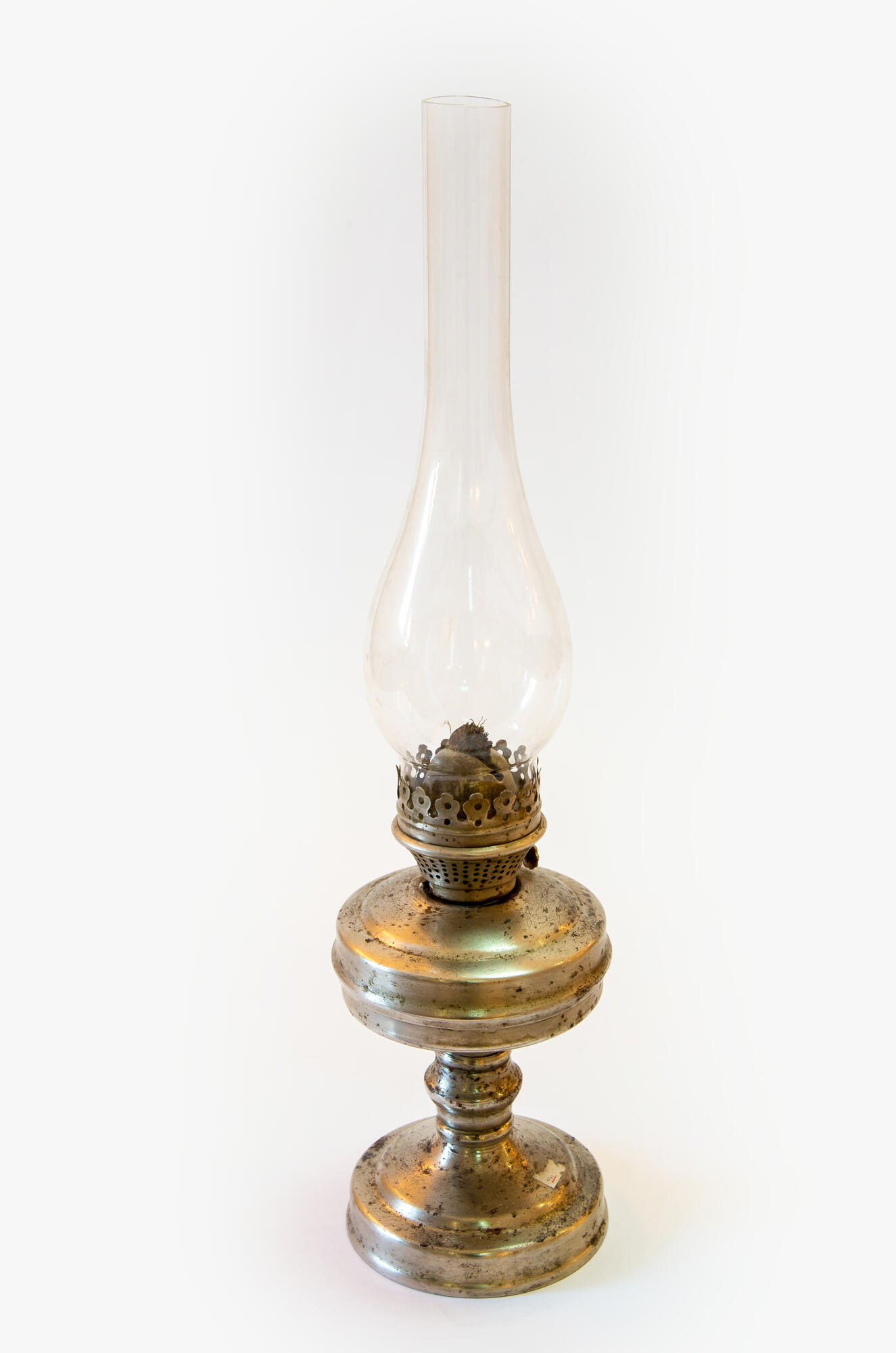


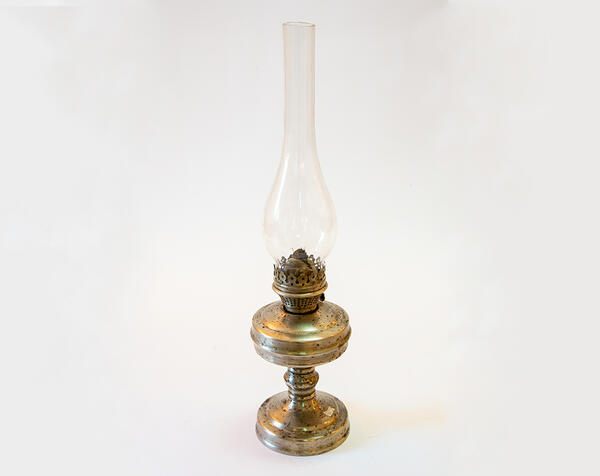
The kerosene lamp presented in the exhibition of the Verkhnyaya Pyshma Historical Museum was called ‘three-line’. This term denoted the width of the wick, which was measured in the ancient unit of length — lines. One line was equal to 2.54 millimeters.
Usually, the length was indicated at the top of the lamp glass, for example, the numbers 3, 5, 8 and 20 could be seen there. The size of the wick was an important parameter, since it determined how bright the lamp was.
The first kerosene lamps appeared in Lviv in 1853. Local pharmacists Ignatius Lukasiewicz and Jan Zech invented a new lamp — a cylinder made of thick sheet metal. A combustible liquid was poured into the lower part, and a wick was put in the upper part. At that time, the pharmacists did not fully understand the properties of kerosene, so they surrounded the lamp with metal plates to protect the building from fire. Lviv passers-by noticed an unusual bright light in the windows of the pharmacy and went inside to see what kind of device was illuminating the room. Soon the townspeople began to light kerosene lamps in their own homes.
Before the invention of electricity, kerosene lamps were considered the most powerful light source. The first kerosene lamps emitted as much light as a dozen wax candles. Over time, the design of the lamp was improved and it could be compared with a 300-watt light bulb.
Kerosene lamps quickly became popular because of their cost. In the second half of the 19th — early 20th centuries, much more petroleum began to be extracted. And kerosene — one of the by-products of its processing — was available in many stores and pharmacies at a low price.
Since 1941, ‘three-line’ and other kerosene lamps were produced for the army needs during the Great Patriotic War. These lamps illuminated blindages, headquarters, military dugouts and field hospitals.
In cities and villages, kerosene lamps continued to be used in the second half of the 20th century. Gradually, electrical appliances replaced other light sources. However, this did not happen overnight — the electrification in the Soviet Union took decades.
Usually, the length was indicated at the top of the lamp glass, for example, the numbers 3, 5, 8 and 20 could be seen there. The size of the wick was an important parameter, since it determined how bright the lamp was.
The first kerosene lamps appeared in Lviv in 1853. Local pharmacists Ignatius Lukasiewicz and Jan Zech invented a new lamp — a cylinder made of thick sheet metal. A combustible liquid was poured into the lower part, and a wick was put in the upper part. At that time, the pharmacists did not fully understand the properties of kerosene, so they surrounded the lamp with metal plates to protect the building from fire. Lviv passers-by noticed an unusual bright light in the windows of the pharmacy and went inside to see what kind of device was illuminating the room. Soon the townspeople began to light kerosene lamps in their own homes.
Before the invention of electricity, kerosene lamps were considered the most powerful light source. The first kerosene lamps emitted as much light as a dozen wax candles. Over time, the design of the lamp was improved and it could be compared with a 300-watt light bulb.
Kerosene lamps quickly became popular because of their cost. In the second half of the 19th — early 20th centuries, much more petroleum began to be extracted. And kerosene — one of the by-products of its processing — was available in many stores and pharmacies at a low price.
Since 1941, ‘three-line’ and other kerosene lamps were produced for the army needs during the Great Patriotic War. These lamps illuminated blindages, headquarters, military dugouts and field hospitals.
In cities and villages, kerosene lamps continued to be used in the second half of the 20th century. Gradually, electrical appliances replaced other light sources. However, this did not happen overnight — the electrification in the Soviet Union took decades.