The history of the Cossacks in the Pogarsky land dates to the 17th century. The Cossacks guarded the southern borders of the country. The Cossack army was self-sufficient. Upon a call-up, a Cossack had to come to a sotnik with his own horse, outerwear and underclothing, a saddle, provisions for six months, food for the horse, as well as his own rifle.
The Cossacks made their own bullets from tin or lead. Bullets had no single standard and were often cast individually for rifles. The mold could be a stone with drilled holes that matched the size of the gun. The molten lead or tin, flowing through the holes, took on a spherical or cylindrical shape and fell into the cooled water. The bullets had different purposes and were divided into hunting and fighting bullets — they differed in size and shape.
A separate caste of the Cossacks were “ptashniki” (wildfowl hunters) and “bobrovniki” (beaver hunters), who used small bullets. They supplied the Hetman’s and even the Emperor’s court with prey.
The beaver’s business existed in the Bryansk region since the 14th — 15th centuries. The banks of the Sudost and Vablya Rivers, where beavers lived, had difficult forests and bushes. Beavers were mainly hunted in the fall and spring, and bullets were prepared in advance. Once a year the community delivered 20 otters and 10 beavers to the authorities. In 1753, there were three communities of beaver hunters in the Pogar Sotnya.
In the military campaigns, the Cossacks used combat bullets, which more often had a cylindrical shape. The Pogar Cossacks as part of the Starodubsky Regiment repulsed the act of aggression by the Polish-Lithuanian detachments and participated in the Great Northern War and the Crimean campaigns. During the Crimean campaign of 1738, Semen Galetsky, the general esaul, standard-bearer and a former sotnik from Pogar, and part of the Cossacks of the Pogar Sotnya died heroically.
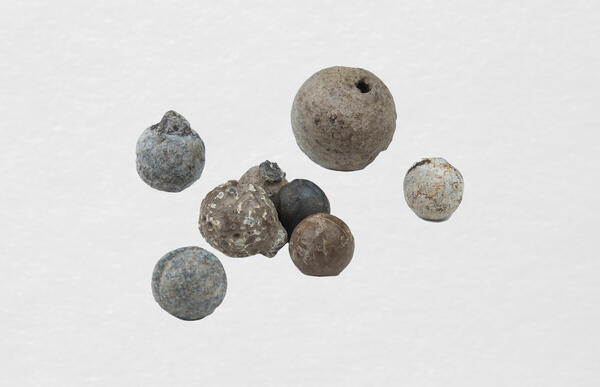
The bullets for Cossack rifles are presented in the Radogoshch Museum. They were made back in the 18th century. They were also cast in different molds, and therefore they are not of the same diameter. Small tails that were obtained by cutting off the cast bullet from the remaining lead can be seen on the bullets. They are called sprues.
The Cossacks made their own bullets from tin or lead. Bullets had no single standard and were often cast individually for rifles. The mold could be a stone with drilled holes that matched the size of the gun. The molten lead or tin, flowing through the holes, took on a spherical or cylindrical shape and fell into the cooled water. The bullets had different purposes and were divided into hunting and fighting bullets — they differed in size and shape.
A separate caste of the Cossacks were “ptashniki” (wildfowl hunters) and “bobrovniki” (beaver hunters), who used small bullets. They supplied the Hetman’s and even the Emperor’s court with prey.
The beaver’s business existed in the Bryansk region since the 14th — 15th centuries. The banks of the Sudost and Vablya Rivers, where beavers lived, had difficult forests and bushes. Beavers were mainly hunted in the fall and spring, and bullets were prepared in advance. Once a year the community delivered 20 otters and 10 beavers to the authorities. In 1753, there were three communities of beaver hunters in the Pogar Sotnya.
In the military campaigns, the Cossacks used combat bullets, which more often had a cylindrical shape. The Pogar Cossacks as part of the Starodubsky Regiment repulsed the act of aggression by the Polish-Lithuanian detachments and participated in the Great Northern War and the Crimean campaigns. During the Crimean campaign of 1738, Semen Galetsky, the general esaul, standard-bearer and a former sotnik from Pogar, and part of the Cossacks of the Pogar Sotnya died heroically.
The bullets for Cossack rifles are presented in the Radogoshch Museum. They were made back in the 18th century. They were also cast in different molds, and therefore they are not of the same diameter. Small tails that were obtained by cutting off the cast bullet from the remaining lead can be seen on the bullets. They are called sprues.