

The helmet was the main headwear of the Soviet soldier during the Great Patriotic War. It protected his head from being hit by bullets and shrapnel.
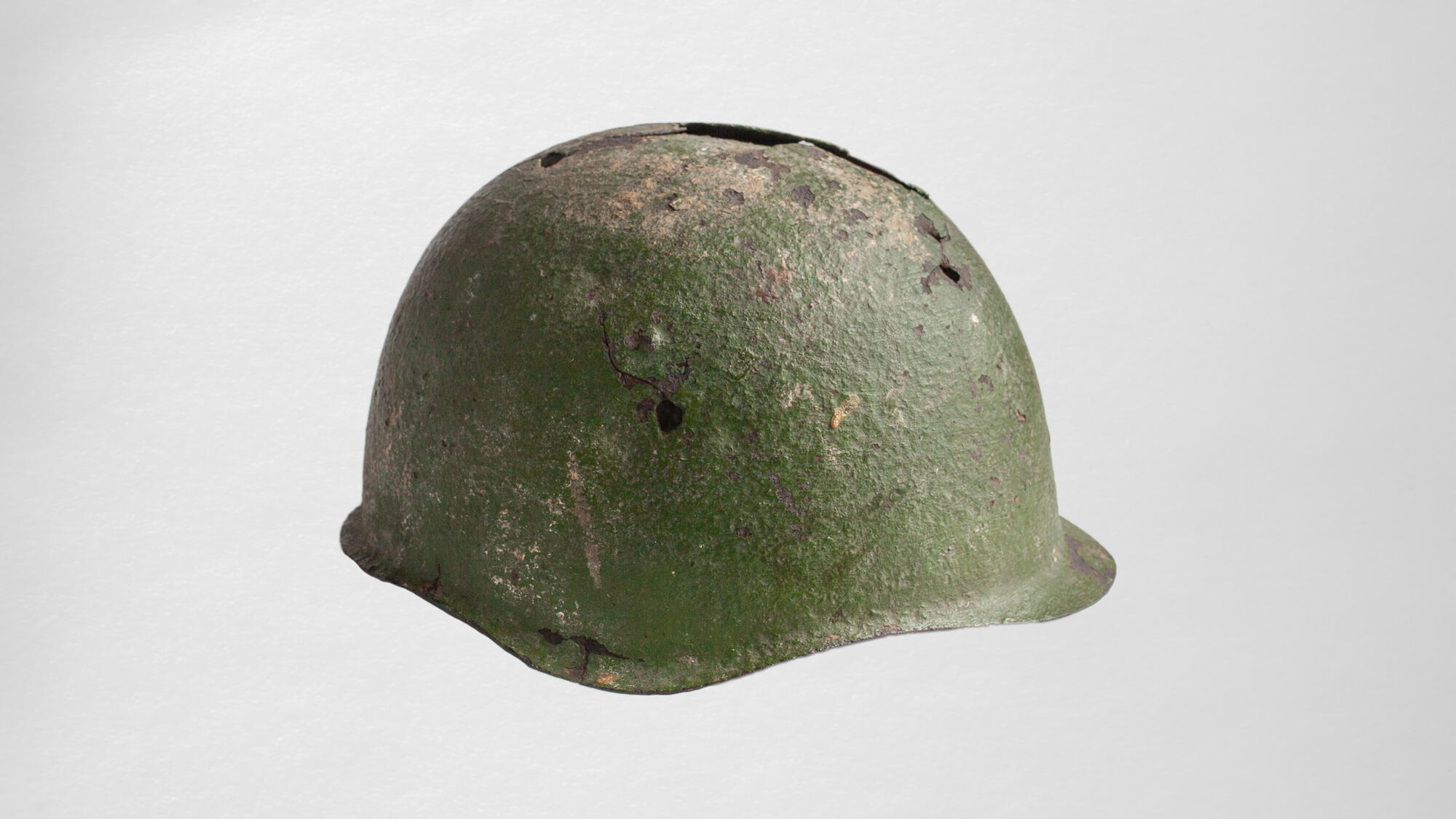
The helmet from the collection of Museum of Local History was found during the search expedition on the battlefronts, which took place during the Great Patriotic War. The helmet was covered with rust, and in the middle you can see a crack — a mark from the battles.
The first mass-produced SSh-36 steel helmet was introduced to Soviet soldiers in 1936. It soon became apparent, however, that the design did not always protect against bullets. In June 1939, a new version of the helmet, the SSh-39, was developed. It was more durable, but such a helmet could not be worn together with a warm headgear. During this period the Soviet Union was at war with Finland, and during the winter months the soldiers had to choose between warmth and protection.
In December 1940, the USSR produced a new batch of helmets SSh-40 with improved underbelly device — the inner straps, which helped fix the helmet on the head. All three types of helmets were used during World War II: SSh-36, SSh-39 and SSh-40. The first two helmets were no longer in production by that time; they were issued to soldiers from stocks of past years.
During the war, Soviet designers tested the quality of pre-war helmets. In December 1942, on the order of a member of the State Defense Committee of the USSR, Anastas Mikoyan a commission was formed to compare the steel helmets of domestic and German manufacture.
The Committee conducted a firing test and found that the Soviet helmets provided better protection against bullets than the German helmets. This was explained by the fact that domestic helmets used a different composition of steel and produced them according to a different scheme. The SSh-40 had only one weak area — the transition from the visor to the frontal wall of the helmet (a strip 8–10 mm wide). The German helmets had many more disadvantages.
In addition to the Soviet Union, SSh-40 helmets were used by the Warsaw Pact countries, as well as by rebel armies in African and Asian countries. Such helmets are still in use in the Russian Army on a par with the postwar models.
The helmet from the collection of Museum of Local History was found during the search expedition on the battlefronts, which took place during the Great Patriotic War. The helmet was covered with rust, and in the middle you can see a crack — a mark from the battles.
The first mass-produced SSh-36 steel helmet was introduced to Soviet soldiers in 1936. It soon became apparent, however, that the design did not always protect against bullets. In June 1939, a new version of the helmet, the SSh-39, was developed. It was more durable, but such a helmet could not be worn together with a warm headgear. During this period the Soviet Union was at war with Finland, and during the winter months the soldiers had to choose between warmth and protection.
In December 1940, the USSR produced a new batch of helmets SSh-40 with improved underbelly device — the inner straps, which helped fix the helmet on the head. All three types of helmets were used during World War II: SSh-36, SSh-39 and SSh-40. The first two helmets were no longer in production by that time; they were issued to soldiers from stocks of past years.
During the war, Soviet designers tested the quality of pre-war helmets. In December 1942, on the order of a member of the State Defense Committee of the USSR, Anastas Mikoyan a commission was formed to compare the steel helmets of domestic and German manufacture.
The Committee conducted a firing test and found that the Soviet helmets provided better protection against bullets than the German helmets. This was explained by the fact that domestic helmets used a different composition of steel and produced them according to a different scheme. The SSh-40 had only one weak area — the transition from the visor to the frontal wall of the helmet (a strip 8–10 mm wide). The German helmets had many more disadvantages.
In addition to the Soviet Union, SSh-40 helmets were used by the Warsaw Pact countries, as well as by rebel armies in African and Asian countries. Such helmets are still in use in the Russian Army on a par with the postwar models.