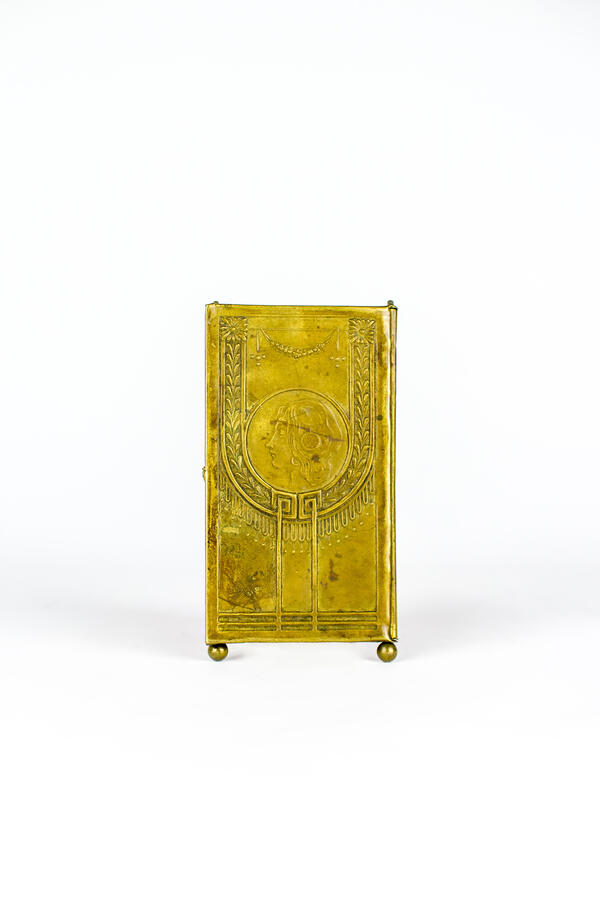
The miniature dance card was a popular ladies accessory. Fashionistas wrote down invitations there, meeting times, dance numbers, gentlemen’s names, and much more. Such a dance card in Russian was called “carne”, from the French carnet de bal.
It was possible to invite a lady for short dances at the event itself, but the gentleman had to agree on a quadrille, a mazurka, and a cotillion in advance. Therefore, both men and women kept special notes, so as not to forget about their promises, in the carnet de bal: they wrote in order all the dances they were going to have at the ball.
Carnet de Bal helped to avoid embarrassing situations, which was very important for the lady’s reputation. If the girl mixed the gentlemen, a real scandal could break out at the ball, which could cost her career and status to her closest relatives. Young ladies considered the dance card a list of their love victories: it was believed that young men invited only those young ladies to dance to whom they felt sympathy. If for any reason the lady turned down the gentleman, she had to skip this dance: it was considered indecent to accept the invitation of another man immediately after rejecting.
The dance card cover was necessarily decorated with precious stones, mother-of-pearl, and a gold monogram. Inside the carnet de bal there were several thin tablets, most often made of ivory or mother-of-pearl. For writing girls used a slate pencil, attached to the belt of the ball gown with the help of a chain and a ring. The text from the plates was erased with an eraser or a damp cloth. Books of bone could serve for a very long time. Sometimes paper sheets were also placed inside the carnet de bal, and thanks to the hard metal cover, they were not crumpled. At the beginning of the 20th century, instead of carnet de bal, ordinary notebooks started to be used; the number of sheets in the notebook corresponded to the number of dances at the ball.
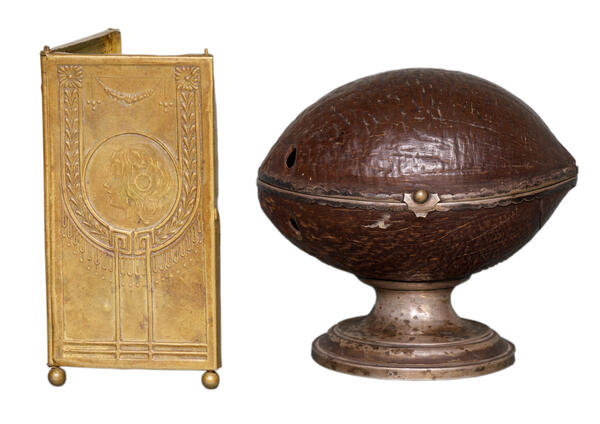
The carnet de bal presented in the exhibition is made in the form of an elegant miniature flat box with round legs at the bottom. The dance card is decorated with stamping on both sides. The profile of a girl with wavy hair and a band on her forehead is depicted in a circular frame, edged with a horseshoe-shaped garland of leaves.
It was possible to invite a lady for short dances at the event itself, but the gentleman had to agree on a quadrille, a mazurka, and a cotillion in advance. Therefore, both men and women kept special notes, so as not to forget about their promises, in the carnet de bal: they wrote in order all the dances they were going to have at the ball.
Carnet de Bal helped to avoid embarrassing situations, which was very important for the lady’s reputation. If the girl mixed the gentlemen, a real scandal could break out at the ball, which could cost her career and status to her closest relatives. Young ladies considered the dance card a list of their love victories: it was believed that young men invited only those young ladies to dance to whom they felt sympathy. If for any reason the lady turned down the gentleman, she had to skip this dance: it was considered indecent to accept the invitation of another man immediately after rejecting.
The dance card cover was necessarily decorated with precious stones, mother-of-pearl, and a gold monogram. Inside the carnet de bal there were several thin tablets, most often made of ivory or mother-of-pearl. For writing girls used a slate pencil, attached to the belt of the ball gown with the help of a chain and a ring. The text from the plates was erased with an eraser or a damp cloth. Books of bone could serve for a very long time. Sometimes paper sheets were also placed inside the carnet de bal, and thanks to the hard metal cover, they were not crumpled. At the beginning of the 20th century, instead of carnet de bal, ordinary notebooks started to be used; the number of sheets in the notebook corresponded to the number of dances at the ball.
The carnet de bal presented in the exhibition is made in the form of an elegant miniature flat box with round legs at the bottom. The dance card is decorated with stamping on both sides. The profile of a girl with wavy hair and a band on her forehead is depicted in a circular frame, edged with a horseshoe-shaped garland of leaves.