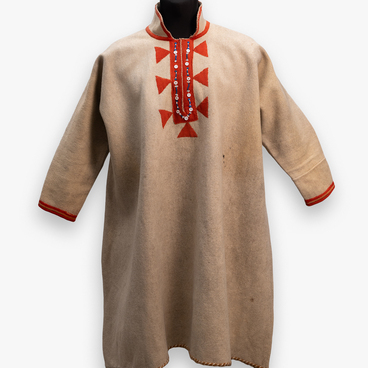
Since ancient times, Sami women have been engaged in sewing clothes and shoes not only for themselves, but also for the whole family.
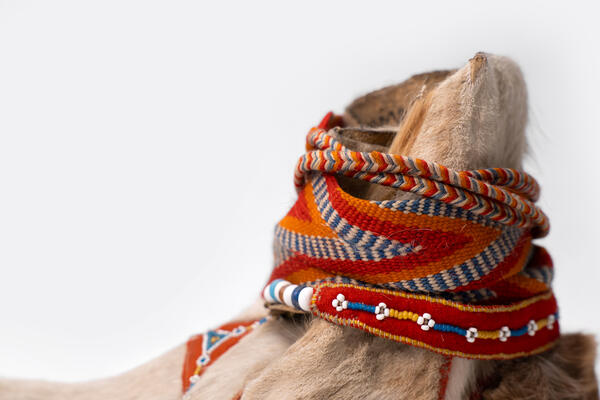
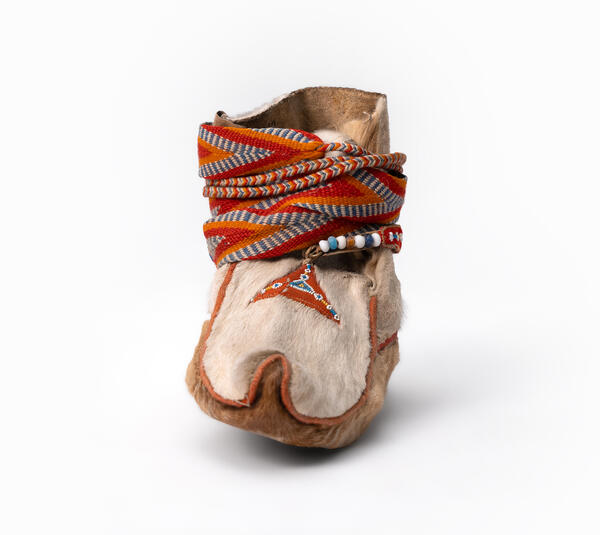
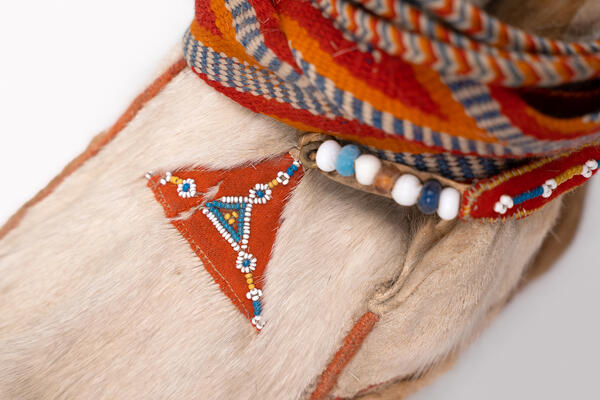
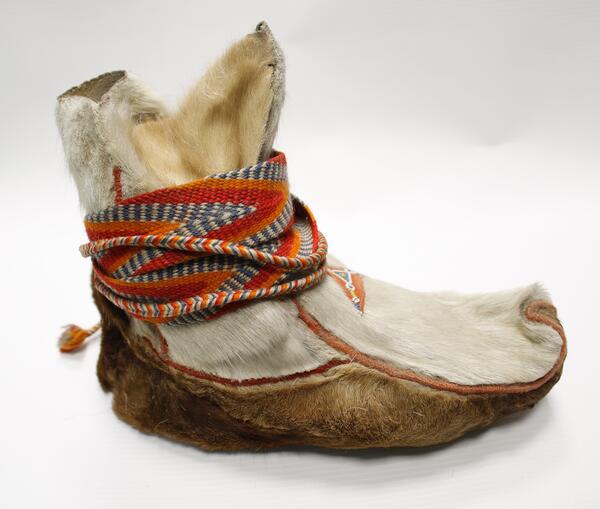
Kanga boots are ankle footwear. They were worn both at home and outdoors. Made of reindeer or seal skin, they were richly decorated with tassels, pendants, beads and braid.
The winter white fur boots presented in the Murmansk Museum of Local History are quite valuable. Such boots were sewn by brides for their weddings. The average age for a girl to get married was 25 years old. The bride choosing usually took place during fairs, where many Sami people came. Most often weddings were held in the open air.
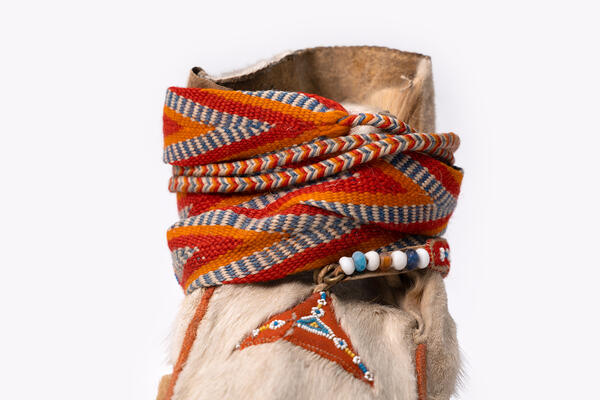
Women’s footwear was decorated with beaded red cloth embroidered triangles on the vamp and on the back. Before the beads were available, fur garments and shoes were decorated with bone beads. The embroidered pattern consisted of stylized images of birds, animals and plants. Craftswomen were inspired by what they saw in nature. Both men’s and women’s kanga boots were of the same cut and were sewn more often from white koyba — skins from reindeer’s legs.
Long braided obory straps made of reindeer skin were sewn to the upper part of the kanga boots. These straps were wrapped around the ankle and held the boots on the feet. Two straps were sewn in the front, then wrapped around the foot and thus firmly fixed the boots. The length of each strap could reach from one and a half to two meters. For a pair of children’s footwear, the length of the obory was proportionately shorter. The ends of the straps were usually decorated with tassels, yarn pompoms or beads.
Instead of insoles tufts of dry grass were used. For this purpose, Sami people collected sedge in the fall, beat it until it was soft and dried it. Knitted gaiters were worn on the legs and tied under the boots.
Kanga boots were conveniently lightweight. They
were easy to dry without the need to take off pants. Therefore, kanga boots
were worn mostly in summer, fall and spring. It is worth noting that such boots
in spring and fall did not prevent the feet from getting wet at all, and one
could warm oneself only by fast walking or running. In cold weather Sami people
wore yary high fur boots. In winter, the kanga boots could be worn only when
long distances on skis had to be covered.