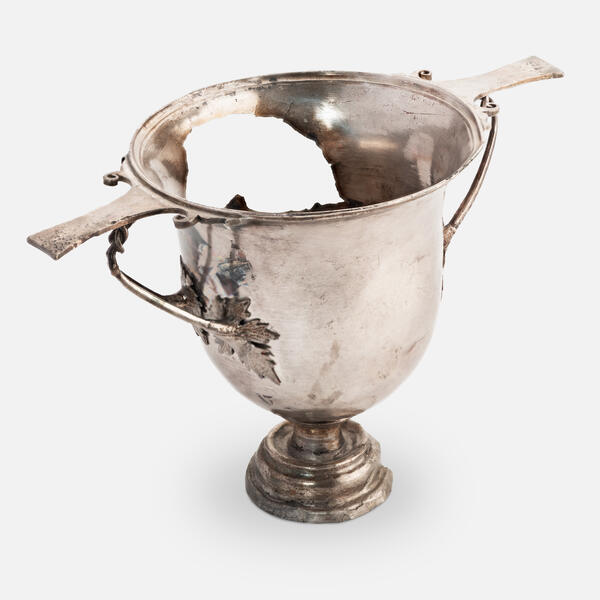
A kantharos is an ancient Greek vessel in the form of a cup with two vertical handles.
Greek gods were said to drink from kantharoi. For instance, Dionysus — the god of vegetation, winemaking, productive forces of nature, inspiration and theater — was depicted with these cups. Kantharoi were often used for sacrifices and as objects of worship. Hence, the kantharos had a religious significance and, initially, was likely used exclusively for ritual purposes.
The kantharos on display is made of several parts. The rim of the vessel is not emphasized, and the edge is bent outward and decorated with two thin ridges. Horizontal handles are soldered to the edge of the kantharos from two opposing sides. These handles are decorated with scrolls and vines, and there are also additional handles near the bottom. Chased silver grape leaves are soldered onto the body. Of four original leaves, three have been preserved.
The vessel’s body has an elongated, conical shape. The bottom is oval and the bowl is hemispherical. The leg of the vessel is intricately profiled and consists of a hollow cylinder and a multi-leveled pallet. It is likely that this kantharos with two sets of handles was made in Italic workshops.
According to an ancient Greek legend, the first individual to learn how to make wine resided in Attica. His name was Icarius. One day, he hosted Dionysus and was very hospitable towards him. In gratitude, Dionysus presented Icarius with a vine and wineskins filled with wine. Icarius wished to promote winemaking and traveled throughout Attica, offering wine to shepherds. The shepherds, intoxicated by the new drink, believed they had been poisoned and killed Icarius in retaliation. The Athenians suffered a plague as a punishment for their actions. To end the epidemic, they sacrificed fruits to honor Icarius. From then on, the head of Dionysus was adorned with a vine.
In ancient mythology, the grapevine leaf was seen as a symbol of fertility, life, and prosperity. Grapes and wine were an integral part of the rituals dedicated to Dionysus, also known as Bacchus.
The practice of cultivating grapes spread
throughout the Middle East, eventually reaching Phoenicia, Egypt, Carthage,
ancient Greece, and Rome. From there, it gradually expanded to all continents.