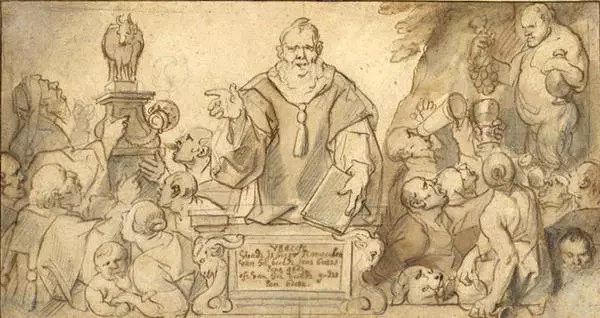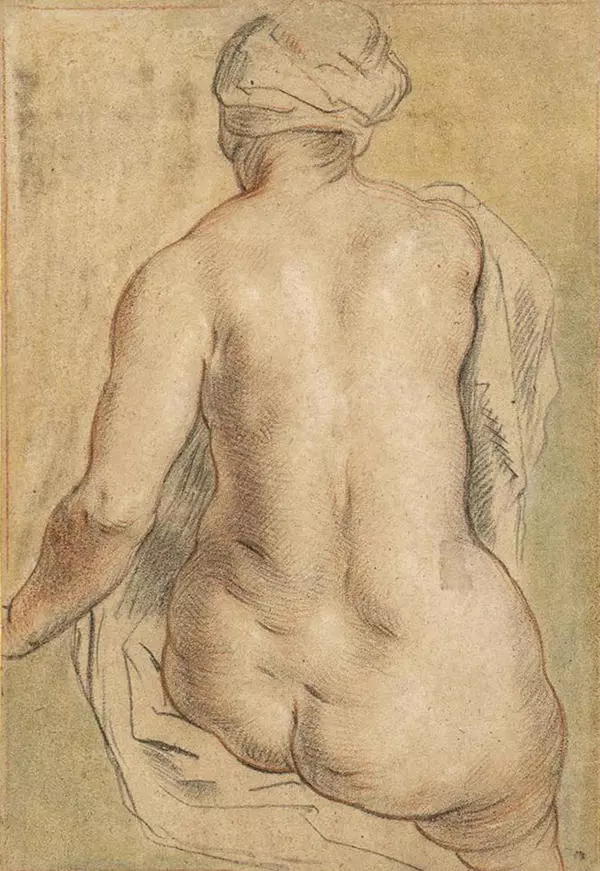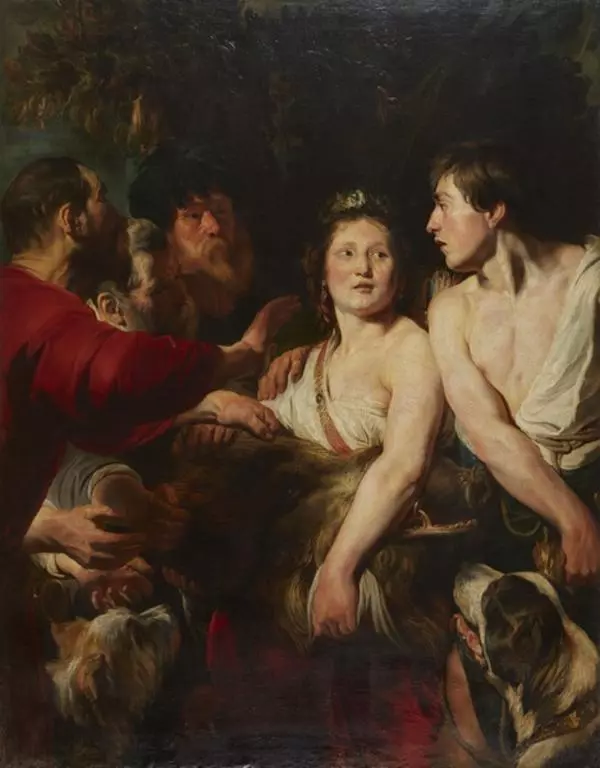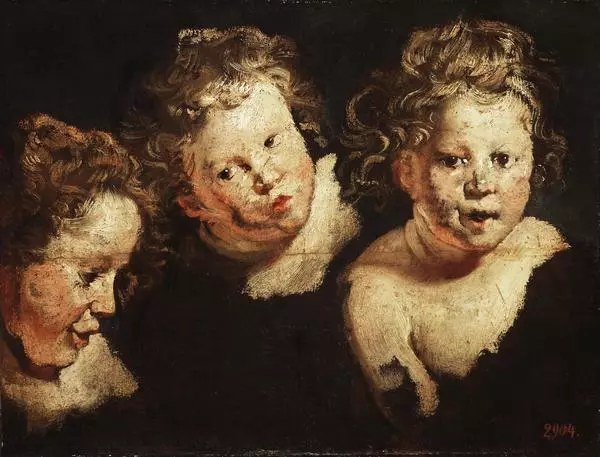


Jacob Jordaens was a leading Flemish painter of the 17th century, renowned for his works on religious, historical, mythological, and allegorical themes — as well as large-scale genre scenes populated by life-size figures and expressive portraits. Considered one of the foremost masters of the Flemish Baroque, Jordaens was profoundly influenced by Peter Paul Rubens, with whom he frequently collaborated, and by the animal and still-life painter Frans Snyders. He spent nearly his entire life in Antwerp, where he operated a large workshop to meet the high demand for his art.
Jordaens’s style vividly embodies the spirit of the Flemish school: a sensual delight in earthly abundance, optimism, and a powerful, almost sculptural treatment of form. His prolific output — estimated at around 700 paintings — is represented in major museums worldwide. He played a pivotal role in developing genre painting, and his influence resonates in the works of Dutch and Spanish artists alike.
Following Rubens’s death in 1640, Jordaens assumed leadership of the Antwerp artistic community and was widely regarded as the first painter of Flanders. Though best known for his paintings, he also produced a small number of engravings — works that remain lesser-known.
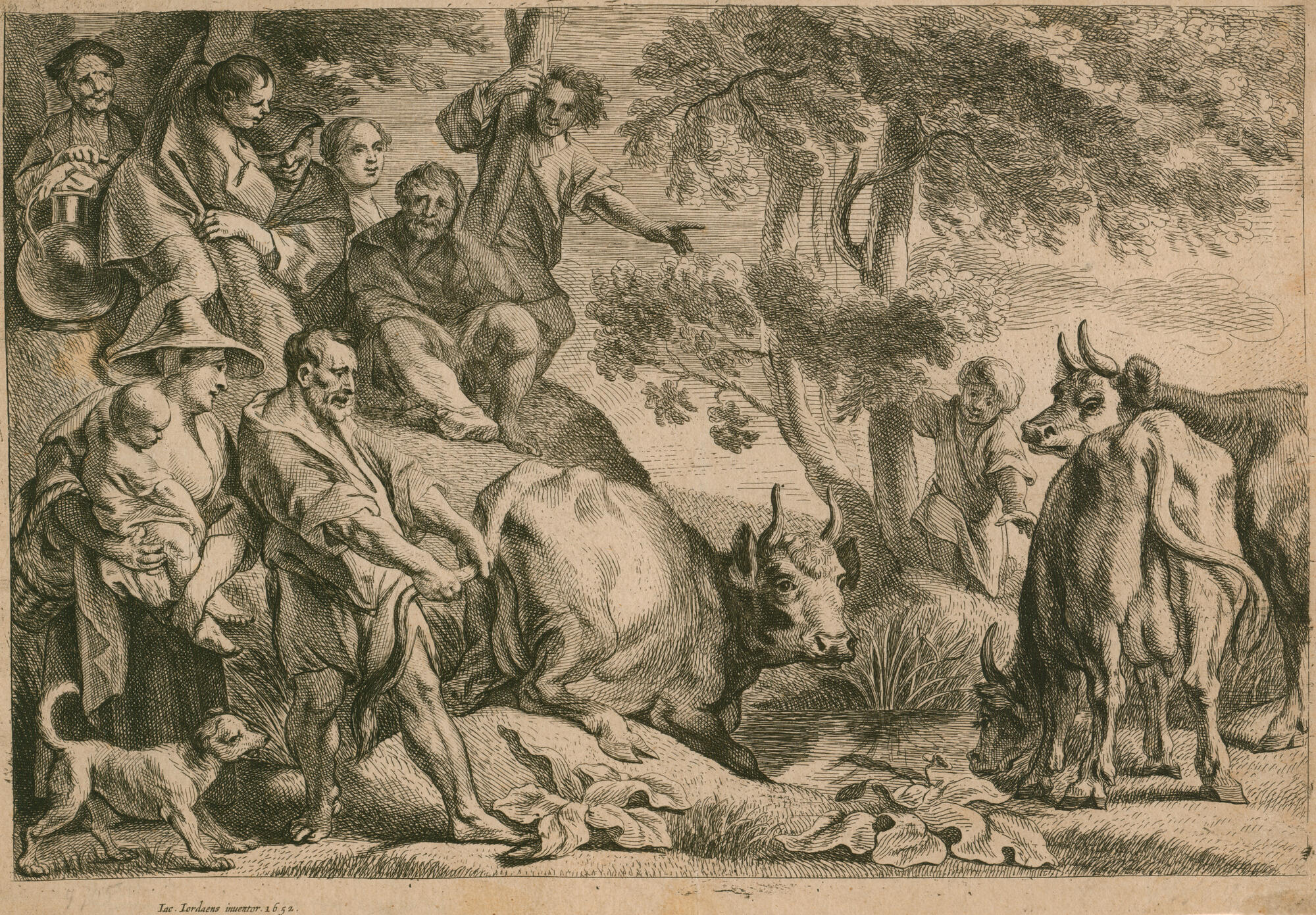
The Irbit State Museum of Fine Arts houses one such work — the engraving “Cacus Steals Hercules’ Bulls and Cows”. It depicts an episode from the tenth labor of Hercules: the theft of the cattle of Geryon, undertaken on behalf of King Eurystheus. After seizing the herd, Hercules drove the animals across Italy toward Mycenae. Exhausted, he paused to rest beside the Tiber River — and fell asleep. Seizing the opportunity, Cacus — a fire-breathing giant and son of Hephaestus — stole four bulls and four cows.
He dragged them into his cave on the Aventine Hill (the future site of Rome, as recounted in Virgil’s “Aeneid”) to conceal their tracks. He sealed the entrance with a massive stone. When Hercules awoke and discovered the theft, he prepared to depart — until he heard the lowing of the hidden cattle echoing from beneath the earth. He tore open the cave’s roof, retrieved the herd, and strangled Cacus in a vengeful embrace.
Virgil describes the climactic struggle in “The Aeneid”: