

Ceramics were used in ancient Russian architecture since the pre-Mongol period. Terracotta tiles and tiles covered with colored glaze were used for flooring and cladding of the plinth parts of the walls.
The mid-17th century was the heyday of relief tiles. Terracotta (red, unglazed), enameled (covered with transparent green glaze) and polychrome (decorated with colored enamels of white, yellow, green and blue) tiles were used for tiled stoves and in the facade decoration of architectural monuments. The tiles were made in carved wooden molds; after firing and drying, a skirting was made on the back of the tile for mounting it on the stove cladding or in the wall of the building.
In the first half of the 18th century, relief tiles were replaced by smooth painted ones. In this period, tiles were used for covering heating devices.
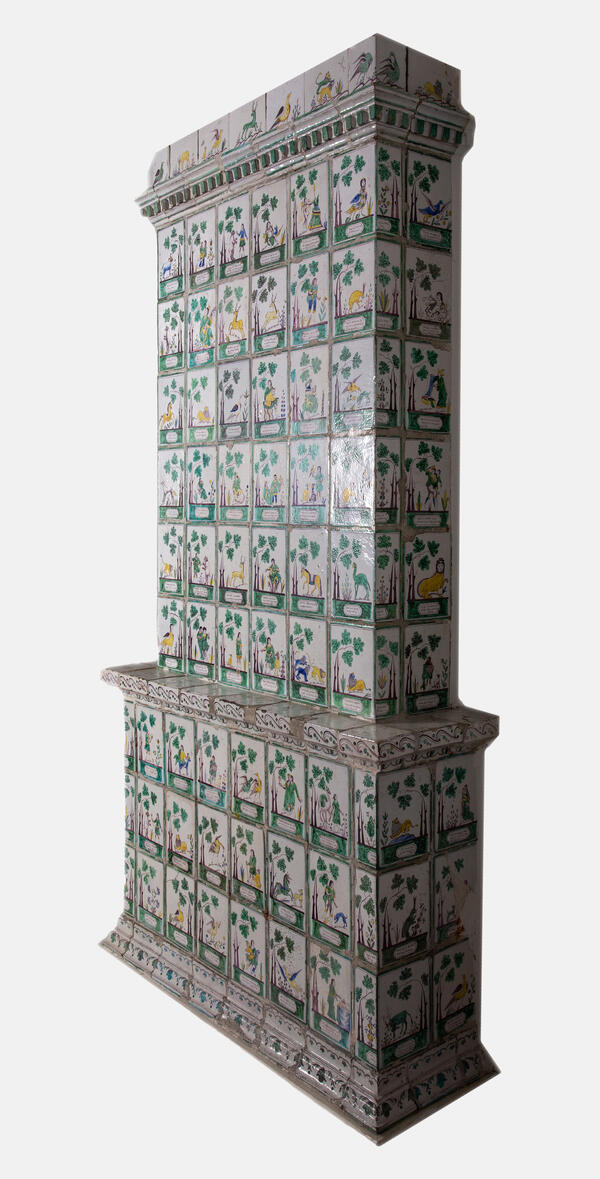
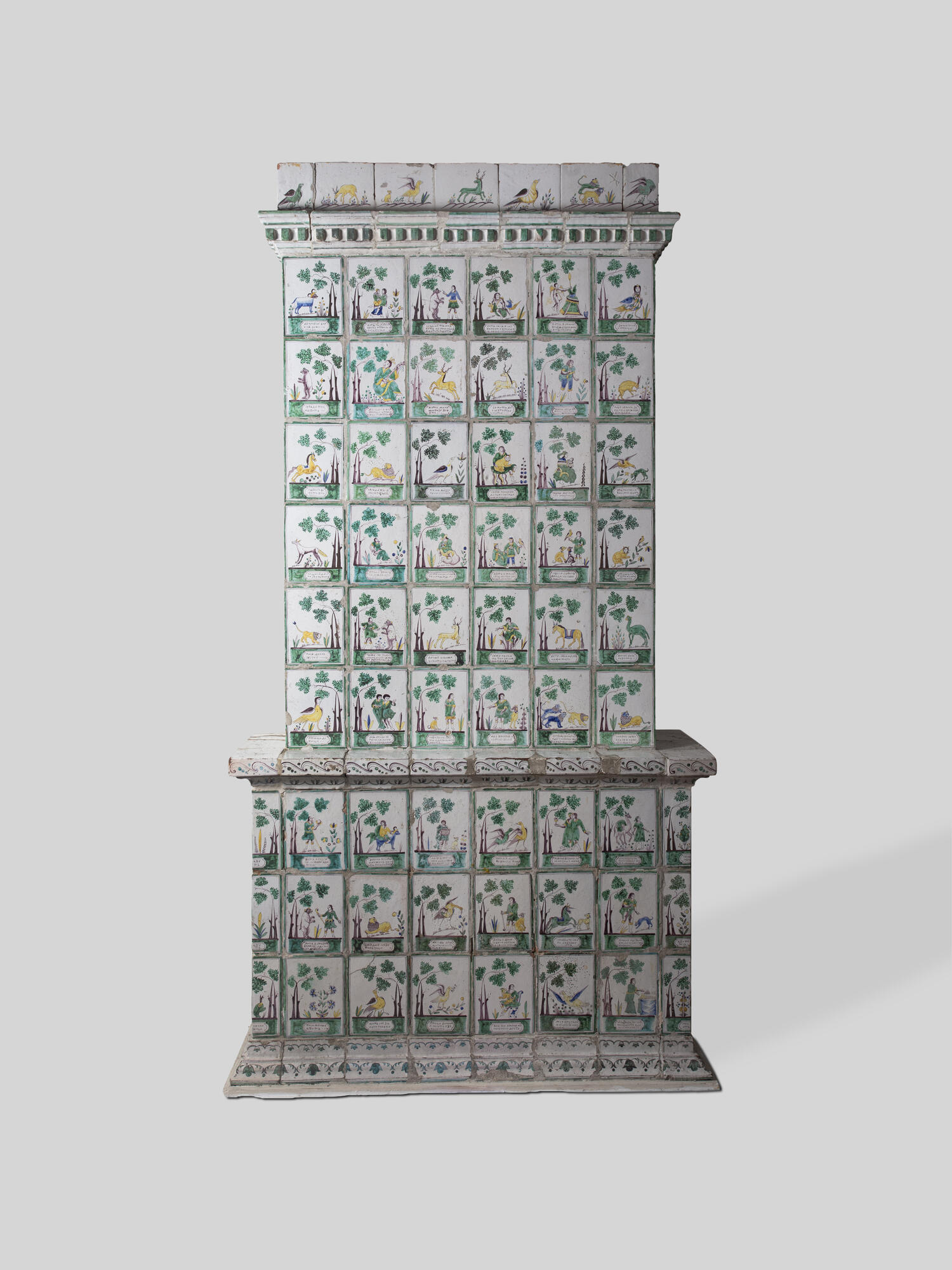
The tiled stove presented at the exhibition was recreated in 1960; it is made of 120 painted tiles with scenes dating from the middle to the second half of the 18th century. The stove is not intended for heating — it is a museum exhibit.
In Russia’s harsh climate, a tiled stove performed not only a practical function, maintaining and preserving heat in the home, but also conveyed a significant message, serving as the most important indicator of the status of the host. The decoration of the glazed tiles performed an important ornamental function in the interior design. Each tile could be viewed with interest, wondering at the variety of images and scenes created by the artists. The painting of ceramic objects is characterized by a diverse color palette, consisting of shades of green, brown, blue and yellow enamels.
The mid-17th century was the heyday of relief tiles. Terracotta (red, unglazed), enameled (covered with transparent green glaze) and polychrome (decorated with colored enamels of white, yellow, green and blue) tiles were used for tiled stoves and in the facade decoration of architectural monuments. The tiles were made in carved wooden molds; after firing and drying, a skirting was made on the back of the tile for mounting it on the stove cladding or in the wall of the building.
In the first half of the 18th century, relief tiles were replaced by smooth painted ones. In this period, tiles were used for covering heating devices.
The tiled stove presented at the exhibition was recreated in 1960; it is made of 120 painted tiles with scenes dating from the middle to the second half of the 18th century. The stove is not intended for heating — it is a museum exhibit.
In Russia’s harsh climate, a tiled stove performed not only a practical function, maintaining and preserving heat in the home, but also conveyed a significant message, serving as the most important indicator of the status of the host. The decoration of the glazed tiles performed an important ornamental function in the interior design. Each tile could be viewed with interest, wondering at the variety of images and scenes created by the artists. The painting of ceramic objects is characterized by a diverse color palette, consisting of shades of green, brown, blue and yellow enamels.
The images illustrate everyday life, showing the daily routine, clothing and habits of Russian people, and indicating their occupations; they present the images of “overseas peoples”, animals from distant lands and mythological creatures. The world of familiar animals is displayed in a variety of ways. The theme of love comes through the images of a brother and sister, parents with children, and lovers.
Accompanying commentary inscriptions, enclosed in frames, allow a deeper understanding of the presented composition: they describe the scenes, reveal the emotional experiences, ideas about life and norms of behavior, providing information about the world around.