One of the trades in demand among peasants was that of the wool-beater. During the spring, summer and autumn shearing seasons, these tradesmen either took orders in their own workshop or went to work in the surrounding villages. In the latter case, they were provided not only with a place to work, but also with lodging and food for the required period. The work of a wool-beater was highly valued and earned a good income.
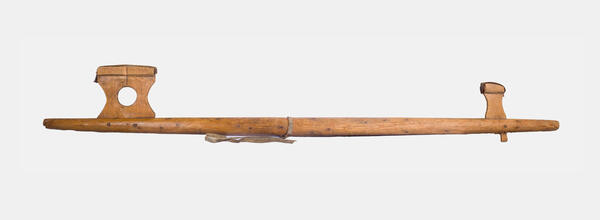
Wool-beater’s tools included a bow (luk, oluk, woolbeater, string), a wool club and a lattice. Strings made of domestic animals’ guts, usually cattle, were pulled on the bow — a bar made of a single piece of wood. The strings were set in motion by beating with a wooden club, they vibrated and whipped the woolen mass of fibers.
The lattice was made of wooden sticks or slats adjacent to each other. Before the beating began, the wool was spread out on the surface of the lattice and, for better whipping, sprinkled with rye flour.
Thus, it was possible to obtain light and clean wool fibers similar to down from the sheared fleece of domestic sheep, which was not always washed beforehand. This material was suitable for making felt products, among which valenki felt boots were the most popular in the Russian tradition of the late 19th — early 20th centuries. Sheep’s wool, besides valenki, was also used to produce men’s hats and caps, carpets and felted blankets, as well as collar pads, saddle cloths, insoles, felt for household needs — door upholstery, insulation for sleighs.
Wool-beaters, like blacksmiths, were treated both with respect and, at the same time, with apprehension. This attitude was attributed, for example, to the belief that all wool-beaters spoke some language that was unknown to the rest of the people. Wool-beaters themselves encouraged this view by actually communicating with each other in a special way, so that outsiders could not understand what they were saying.
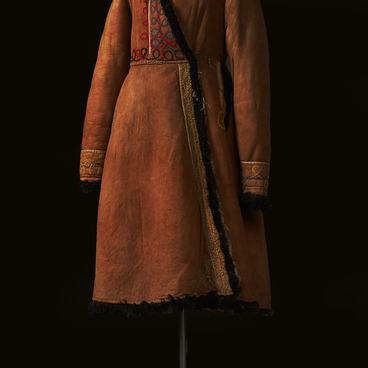
A wool-beater could often be the protagonist of Christmas games. The disguised man, posing as a wool-beater, smeared himself with soot and wore a fur coat turned inside out. He approached the girls and asked, “Is there any work of beating wool?” If a girl paid off with a gingerbread or a candy, the “wool-beater” would leave her alone and go to the next one; otherwise, he would ask his question over and over again, while trying to smear his victim with soot.