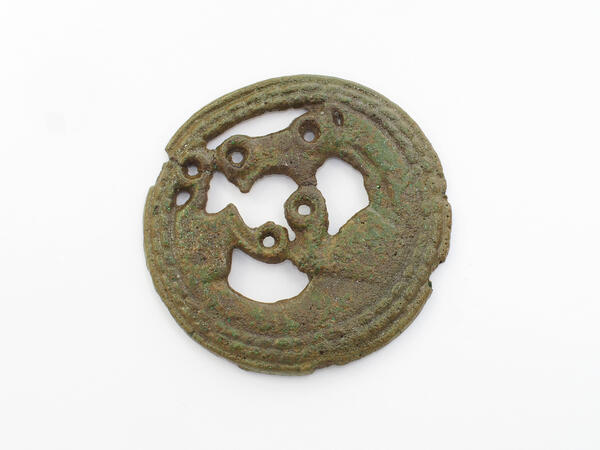
It is difficult to recognize a panther in the bronze figurine from the museum collection: the schematic representation of the animal’s muzzle is more reminiscent of a horse’s, and the ancient craftsman marked the eye, the nostril, the tips of the paws and the tail with holes. The panther’s ear is oval, very small, also shaped like a slit. However, the animal has a long neck, powerful shoulder blades and a lean stomach. The panther’s figure is located in a round frame, which is decorated with two circles in the form of a twisted rope.
This image of a predator is made in the Scythian-Siberian animal style. To make figurines and ornaments in this style, craftsmen most often used the images of red deer and other ungulates, birds of prey or animals — for example, a panther or a lion. They also depicted mythical creatures: griffins, winged lions, ram birds. These images had a sacred and magical meaning.
The Scythian-Siberian animal style is characterized by canonical animal poses. One of the most famous motifs is the coiled-up predator. Usually, animals were depicted in profile and their appearance was emphasized: deer and goats had large branched or twisted horns, horses had upright ears, and felines were elegant and graceful. The Scythians recreated scenes of persecution, torment, and eating. Through similar artistic techniques in the Scythian-Siberian animal style, they conveyed the twofold state of animals: on the one hand, movement, expression, and on the other, harmony and balance.
The images of predators were used in rituals; sanctuaries with sacred objects that archaeologists find today tell about this. In addition, weapons were decorated with the images of large cats. When people were buried, objects were placed in the graves that could be used by the dead in the afterlife. They were also decorated with animal images. Predators were associated with the Lower (underground) world, because they were associated with death.
The bronze panther was found on the territory of the settlement Shelomok II during the excavation of a ritual object that dates back to the 6th — 4th centuries BC. Doctor of Historical Sciences Lyudmila Pletneva supervised the work in 2001. The figurine was attributed to the Shelomok archaeological culture, which is part of the Scythian-Siberian cultures.
This image of a predator is made in the Scythian-Siberian animal style. To make figurines and ornaments in this style, craftsmen most often used the images of red deer and other ungulates, birds of prey or animals — for example, a panther or a lion. They also depicted mythical creatures: griffins, winged lions, ram birds. These images had a sacred and magical meaning.
The Scythian-Siberian animal style is characterized by canonical animal poses. One of the most famous motifs is the coiled-up predator. Usually, animals were depicted in profile and their appearance was emphasized: deer and goats had large branched or twisted horns, horses had upright ears, and felines were elegant and graceful. The Scythians recreated scenes of persecution, torment, and eating. Through similar artistic techniques in the Scythian-Siberian animal style, they conveyed the twofold state of animals: on the one hand, movement, expression, and on the other, harmony and balance.
The images of predators were used in rituals; sanctuaries with sacred objects that archaeologists find today tell about this. In addition, weapons were decorated with the images of large cats. When people were buried, objects were placed in the graves that could be used by the dead in the afterlife. They were also decorated with animal images. Predators were associated with the Lower (underground) world, because they were associated with death.
The bronze panther was found on the territory of the settlement Shelomok II during the excavation of a ritual object that dates back to the 6th — 4th centuries BC. Doctor of Historical Sciences Lyudmila Pletneva supervised the work in 2001. The figurine was attributed to the Shelomok archaeological culture, which is part of the Scythian-Siberian cultures.