

The painter Olga Basova was born in 1978 in the city of Gorky (nowadays Nizhny Novgorod). She went to the Chkalov Youth Club and graduated from the Chkalov Nizhny Novgorod State University. In 1999 she began working as a teacher of additional education in the art studio of the Chkalov Youth Club. Subsequently, she acted as a teacher and organizer of the festival-competition “The World through the Eyes of Children” and participated in the interactive exhibition of children’s drawings ‘Where the Motherland Begins’.
In 2012, Basova won the competition for the best teachers of additional education who implement additional educational programs at state and municipal institutions of the Nizhny Novgorod region within the framework of the national project ‘Education’. Her students have repeatedly taken part in city, All-Russian and international exhibitions and competitions in Japan, Czech Republic, France, Belarus, as well as in some countries of Eurasia. Being in close ongoing contact with young talents helps the painter in her constant creative search, so that she can come up with the ideas for new paintings.
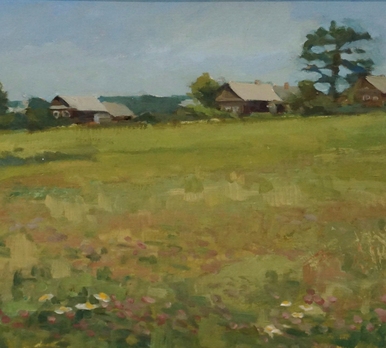
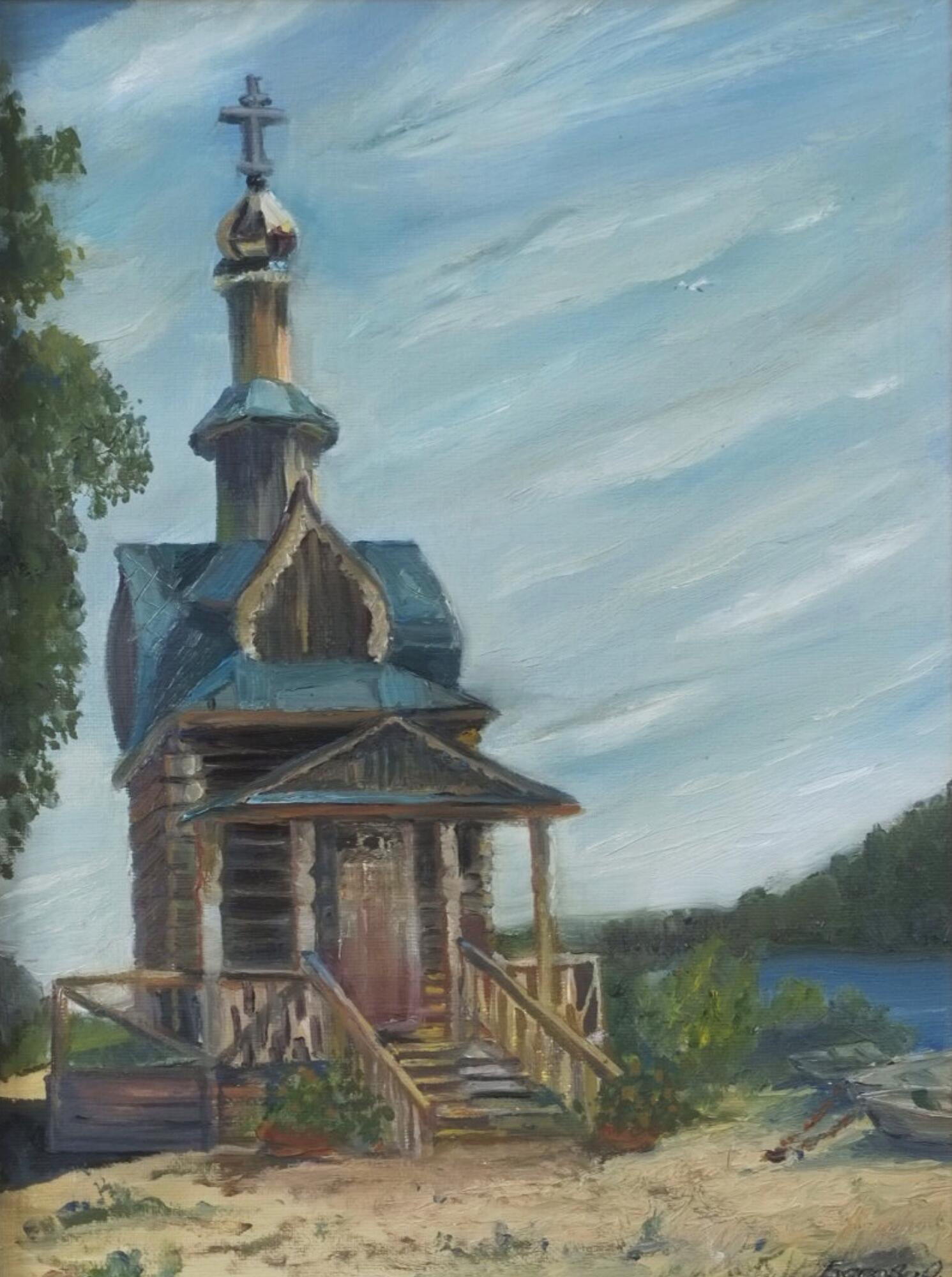
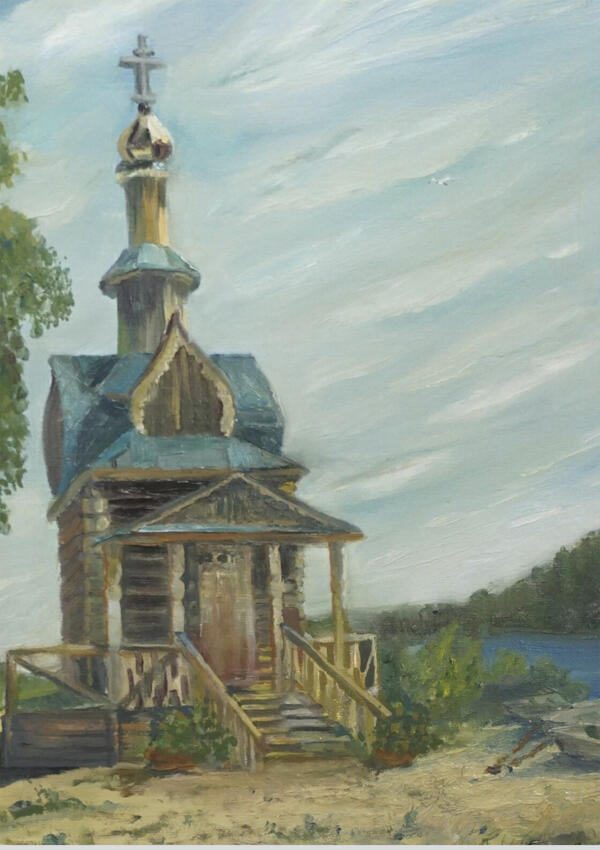
Since her very childhood, Basova loved to visit the picturesque Varnavino region, including the coast of the severe taiga river Vetluga. These places have inspired her to paint whole series of lyrical landscapes, and ‘Reverend Barnabas’ Spring’ is one of them. In the foreground, she depicted a chapel with the St. Barnabas of Vetluga spring; it takes up almost the entire left half of the canvas. On the right you can see the Vetluga River, a boat and the woods. Greenish clouds are shown in a dynamic tilt.
The first chapel over the spring was built in the 16th century. It can be seen on photographs made in the early 20th century, in pre-revolutionary times. In the 1930s, it was destroyed as part of the state’s atheist policy. The chapel depicted in the painting by Basova was not built until the post-Soviet period, in the 1990s. According to one of the legends, this source was consecrated many centuries ago by Barnabas of Vetluga himself. The local water is also believed to have healing properties.
It is believed that the monk Barnabas came to Povetluzhje during very difficult times in 1417. At that time, the region was hardly recovering after a destructive invasion of the Tatar-Mongols, and the situation was aggravated by internal conflicts and constant raids of the pagan Mari tribes. According to legends, the missionary activity of Barnabas and his sincere sermons helped to convert many Mari to Orthodoxy, and he also helped to alleviate internal strife.
In 2012, Basova won the competition for the best teachers of additional education who implement additional educational programs at state and municipal institutions of the Nizhny Novgorod region within the framework of the national project ‘Education’. Her students have repeatedly taken part in city, All-Russian and international exhibitions and competitions in Japan, Czech Republic, France, Belarus, as well as in some countries of Eurasia. Being in close ongoing contact with young talents helps the painter in her constant creative search, so that she can come up with the ideas for new paintings.
Since her very childhood, Basova loved to visit the picturesque Varnavino region, including the coast of the severe taiga river Vetluga. These places have inspired her to paint whole series of lyrical landscapes, and ‘Reverend Barnabas’ Spring’ is one of them. In the foreground, she depicted a chapel with the St. Barnabas of Vetluga spring; it takes up almost the entire left half of the canvas. On the right you can see the Vetluga River, a boat and the woods. Greenish clouds are shown in a dynamic tilt.
The first chapel over the spring was built in the 16th century. It can be seen on photographs made in the early 20th century, in pre-revolutionary times. In the 1930s, it was destroyed as part of the state’s atheist policy. The chapel depicted in the painting by Basova was not built until the post-Soviet period, in the 1990s. According to one of the legends, this source was consecrated many centuries ago by Barnabas of Vetluga himself. The local water is also believed to have healing properties.
It is believed that the monk Barnabas came to Povetluzhje during very difficult times in 1417. At that time, the region was hardly recovering after a destructive invasion of the Tatar-Mongols, and the situation was aggravated by internal conflicts and constant raids of the pagan Mari tribes. According to legends, the missionary activity of Barnabas and his sincere sermons helped to convert many Mari to Orthodoxy, and he also helped to alleviate internal strife.