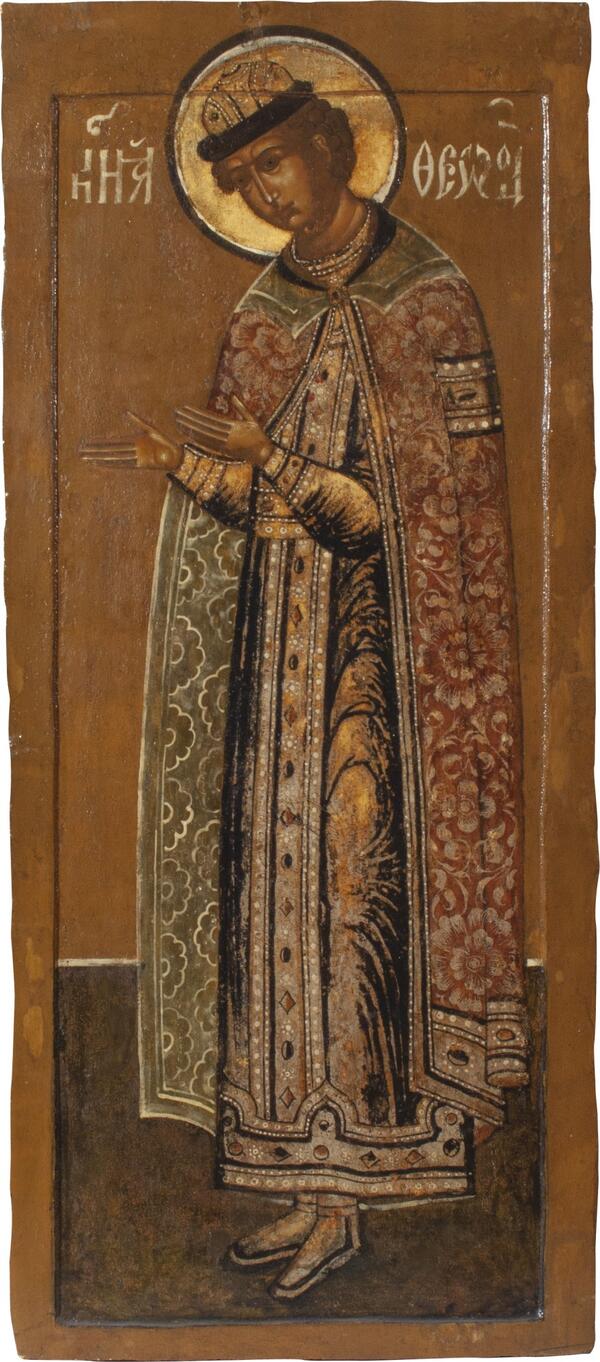
The icon of Saint Prince Fyodor of Murom was among the finds of the Tretyakov Gallery expedition, which took place in 1965 in the Vladimir lands. During these studies, art experts led by Nadezhda Vsevolodovna Rozanova found three tiers of a 17th-century iconostasis in an abandoned church in a village near the city of Murom.
The traditional iconostasis, also called the “high Russian iconostasis”, is a wall of images arranged in a certain order. It is designed to separate the altar of the church from the common space. It usually consists of five tiers: the Sovereign tier, the Deesis, the Twelve Great Feasts, the Old Testament Prophets and the Patriarchs.
The Deesis tier is a group of icons with Christ Pantocrator (translated from Greek as “Almighty”) in the center, flanked by the Mother of God and John the Baptist, followed by other revered saints.
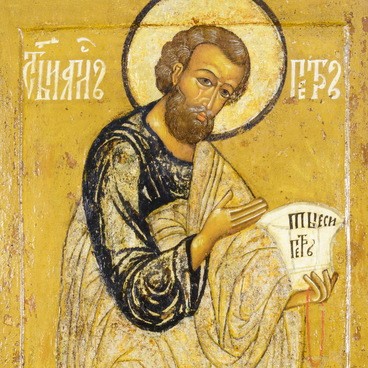
The Murom iconostasis was special since it mostly included the images of Russian and local saints. For example, the Deesis tier, found by the art historians from Moscow and transferred to the Saratov Museum, featured Murom princes: Peter, Fyodor, and Michael.
Fyodor was the son of Saint Prince Constantine, the brother of young Michael. According to local legend, the people of Murom were still pagans in the 12th century. Therefore, Constantine, a descendant of St. Vladimir, who baptized Rus, gathered an army in Kyiv in 1192 and laid siege to Murom. He planned to persuade the locals to accept the new religion and even sent his youngest son Michael to negotiate. However, the people of Murom did not believe the sincere intentions of the Prince, considered that he was scheming against them and killed his son. When Constantine, his retinue and his eldest son Fyodor approached the walls of the city, the besieged surrendered.
The prince did not force the pagans to become Christians, but was engaged in their enlightenment. He built an Annunciation Church in Murom, where he buried his son Michael, and soon erected a church in the name of St. Boris and St. Gleb.
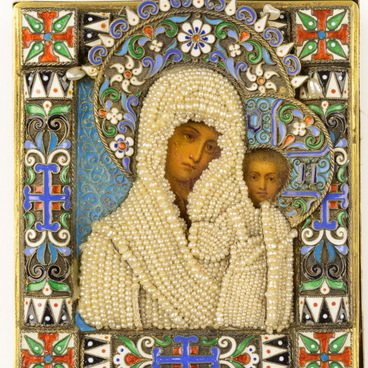
However, the people of Murom changed their opinion after the following event. An armed crowd came to Constantine’s house in order to kill him. Unarmed, he fearlessly stepped out to meet them holding an icon of the Mother of God in his hands. Impressed by such courage and faith in God, the pagans gave up their struggle and accepted Orthodoxy.
This was how the noble prince Constantine “enlightened the whole people with baptism”, “proclaimed the faith” in the city of Murom and saved the inhabitants “from the charm of idols.” His son Fyodor was helping him greatly in all those matters.
The traditional iconostasis, also called the “high Russian iconostasis”, is a wall of images arranged in a certain order. It is designed to separate the altar of the church from the common space. It usually consists of five tiers: the Sovereign tier, the Deesis, the Twelve Great Feasts, the Old Testament Prophets and the Patriarchs.
The Deesis tier is a group of icons with Christ Pantocrator (translated from Greek as “Almighty”) in the center, flanked by the Mother of God and John the Baptist, followed by other revered saints.
The Murom iconostasis was special since it mostly included the images of Russian and local saints. For example, the Deesis tier, found by the art historians from Moscow and transferred to the Saratov Museum, featured Murom princes: Peter, Fyodor, and Michael.
Fyodor was the son of Saint Prince Constantine, the brother of young Michael. According to local legend, the people of Murom were still pagans in the 12th century. Therefore, Constantine, a descendant of St. Vladimir, who baptized Rus, gathered an army in Kyiv in 1192 and laid siege to Murom. He planned to persuade the locals to accept the new religion and even sent his youngest son Michael to negotiate. However, the people of Murom did not believe the sincere intentions of the Prince, considered that he was scheming against them and killed his son. When Constantine, his retinue and his eldest son Fyodor approached the walls of the city, the besieged surrendered.
The prince did not force the pagans to become Christians, but was engaged in their enlightenment. He built an Annunciation Church in Murom, where he buried his son Michael, and soon erected a church in the name of St. Boris and St. Gleb.
However, the people of Murom changed their opinion after the following event. An armed crowd came to Constantine’s house in order to kill him. Unarmed, he fearlessly stepped out to meet them holding an icon of the Mother of God in his hands. Impressed by such courage and faith in God, the pagans gave up their struggle and accepted Orthodoxy.
This was how the noble prince Constantine “enlightened the whole people with baptism”, “proclaimed the faith” in the city of Murom and saved the inhabitants “from the charm of idols.” His son Fyodor was helping him greatly in all those matters.