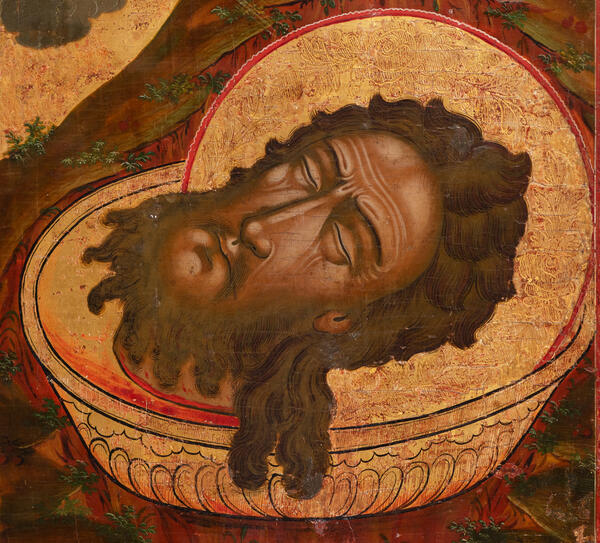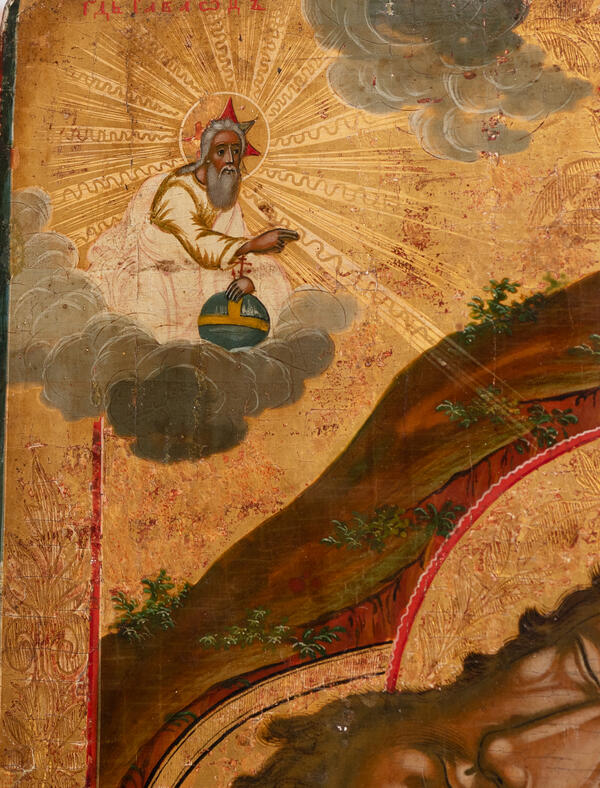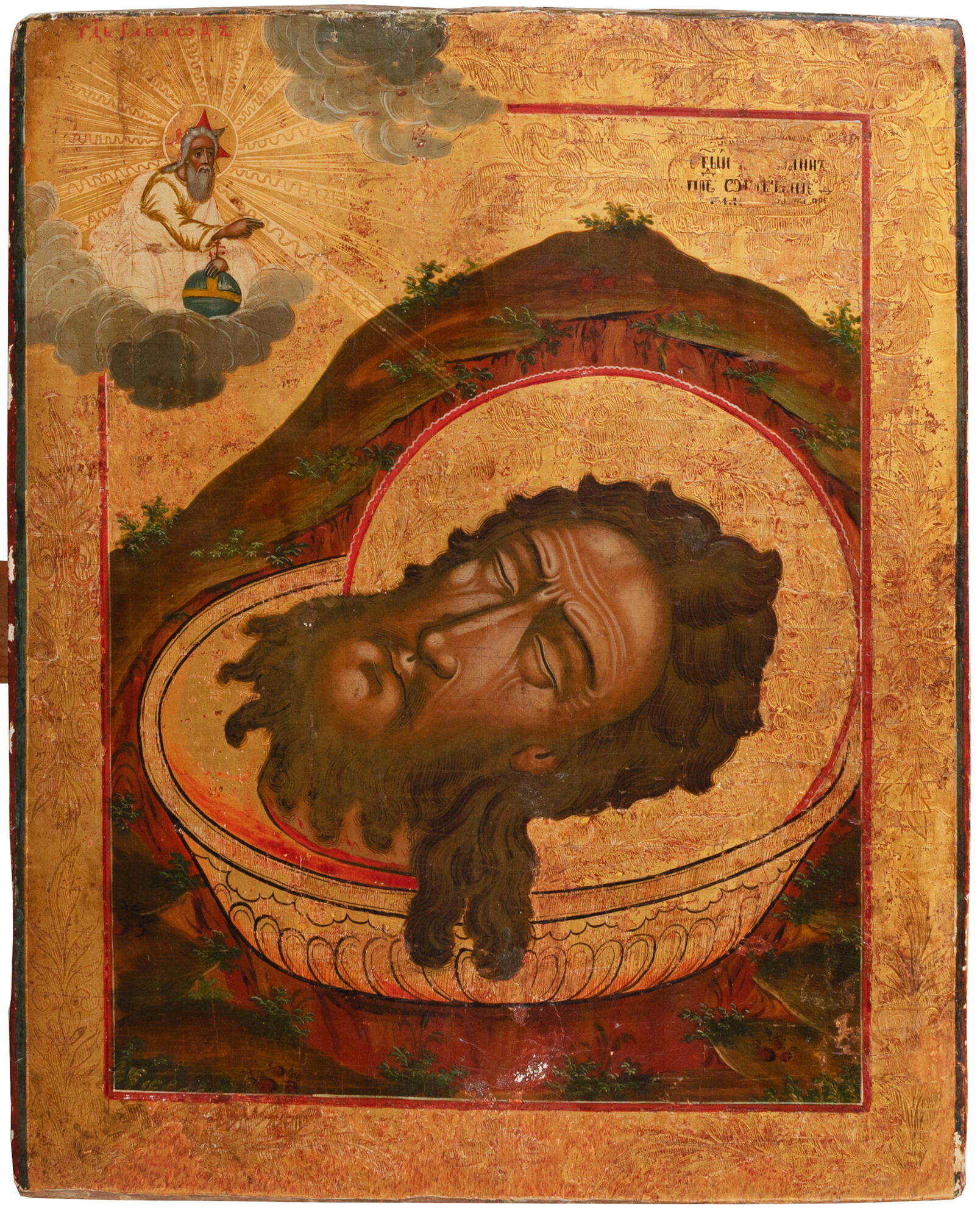


The center of this composition is the head of John the Baptist resting in a golden chalice. In the background, there are hills covered in vegetation. Saint John has wrinkles on his forehead and around his eyes, symbolizing his suffering for the sins of humanity. At the top left corner of the icon, there is Lord Sabaoth, or God the Father, with a red star around His head and long rays emanating from it.
John the Baptist, also known as Saint John the Forerunner, is one of the most revered saints in Christianity. According to the Gospels, he proclaimed Jesus to be the Messiah. Legend has it that John lived an ascetic lifestyle in the wilderness. There, he subsisted on locusts and wild honey and performed rituals, washing himself with water to repent and purify himself from sin. Later, this ritual became known as the sacrament of baptism. Saint John also baptized Jesus in the river Jordan.
John the Baptist, also known as Saint John the Forerunner, is one of the most revered saints in Christianity. According to the Gospels, he proclaimed Jesus to be the Messiah. Legend has it that John lived an ascetic lifestyle in the wilderness. There, he subsisted on locusts and wild honey and performed rituals, washing himself with water to repent and purify himself from sin. Later, this ritual became known as the sacrament of baptism. Saint John also baptized Jesus in the river Jordan.