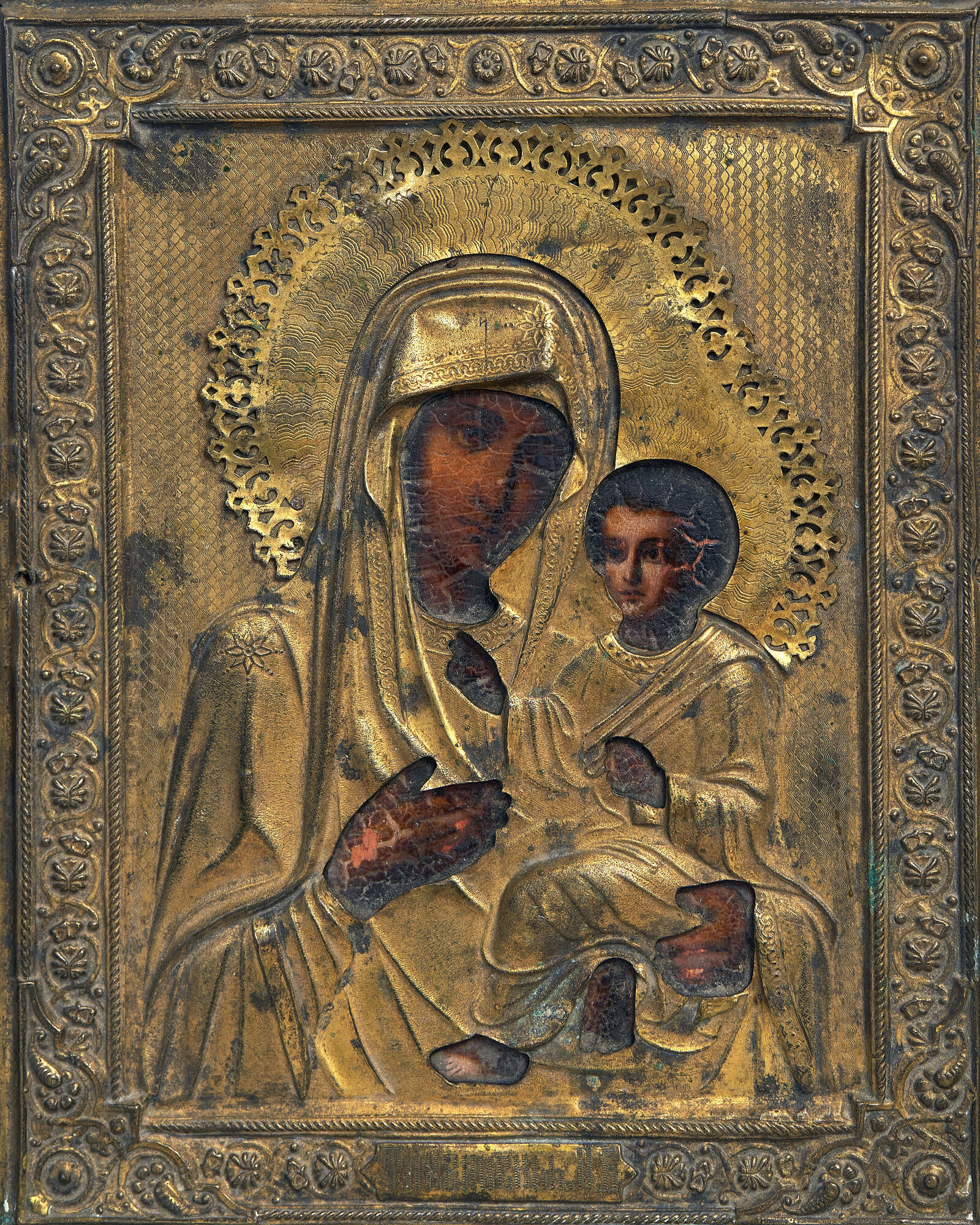


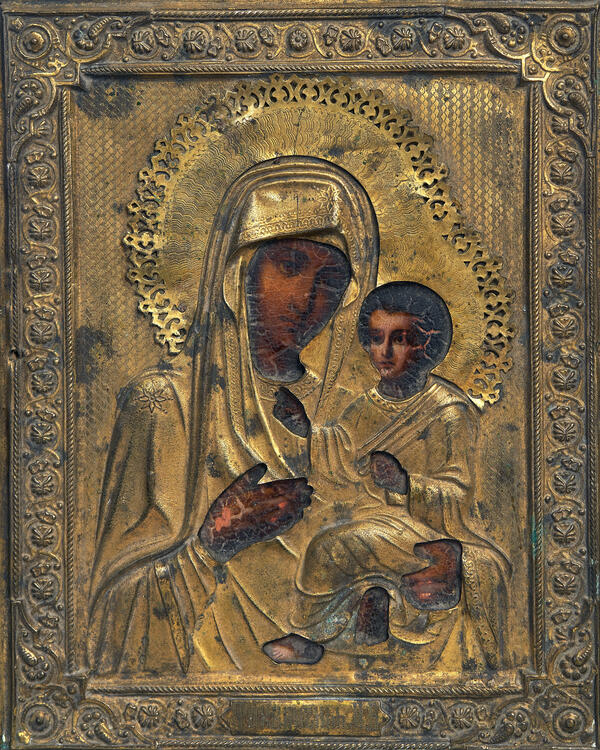
The collection of the Urazovo Local History Museum contains the Tikhvin Icon of the Mother of God, dating from the early 19th century.
The Tikhvin icon belongs to the iconographic type of icons of the Mother of God Hodegetria. Its characteristic feature is the communion of the Blessed Virgin with the Christ Child and their appeal to each other.
The Tikhvin Icon of the Mother of God is one of the revered miraculous icons in the Orthodox Church. According to the legend, it was painted by the holy Apostle and Evangelist Luke. In the 5th century, the icon was transferred from Jerusalem to Constantinople, where the Blachernae temple was built for it. In 1383, the icon disappeared from the temple and appeared later in a radiant light over the waters of Lake Peipus, near the town of Tikhvin. On the site of the appearance of the icon, a wooden temple was erected in honor of the Assumption of the Virgin. Later, at the behest of Grand Duke Vasily III, a stone temple was built instead of a wooden one, and in 1560 by order of Tsar Ivan the Terrible a man’s monastery was built at the temple. In 1613–1614, the Swedish troops, having seized the city of Novgorod, more than once tried to destroy this monastery, but the monastery was saved by the intercession of the Mother of God. After a miraculous victory over the Swedes, the Tsar’s ambassadors arrived at the monastery. Having made a copy of the miraculous icon, they went to the village of Stolbovo, where they made peace with the Swedes. Subsequently, the copy was brought to Moscow and placed in the Assumption Cathedral. Then it was sent to Novgorod and placed in the St. Sophia Cathedral.
Upon the initiative proposed by the Committee of Trusteeship for Russian Icon Painting in 1910, the ancient icon was uncovered from under later paintings by the restorer, icon painter and collector Grigory Chirikov. After the closure of the Dormition Monastery in the 1920s, the icon became an exhibit of the local history museum. Until 1941 it was located in the Tikhvin Museum. During the occupation of Tikhvin in November 1941, the Germans took the icon out of the cathedral and sent it to Pskov.
In the spring of 1944, the icon found its way to Riga, Libava, Jablonec nad Nisou, the American zone of occupation of Germany. In 1950, the miraculous icon was transported to the Holy Trinity Cathedral in Chicago, where the rector and keeper of the icon was first Archbishop John of Riga, and then his adopted son, Archpriest Sergius. The latter devoted his entire life to the preservation of the icon. According to the will of Archbishop John, the return of the icon to Russia was to take place when the Tikhvin monastery was revived. The monastery passed to the Church in 1995, and the Assumption Cathedral was restored and consecrated. In 2004, the icon was solemnly returned to its historical place in the Tikhvin Assumption Monastery of the Mother of God.
The Tikhvin icon belongs to the iconographic type of icons of the Mother of God Hodegetria. Its characteristic feature is the communion of the Blessed Virgin with the Christ Child and their appeal to each other.
The Tikhvin Icon of the Mother of God is one of the revered miraculous icons in the Orthodox Church. According to the legend, it was painted by the holy Apostle and Evangelist Luke. In the 5th century, the icon was transferred from Jerusalem to Constantinople, where the Blachernae temple was built for it. In 1383, the icon disappeared from the temple and appeared later in a radiant light over the waters of Lake Peipus, near the town of Tikhvin. On the site of the appearance of the icon, a wooden temple was erected in honor of the Assumption of the Virgin. Later, at the behest of Grand Duke Vasily III, a stone temple was built instead of a wooden one, and in 1560 by order of Tsar Ivan the Terrible a man’s monastery was built at the temple. In 1613–1614, the Swedish troops, having seized the city of Novgorod, more than once tried to destroy this monastery, but the monastery was saved by the intercession of the Mother of God. After a miraculous victory over the Swedes, the Tsar’s ambassadors arrived at the monastery. Having made a copy of the miraculous icon, they went to the village of Stolbovo, where they made peace with the Swedes. Subsequently, the copy was brought to Moscow and placed in the Assumption Cathedral. Then it was sent to Novgorod and placed in the St. Sophia Cathedral.
Upon the initiative proposed by the Committee of Trusteeship for Russian Icon Painting in 1910, the ancient icon was uncovered from under later paintings by the restorer, icon painter and collector Grigory Chirikov. After the closure of the Dormition Monastery in the 1920s, the icon became an exhibit of the local history museum. Until 1941 it was located in the Tikhvin Museum. During the occupation of Tikhvin in November 1941, the Germans took the icon out of the cathedral and sent it to Pskov.
In the spring of 1944, the icon found its way to Riga, Libava, Jablonec nad Nisou, the American zone of occupation of Germany. In 1950, the miraculous icon was transported to the Holy Trinity Cathedral in Chicago, where the rector and keeper of the icon was first Archbishop John of Riga, and then his adopted son, Archpriest Sergius. The latter devoted his entire life to the preservation of the icon. According to the will of Archbishop John, the return of the icon to Russia was to take place when the Tikhvin monastery was revived. The monastery passed to the Church in 1995, and the Assumption Cathedral was restored and consecrated. In 2004, the icon was solemnly returned to its historical place in the Tikhvin Assumption Monastery of the Mother of God.