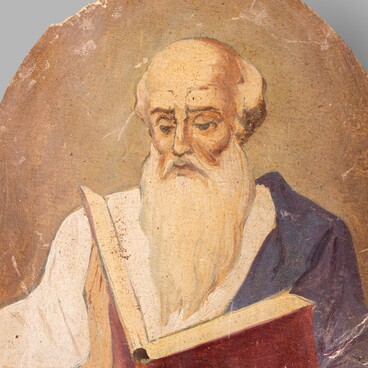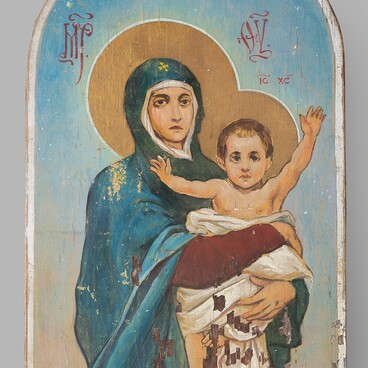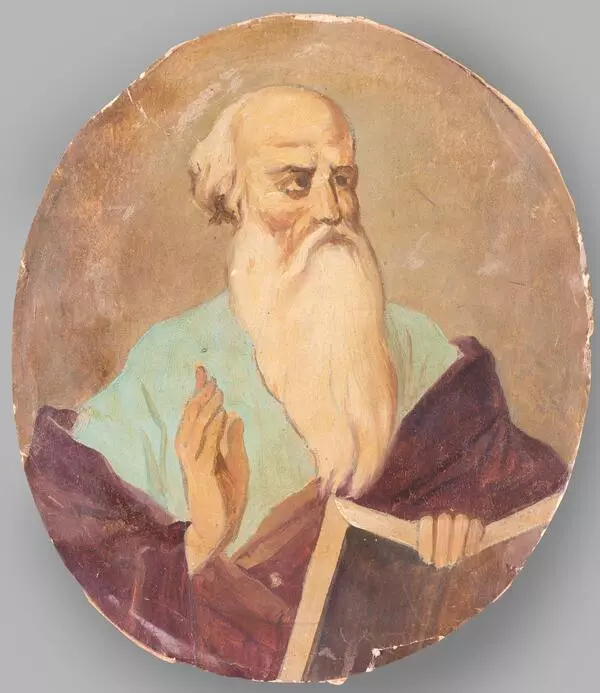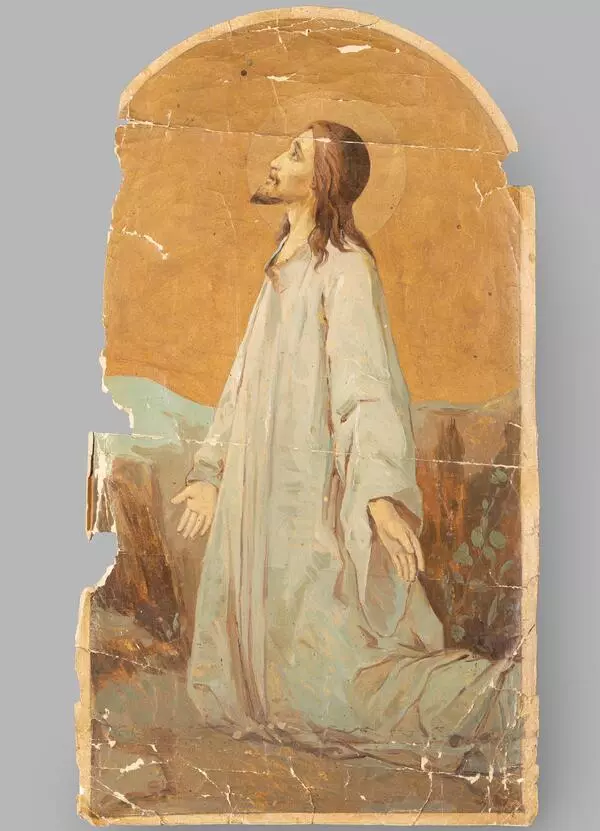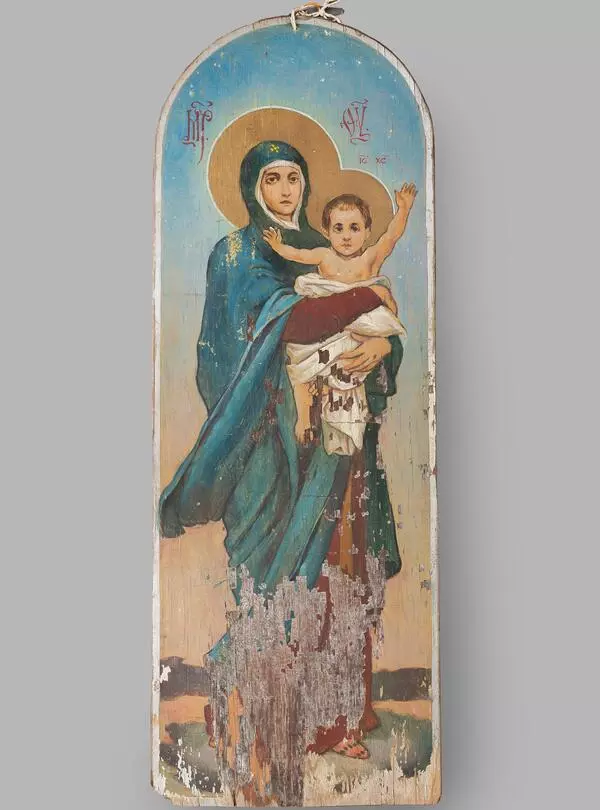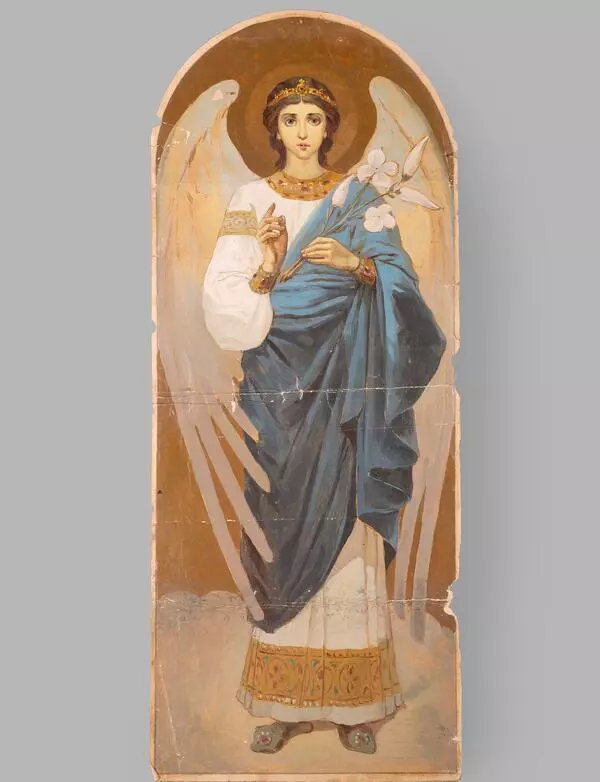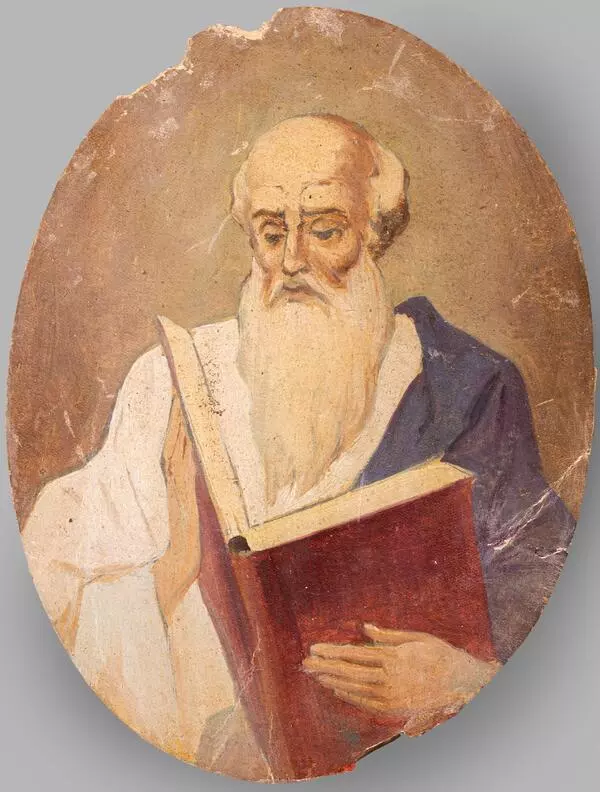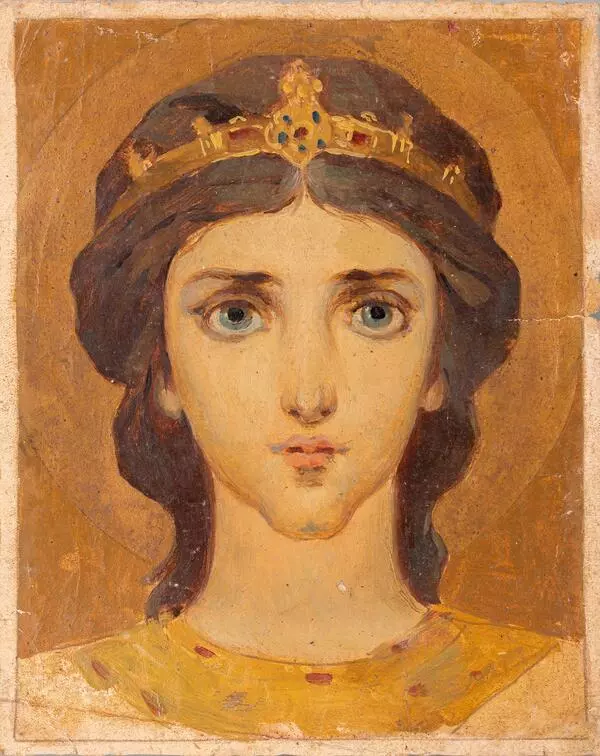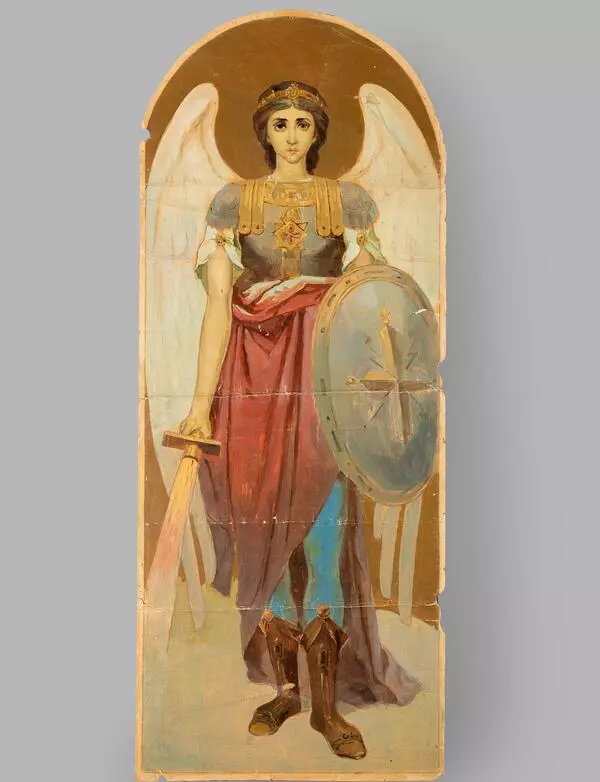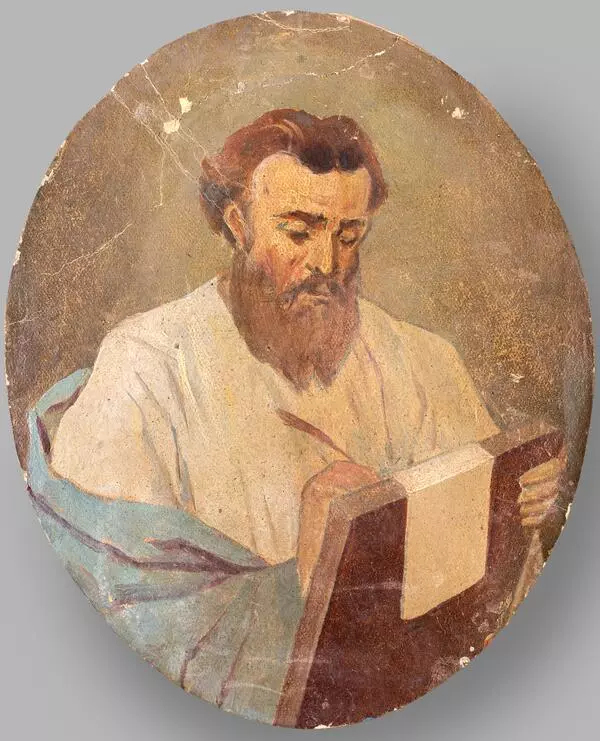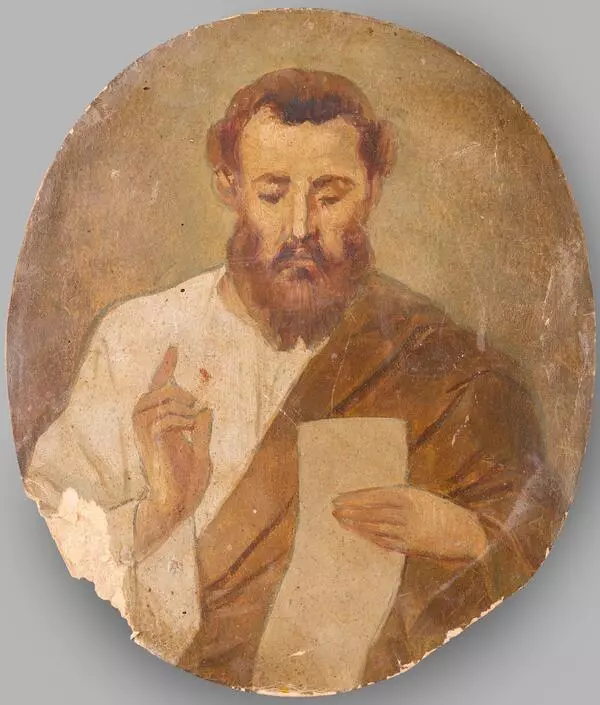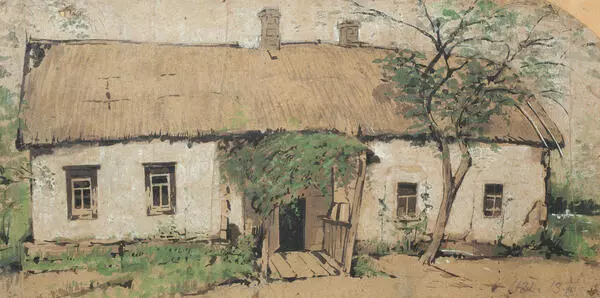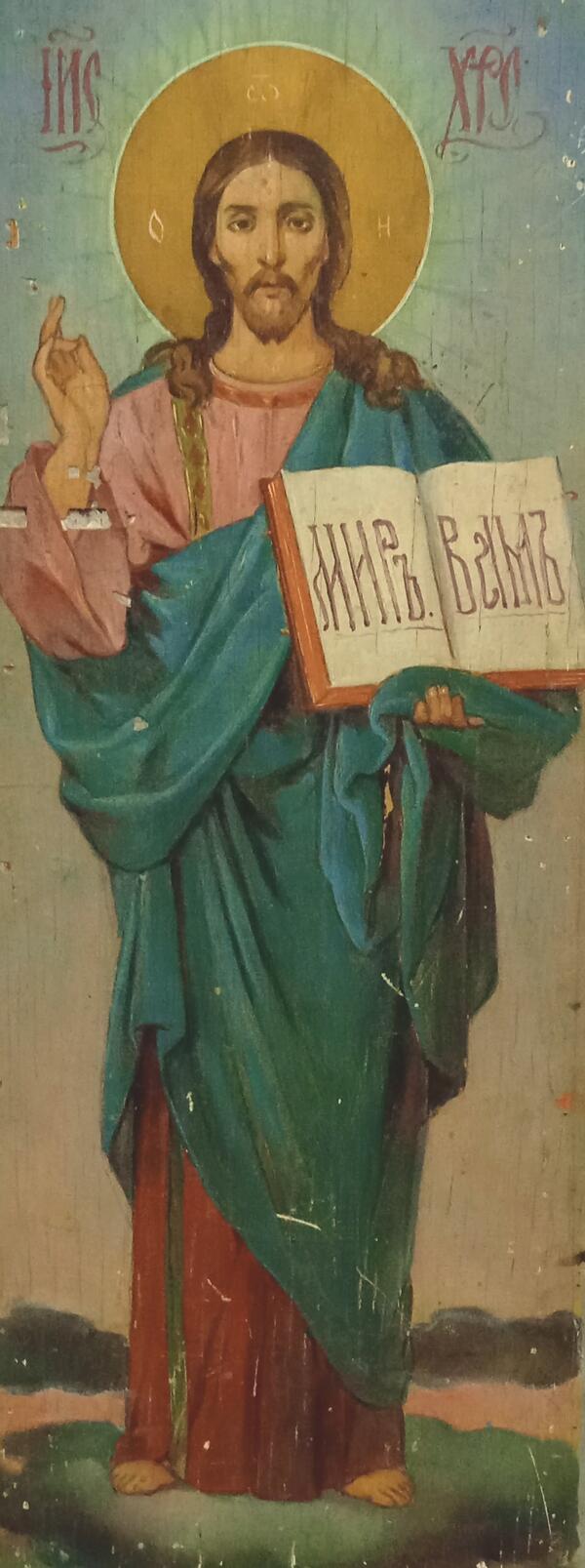
Mikhail Ivanovich Khvostenko was one of the most famous Borisovka masters, a representative of a prominent dynasty of artists and icon painters, which originated under Count Boris Petrovich Sheremetev. Naturally gifted, Mikhail Khvostenko perfected his talents studying in Moscow and working on the paintings of the Donskoy Monastery and stage design for the play by Grand Duke Konstantin Konstantinovich Romanov “King of Judea”.
The presented icon was part of a triptych. A triptych (from the Greek tρίπτυχος — “folded three times”) in church art is a composition consisting of three icons (or an icon consisting of three parts). The main image is placed on the middle board, and additional images — on the two side boards. Most often it depicts Christ with the Theotokos and John the Forerunner, or the Mother of God with the Baby Jesus and saints. Icons united by a common theme can be installed in a certain order or fastened with loops, and displayed open or, if necessary, folded.
In the Middle Ages, triptychs of icons, stained glass windows or wooden carved bas-reliefs were very popular in Western Europe. They were specially made for churches and placed in their altar part.
Church triptychs can be over a meter in size or very small. Miniature three-part icons were in demand among travelers and pilgrims. Such images were called “traveling” or “folding icons”, as they could be easily folded. When folded, the side panels cover the central board and the beholder sees the reverse side.
-sized triptychs were often installed in home iconostases. The image presented in the exhibition belongs to the iconographic type “Pantocrator”, and the icon painter strictly follows the canon. The figure of Jesus is almost full-length. The Savior is dressed in a red chiton and a blue himation. The blue color symbolizes purity and virtue, and red — sacrificial blood. At the same time, the red, purple robe, which by law could be worn only by the emperor, indicates royal dignity. The vertical patch on the right side of the chiton, clavus, is another sign of imperial power. His right hand makes a blessing gesture forming the shapes of His initials: the fingers are folded in the form of the letters “I Х” (meaning Jesus Christ); He holds the Gospel in His left hand with the words “Peace be upon you.” The Old Slavonic letters of the inscription “IC XC” with titlos on both sides of the Savior’s head are calligraphically written.
The presented icon was part of a triptych. A triptych (from the Greek tρίπτυχος — “folded three times”) in church art is a composition consisting of three icons (or an icon consisting of three parts). The main image is placed on the middle board, and additional images — on the two side boards. Most often it depicts Christ with the Theotokos and John the Forerunner, or the Mother of God with the Baby Jesus and saints. Icons united by a common theme can be installed in a certain order or fastened with loops, and displayed open or, if necessary, folded.
In the Middle Ages, triptychs of icons, stained glass windows or wooden carved bas-reliefs were very popular in Western Europe. They were specially made for churches and placed in their altar part.
Church triptychs can be over a meter in size or very small. Miniature three-part icons were in demand among travelers and pilgrims. Such images were called “traveling” or “folding icons”, as they could be easily folded. When folded, the side panels cover the central board and the beholder sees the reverse side.
-sized triptychs were often installed in home iconostases. The image presented in the exhibition belongs to the iconographic type “Pantocrator”, and the icon painter strictly follows the canon. The figure of Jesus is almost full-length. The Savior is dressed in a red chiton and a blue himation. The blue color symbolizes purity and virtue, and red — sacrificial blood. At the same time, the red, purple robe, which by law could be worn only by the emperor, indicates royal dignity. The vertical patch on the right side of the chiton, clavus, is another sign of imperial power. His right hand makes a blessing gesture forming the shapes of His initials: the fingers are folded in the form of the letters “I Х” (meaning Jesus Christ); He holds the Gospel in His left hand with the words “Peace be upon you.” The Old Slavonic letters of the inscription “IC XC” with titlos on both sides of the Savior’s head are calligraphically written.