Pottery, like some other crafts, has traditionally been considered a side activity in relation to agriculture. In turn, clay toy making was a secondary phenomenon related to pottery. Such toys were made almost everywhere where clay deposits were found. People made such toys just for fun. Later, they began to sell clay toys at fairs and folk festivities. Only in a few locations clay toys became an independent craft, influenced by fashion and local demand.
The traditional Romanov clay toy got its name from the village of Romanovo, now known as Troitskoye, in the Lipetsk District. The history of the village goes back centuries. It started as a small settlement in the early 17th century. Later, it grew into a town and a major trade center, but in the 18th century, eventually became a village once again.
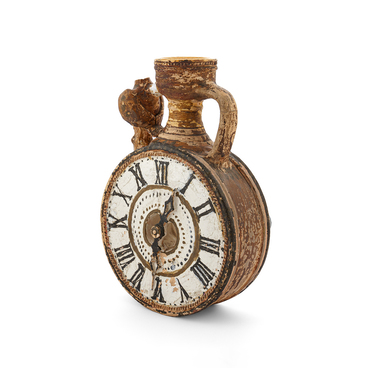
In 1909, the Lipetsk Regional Museum of Local Lore began to form a collection of items made by the artisans of the Romanovo village in Lipetsk Uyezd. The research into the old craft of Romanov toys was initiated by Mariya Nikolayevna Trunova. She was the wife of Mikhail Pavlovich Trunov who founded the Lipetsk Society for the Spread of Scientific and Practical Knowledge named after Peter the Great. Mariya Trunova also donated the first Romanov toys to the museum. She continued buying such toys at her own expense, both directly from craftsmen and at the St. George’s Fair (on April 23, Old Style) when merchants brought such products to Lipetsk. The craft was described in the report of the Society named after Peter the Great, “The toys are very diverse. Some are still made using ancient forms, but lately, the old traditions are being replaced by new forms, reflecting the interests of the time.“
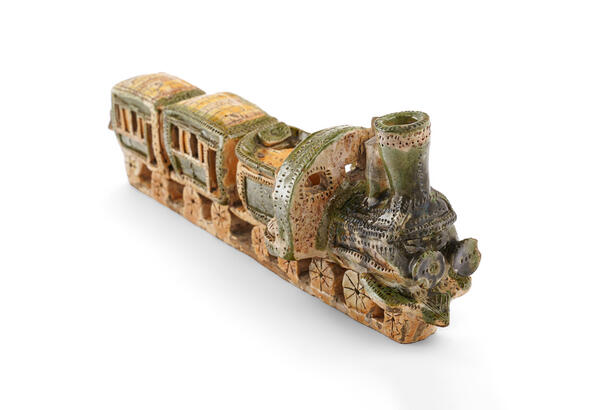
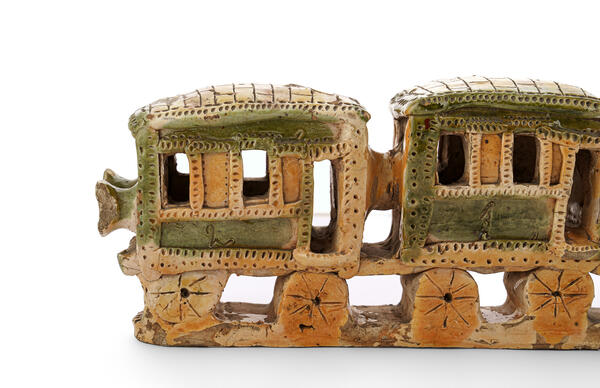
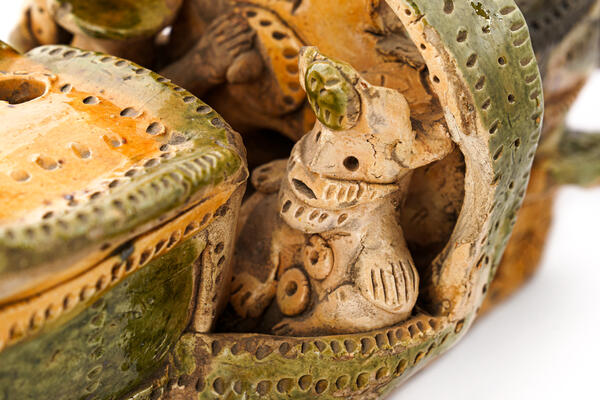
One of the oldest Romanov toys in the museum collection is a steam locomotive whistle, dating back to the early 20th century. Early toys were not painted but glazed with a liquid mixture of burnt sand and lead oxide. Initially, the glaze was yellow and green. Later, brown began to be used. The glaze gave the toys a glassy sheen.