In the late 19th and early 20th centuries, nomadic peoples, including Tuvans, had metal work, including jewelry work, done entirely by blacksmiths. Those who worked with silver were called “naryn-dargan” — literally, a blacksmith doing intricate work.
The products made by Tuvan blacksmiths were greatly cherished and passed down from generation to generation. Skilled jewelers were known far beyond their native lands. In Tuvan culture, only men could be blacksmiths. Their know-how was usually kept secret and handed down.
Expensive silver jewelry was available only to the wealthy. Payment was made in kind — small cattle, hides, oil, and clothing. Craftsmen received a cow or a horse for especially valuable items.
There are different types of Tuvan women’s jewelry: those for hair, ears, hands, fingers, and belts.
Sewing clothes, hats, and shoes was a woman’s occupation. A Tuvan woman was fully engaged in gathering, as well as preparing and processing materials for sewing. In the past, such materials were mainly hides of domestic and hunted animals. Every Tuvan woman had the necessary accessories for sewing.
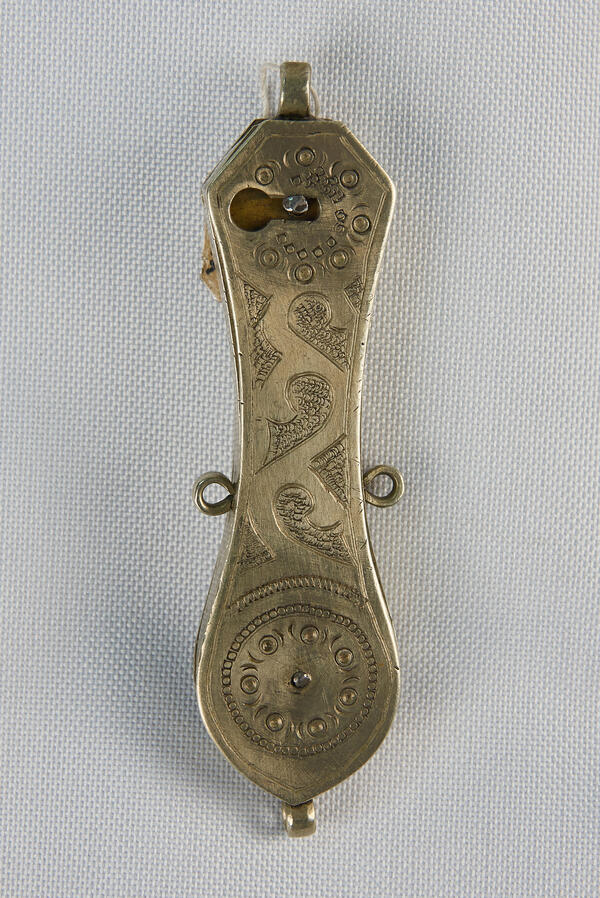
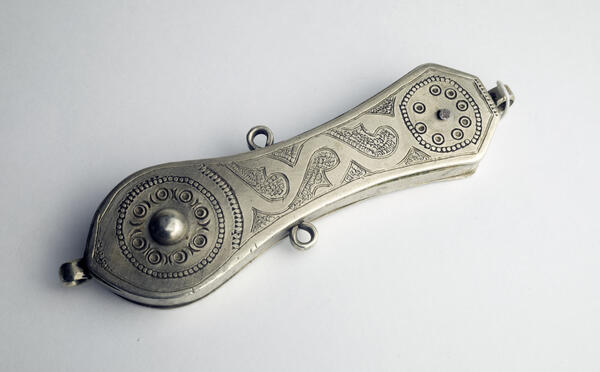
Wealthy women carried needlecases on their belts. More prosperous women used silver items inlaid with natural stones (malachite, turquoise, carnelian). Now that the national costume has completely been replaced with the European one, such needlecases went out of use, but in the early 20th century they were used by many. For Tuvan women they served as an item which they made a show of and carried on their belts or next to their chests.
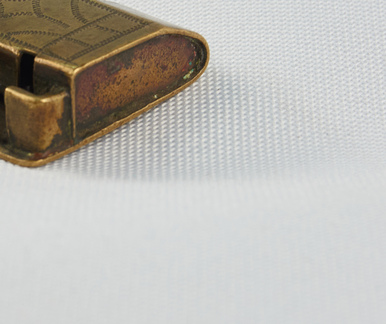
The needlecase from the Tuva Museum is a quadrangular box with a sliding lid. The one-piece back wall is decorated with geometric and floral patterns. The lid of the needlecase is closed with a rivet. The lid has a keyhole for it. The walls of the needle box are reinforced with wood inside.