A horse was thought to be the most useful animal in a peasant’s household. The harness for it was ordered from special craftsmen who took into account physical characteristics of the horse, designing products that would keep it healthy and able to work.
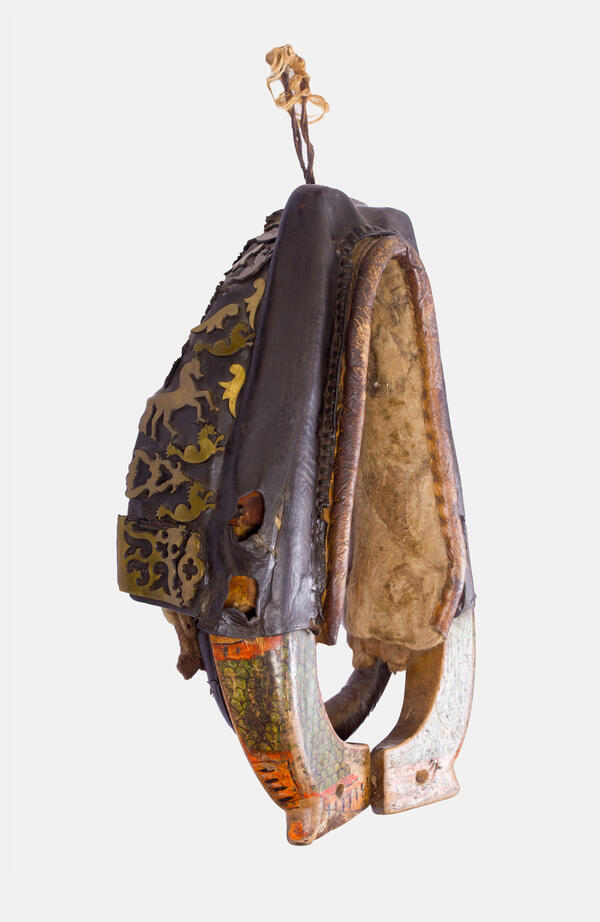
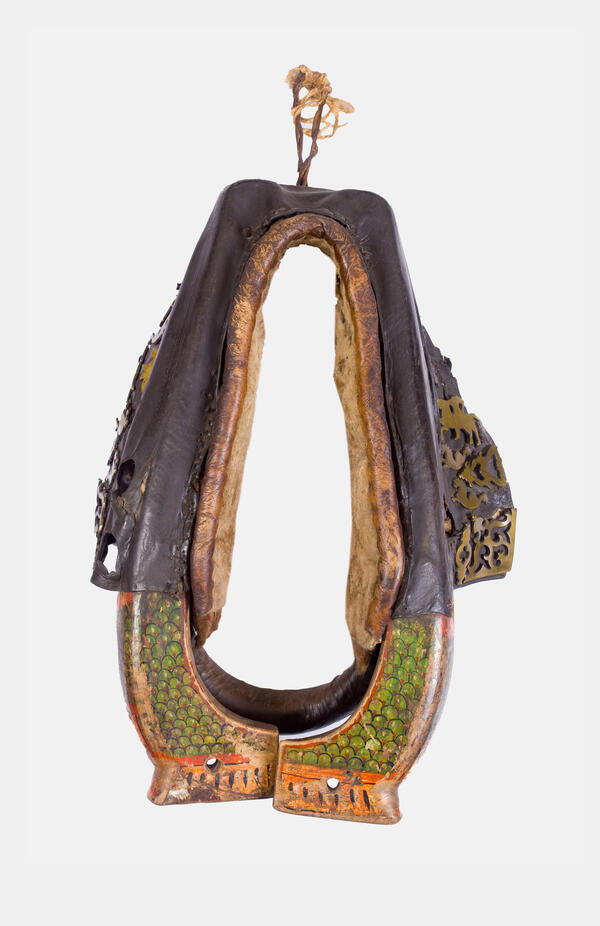
A horse collar is an important part of the harness: it supports the shafts, and the reins, traces or straps are also attached to it. In contrast to the yoke, in which the horse pulls the cart, plow or harrow through the force of the shoulders, the collar allows it to transfer the strain to the rear part of the body and not to pull the weight, but to push it.
A horse collar consists of a felt lining on the inside, a leather cover, and a hame strap. Hames were made of maple or birch wood; they were two slightly rounded bars connected at one end. To prevent the wood from cutting into the horse’s body and rubbing it, the wooden hames were placed in a collar pad, a leather cover. The absence of a rigid connection at one end allowed the collar to be put freely around the neck of the horse, immediately correcting it and securing it to the body of the animal. The felt lining and the leather pad protect the neck and withers of the animal from rubbing with wooden parts. A hame strap serves to tighten the detachable parts of the hames under the horse’s neck.
A festive horse harness was used for weddings, Maslenitsa and some other holidays. It was richly decorated: the wooden part — with carving and colorful paints, the leather part — with embossing, painting, leather and metal plates of different configurations, and bells. Festive harness was kept separately and cherished as a sign of wealth and prosperity of a peasant’s family.
In Russian folk tradition, there were many beliefs and prohibitions associated with the horse collar. For example, it was believed that a mother should pass her weak newborn baby through a horse collar back and forth three times to the midwife, as it was believed that this action would definitely help prevent the infant’s death. Women were forbidden to step over the horse collar: it was believed that the horse on which it was put would lose strength and would not be able to move the cart. A woman in labor, on the contrary, was advised to step over the collar to facilitate childbirth.
People are well aware of the expression “to put a horse collar around your neck”, which meant taking on overwhelming duties and in earlier times was associated only with the plight of a married woman, leaving loving parents, the paternal home, associated with the idea of a happy girlhood, not burdened with unnecessary worries.