From the 1960s to the 1990s, large-scale excavations of the Golden Horde settlements took place in the Soviet Union, and later in Russia. In 1993, one of the Ulus Jochi mausoleums with a half-meter-wide fence was discovered near the settlement of Bakhtiyarovka in the Leninsky District of the Volgograd Region.
Earlier discoveries on the territory of today’s Volgograd Region include the Kolobovsky burial mound, known since 1773; the Tsarevskoe ancient settlement, a 14th century archaeological monument, which has been studied since the 19th century; and the Zubovka ancient settlement, discovered by researchers in the same historical period.
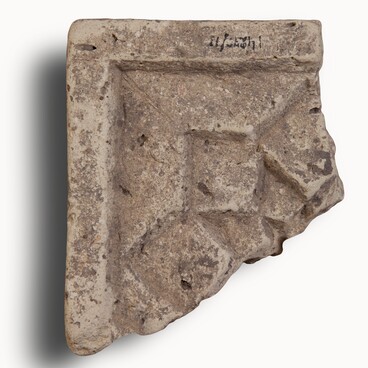
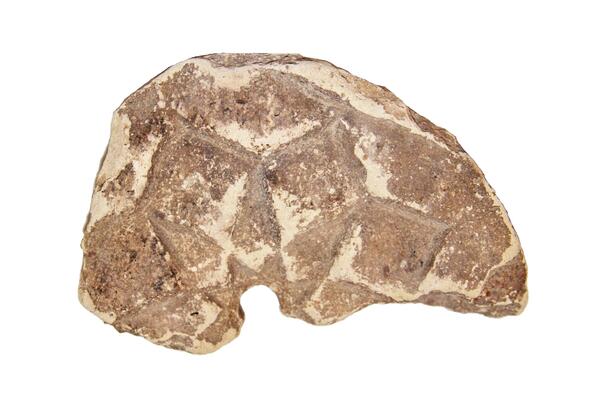
In the excavated area, researchers found a variety of architectural fragments, including those made of ganch. It was known since the first centuries AD as a material used for plastering, volumetric and plastic decorations (carvings, lattices, and sculptures). Wet ganch was easy to carve and allowed for a variety of low and high reliefs.
The surface of the carvings on ganch was white and matt. The dried layer of ganch served as a base for painting. This material was well known to builders and architects both in Central Asia and the Golden Horde. It was obtained by firing the raw material, which contained gypsum and clay. Archaeologists often find this building material during excavations in the Astrakhan and Volgograd regions.
For example, in 2014 the Volgo-Akhtubinsk archaeological expedition of Volgograd State Social and Pedagogical University carried out exploratory excavations of the Vodyanskoye settlement in the vicinity of Dubovka, Volgograd Region. Archaeologists found carved ganch tiles used to decorate external walls. 90% of the finds consisted of decorative elements — carved ganch and mosaic tiles.
This item from the collection of the Volgograd Regional Museum of Local History was created as a decoration in the 13th or 14th century. The surface clearly shows a geometric pattern that makes up a composition of several rhombuses.
Earlier discoveries on the territory of today’s Volgograd Region include the Kolobovsky burial mound, known since 1773; the Tsarevskoe ancient settlement, a 14th century archaeological monument, which has been studied since the 19th century; and the Zubovka ancient settlement, discovered by researchers in the same historical period.
In the excavated area, researchers found a variety of architectural fragments, including those made of ganch. It was known since the first centuries AD as a material used for plastering, volumetric and plastic decorations (carvings, lattices, and sculptures). Wet ganch was easy to carve and allowed for a variety of low and high reliefs.
The surface of the carvings on ganch was white and matt. The dried layer of ganch served as a base for painting. This material was well known to builders and architects both in Central Asia and the Golden Horde. It was obtained by firing the raw material, which contained gypsum and clay. Archaeologists often find this building material during excavations in the Astrakhan and Volgograd regions.
For example, in 2014 the Volgo-Akhtubinsk archaeological expedition of Volgograd State Social and Pedagogical University carried out exploratory excavations of the Vodyanskoye settlement in the vicinity of Dubovka, Volgograd Region. Archaeologists found carved ganch tiles used to decorate external walls. 90% of the finds consisted of decorative elements — carved ganch and mosaic tiles.
This item from the collection of the Volgograd Regional Museum of Local History was created as a decoration in the 13th or 14th century. The surface clearly shows a geometric pattern that makes up a composition of several rhombuses.