People began steaming food as early as the Neolithic era.
The first to come up with such a method of cooking were the Chinese. Initially, people simply placed rice or fish on rocks near natural hot springs, and after a while the food acquired a different taste. This method was not very convenient, and soon in China, a device was invented to steam food regardless of the location of hot springs.
Special clay vessels with double walls were invented, in which food was kept separate from the liquid. A small pot was placed on a tripod in the outer chamber, which was filled with water. The food was placed inside the pot. After that, the vessel was covered with a lid and a fire was lit underneath.
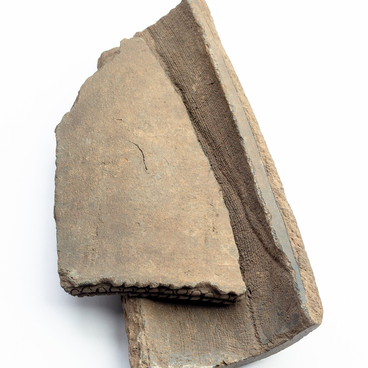
During excavations, archaeologists have found fragments of such vessels, dating back more than five thousand years.
For these purposes, the Chinese also used bamboo baskets, which were placed over a pan with a thick, convex bottom, and consisted of several tiers. Water was poured into the pan, and finely chopped food was put in baskets. The design of the pan made it easy to increase the number of baskets and add water if necessary.
Similar baskets are still in use today, though their design has been modernized. Whereas metal was once expensive and baskets were mainly woven from bamboo or reeds, now metal wire is used for durability.
Koreans also had a similar device for steaming food. It was called a “siru.” Unlike the Chinese, who used bamboo and clay bowls, the Koreans preferred bronze. Therefore, the classic Korean siru was a bronze bowl with holes punched in the bottom.
Although the steamer had been known in Asia for
many millennia, it appeared in Europe only in the 17th century. In 1679, it was
created by the French mathematician and naturalist Denis Papin, who was
interested in the physics of steam engines and sought to develop his own motor
design. It later became clear that this device not only reduced cooking time
but also better preserved the vitamins and nutrients in food.