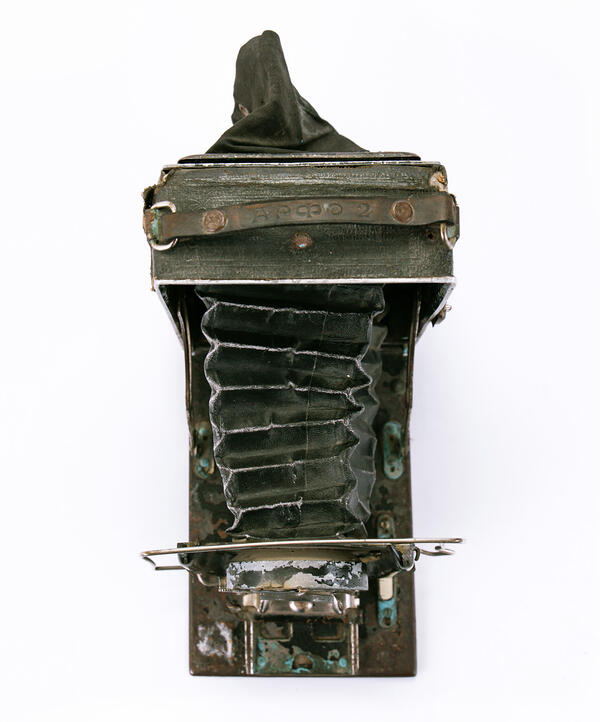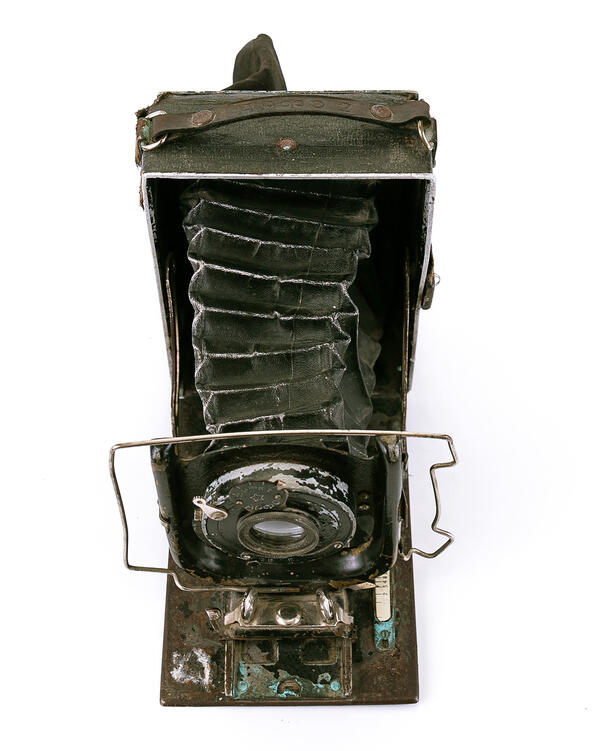


The Foto-Trud artel was known until 1933 as the Foto-Trud Manufacturing and Cooperative Partnership (EFTE). It was here that the first Soviet cameras were produced. They were folding amateur cameras 9 by 12 cm with a Vario shutter and a Kenngott lens. After restrictions on the import of parts from abroad were introduced, the artel set up their own production, and in 1931 the first camera created entirely from locally-made components entered the market.
By 1933, the artel had grown into a factory that also produced related products. An independent artel that was engaged in the production of cameras called “ARFO” was established. The cameras they produced were namesakes of the artel.
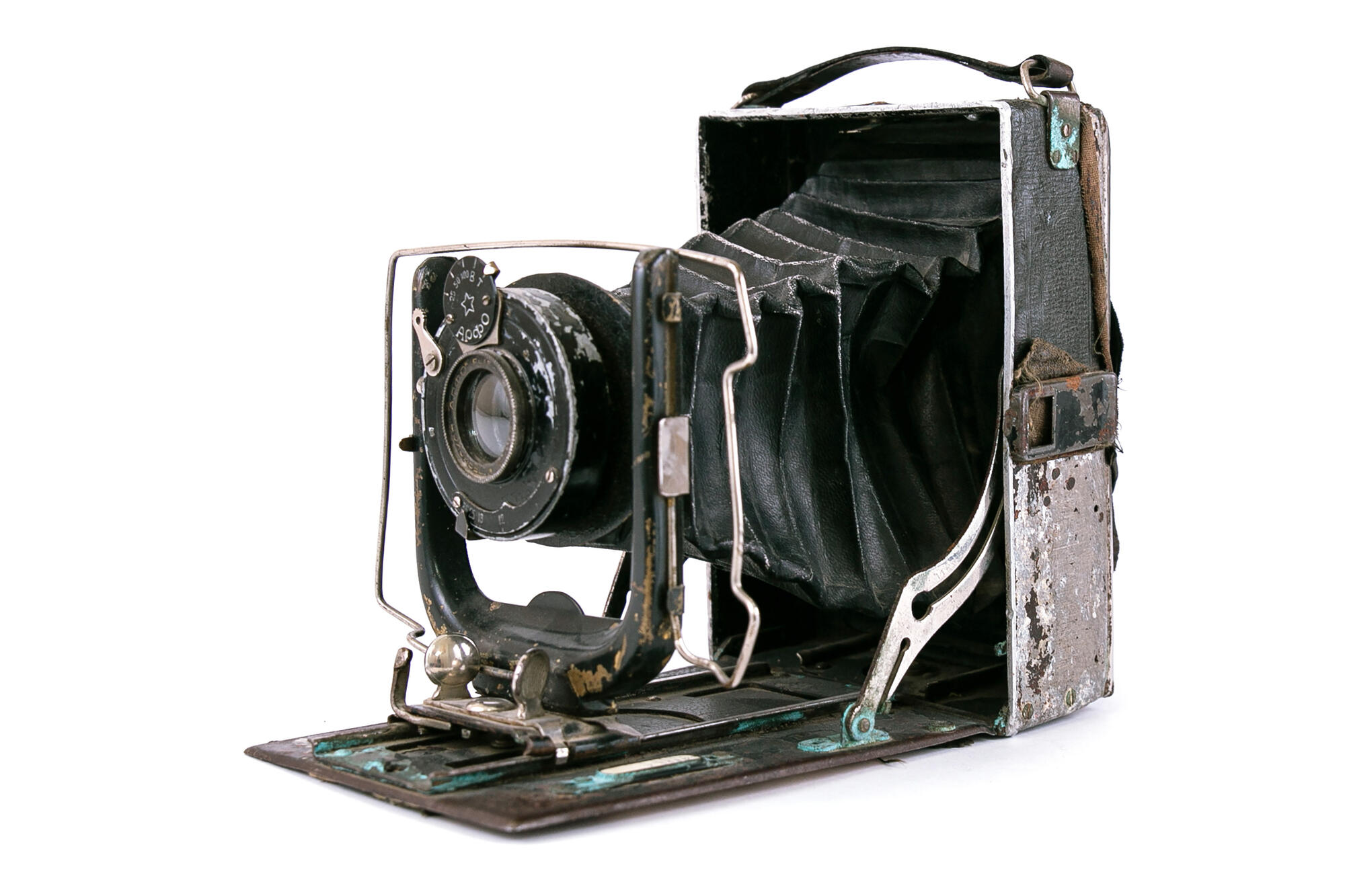
The ARFO camera received a new lens, a double extension bellows and a lens decenter device for correcting trapezoidal distortions. From 1933 to 1938, five models with similar designs were released: “ARFO”, “ARFO-2”, “ARFO-2A”, “ARFO-3” and “ARFO-4”.
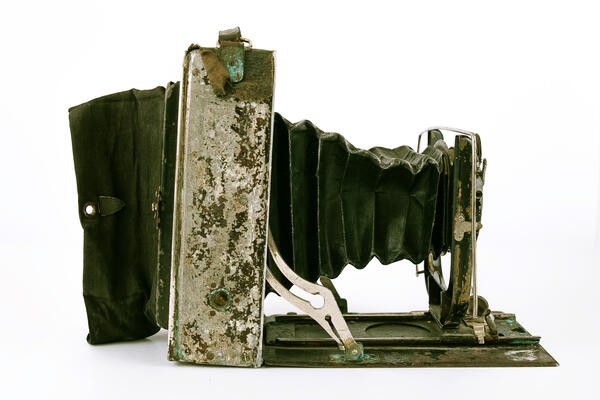
All devices of the family were folding-type cameras that shot on photographic plates, designed for the 9 by 12 format. The front wall is hinged, with runners for moving the lens rack with bellows; the viewfinder is a folding frame. The ARFO anastigmatic lens and central shutters were proprietary. Photographic plates were installed in a removable cassette, which was used as the capture medium.
To bring the device into working position, the photographer pressed a button in the upper part of the case, and the lens cover was tilted down. With the help of special plates, the lens was pulled forward along the runners on the lid. By moving the chrome lever located at the bottom of the device, the distance to the object was with reference to the scale on the left and the sharpness was adjusted using ground glass. The protective plate of the pre-inserted cassette was pushed up. The photographer cocked the shutter, set the shutter speed (on the scale above) and the aperture (below). All that was left to do is aim through the folding window and frame and press the shutter. After the picture was taken, the protective plate moved into the cassette and could be changed.
Once the person was done
making photos, the lens moved all the way back, the lid folded when pressed on
the two side levers, which was signaled by a clicking sound. When folded, the
ARFO-2, along with a stock of cassettes, could fit into a fairly small case.