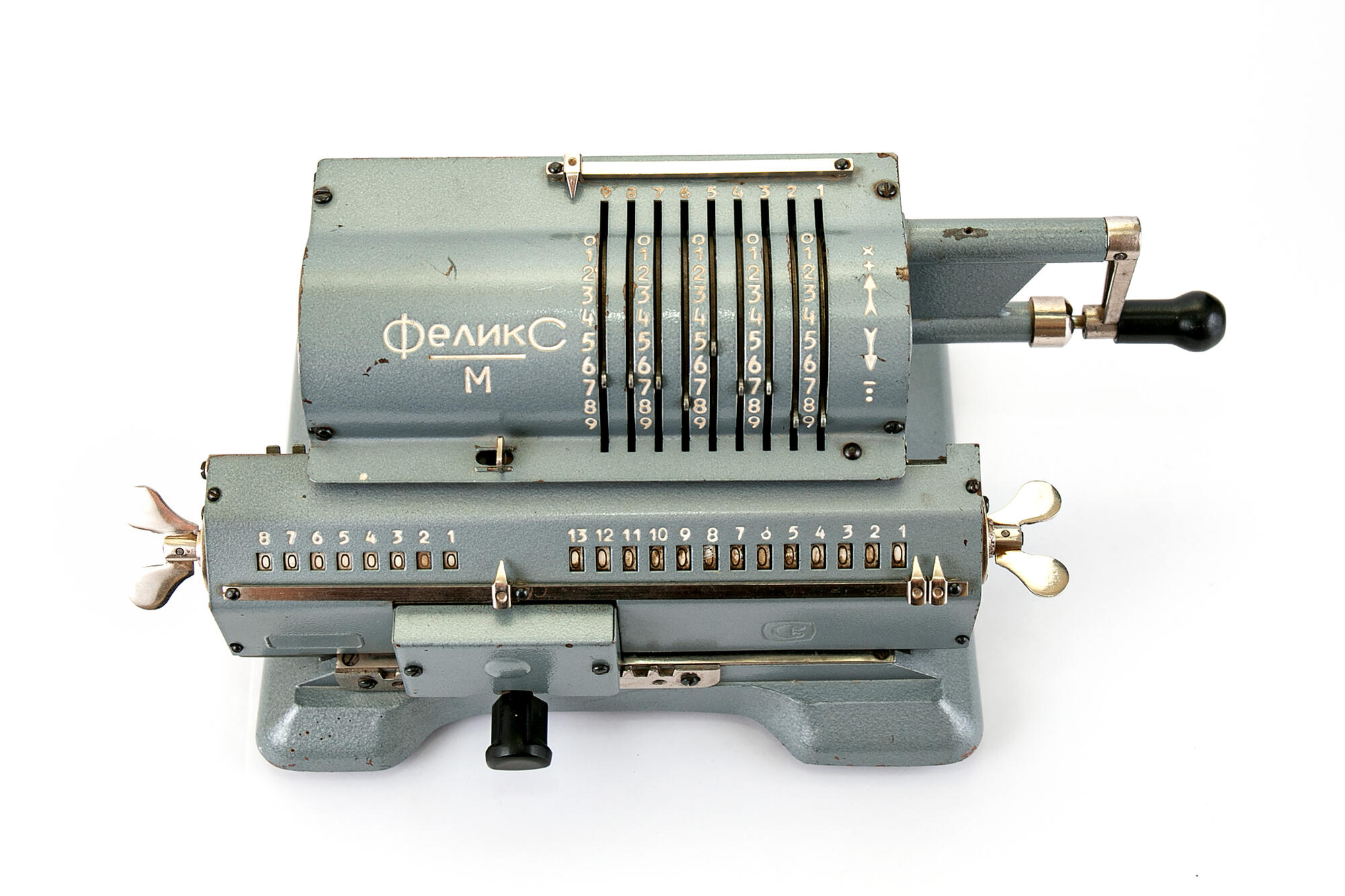


Mechanical calculating machines appeared in Europe as early as the 17th century: in 1623, Wilhelm Schickard invented the so-called “counting clock” (its mechanism of gears and sprockets resembled a clock); in 1642, Blaise Pascal created the Pascal calculator or Pascaline. From 1673, thanks to the invention of Gottfried Wilhelm Leibniz, the stepped drum or Leibniz wheel was implemented in such devices.
In 1821, the Parisian inventor Charles Xavier Thomas de Colmar launched the first mass-produced arithmometer. These machines could perform four basic arithmetic operations but were very bulky: each radix corresponded to a separate stepped drum (the Leibniz wheel). In 1873, on the basis of the Thomas calculating machine, the Russian mechanic of Swedish origin Wilgodt Theophil Odhner created a new kind of counting machine.
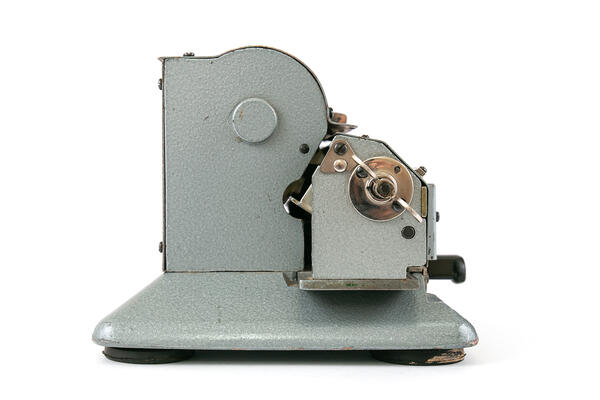
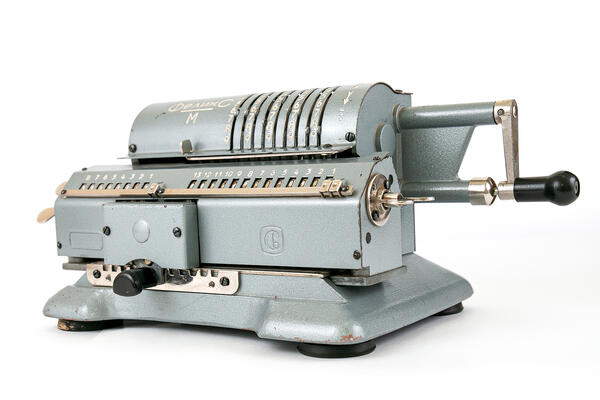
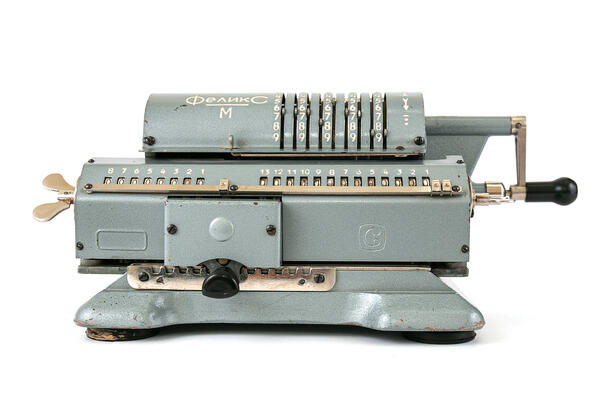
Having patented this device, Odhner launched factory production of the arithmometer in St. Petersburg, and then in Germany (under the brand name Brunsviga). After the nationalization of industry by the Soviet government, the heirs of the owner moved the company to Sweden. Since then, the release of the arithmometer continued in Sweden under the name “Original-Odhner”, and in Moscow its clone was produced under the name “Felix” after Felix Dzerzhinsky.
In his machine, Odhner replaced the rollers with small rotating pinwheel disks. The pins were extended or shortened by turning side levers. Thanks to its simple design, the device was very robust and, as it was completely manually operated, errors in results were excluded.
The Felix arithmometer was especially popular in the 1960s. It was a rather expensive (10–13 rubles), heavy (about 3.5 kilograms) and noisy but reliable device. From 1929 to 1978, several million pieces were produced in more than 20 variations. Besides addition, subtraction, division and multiplication, it was capable of calculating percentages and square root extractions. Operating the arithmometer was taught at school.
Arithmetic operations were performed by means of single or multiple rotations of the handle. The device was intended only for working with positive numbers. In case of overflow or negative number in the result, the device made a ringing sound indicating that it was required to undo the previous operation by turning the handle in the opposite direction.
In the USSR, mass production of
calculators began in the 1980s, and arithmometers became collector items.