The first “chocolatiers” in the world were the Aztecs and the Maya. About 3,000 years ago, they learned how to make a bitter, spicy tonic drink from ground roasted cocoa beans with the addition of hot pepper. It was meant to be drunk cold. The drink was called “chocolatl” which is translated as “bitter water”. According to Aztec beliefs, cocoa fruit give strength and wisdom to those who eat them.
In the 1520s, Hernan Cortes introduced this marvelous product in Europe. A century later, chocolate, already sweet and hot, became a well-known dessert among the rich. Other customers were unable to afford it for a long time due to the high cost of raw materials.
In 1828, the Dutch inventor Coenraad Johannes van Houten patented a method for extracting butter from grated cocoa beans. This opened up new opportunities for confectioners: from now on, chocolate could be both drunk and eaten. It is believed that the first bar of hard dark chocolate appeared in France, created by confectioner Jean Pietre.
In 1866, the English company “Fry and Sons” took up the production of molded chocolate. Milk chocolate appeared in 1875 thanks to the Swiss Daniel Peter. He was the one who, after a series of experiments, managed to mix cocoa powder, cocoa butter and milk powder in the right proportion. The first conched chocolate appeared in 1879, also in Switzerland invented by Rudolf Lindt.
Having mastered the technology of making chocolate, confectioners realized what a treasure they got. The chocolate mass went well with various additives: nuts, candied fruits, dried fruit, caramel, and cream. Its plasticity and durability made it possible to create not only chocolate bars or classic candies, but also all kinds of shapes. Easter eggs were the first example of this kind.
In Russia, drinking chocolate was introduced in the 18th century. Unlike bitter coffee, this sweet drink quickly gained recognition. It was served both in the living rooms of the nobility and in public pastry shops.
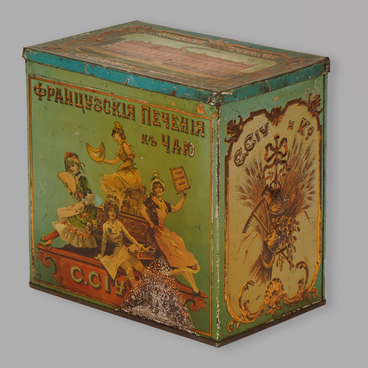
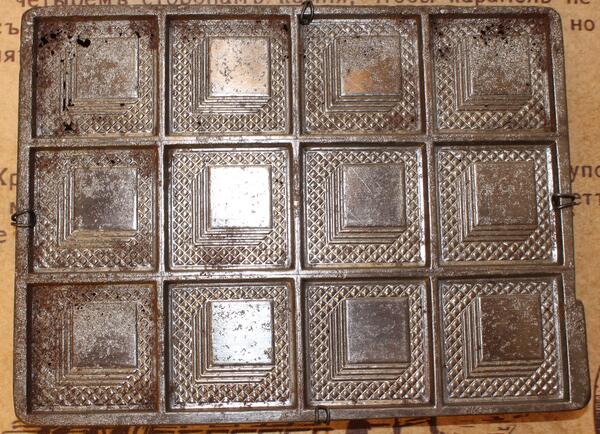
The “Einem”, “Georges Bormann”, “Eliseev Brothers” and others confectionery associations set up special workshops where chocolate of all varieties and tastes was made. For the chocolate mass, square, round and rectangular molds with four, eight, twelve, sixteen or thirty-two cells were usually used. An image was often applied to the bottom of the cells. It could be an ornament, a drawing, or the manufacturer’s name.
In the 1520s, Hernan Cortes introduced this marvelous product in Europe. A century later, chocolate, already sweet and hot, became a well-known dessert among the rich. Other customers were unable to afford it for a long time due to the high cost of raw materials.
In 1828, the Dutch inventor Coenraad Johannes van Houten patented a method for extracting butter from grated cocoa beans. This opened up new opportunities for confectioners: from now on, chocolate could be both drunk and eaten. It is believed that the first bar of hard dark chocolate appeared in France, created by confectioner Jean Pietre.
In 1866, the English company “Fry and Sons” took up the production of molded chocolate. Milk chocolate appeared in 1875 thanks to the Swiss Daniel Peter. He was the one who, after a series of experiments, managed to mix cocoa powder, cocoa butter and milk powder in the right proportion. The first conched chocolate appeared in 1879, also in Switzerland invented by Rudolf Lindt.
Having mastered the technology of making chocolate, confectioners realized what a treasure they got. The chocolate mass went well with various additives: nuts, candied fruits, dried fruit, caramel, and cream. Its plasticity and durability made it possible to create not only chocolate bars or classic candies, but also all kinds of shapes. Easter eggs were the first example of this kind.
In Russia, drinking chocolate was introduced in the 18th century. Unlike bitter coffee, this sweet drink quickly gained recognition. It was served both in the living rooms of the nobility and in public pastry shops.
The “Einem”, “Georges Bormann”, “Eliseev Brothers” and others confectionery associations set up special workshops where chocolate of all varieties and tastes was made. For the chocolate mass, square, round and rectangular molds with four, eight, twelve, sixteen or thirty-two cells were usually used. An image was often applied to the bottom of the cells. It could be an ornament, a drawing, or the manufacturer’s name.