

Once upon a time, the World Organisation of Chefs’ Societies conducted a survey to identify popular brands of cakes. “Napoleon” won the first place among the favorites. In Italy and France, this cake is called mille-feuilles — “thousand layers”, in England — vanilla slice or cream slice, in Hungary — “royal French cream” (Királyi francia krémes).
The history of this cake probably dates back to the 17th century. It was then that confectioners began to make puff pastry. It was invented by Claudius Gele. In 1645, as he was preparing a meal for his sick father, he rolled and folded the dough several times, putting pieces of butter between the layers. The resulting multi-layered bread can be considered the ancestor of Napoleon.
In 1733, “The Modern Chef” was published by Vincent La Chapelle, a French chef working in England. In the book, for the first time, the term “thousand-layer cake” appears, but instead of cream, layers are to be coated with jam and marmalade. That is how, with jam, it was recommended to cook this cake throughout the 19th century.
The original version with Bavarian cream was proposed in 1876 by another French confectioner, Urbain Dubois. It is believed that layered cream cakes were served in the 18th century at the court of Louis XV.
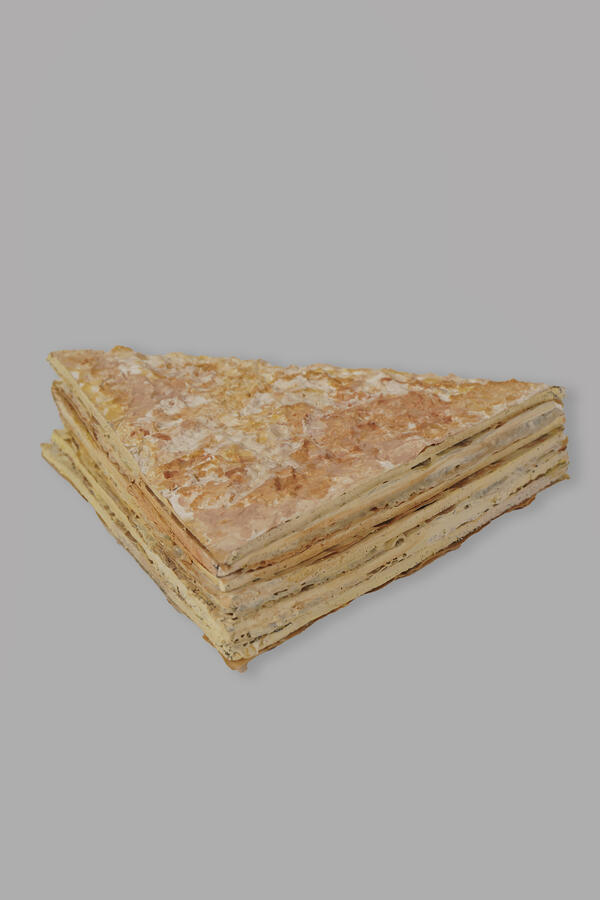
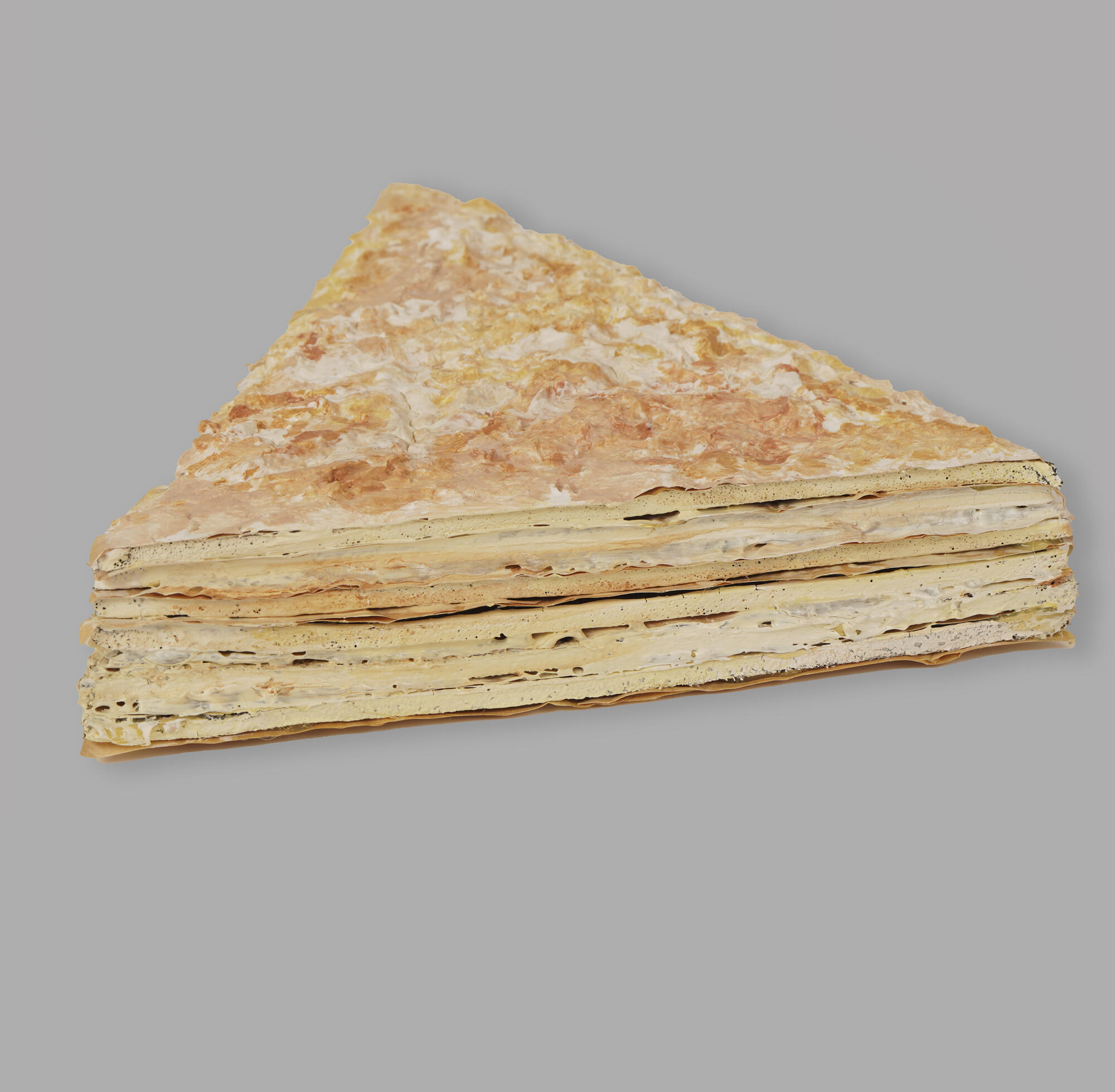
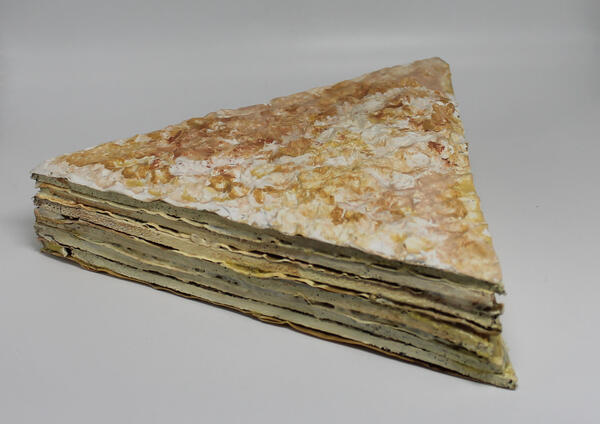
In Russia, “French” puff pastries have been known since the beginning of the 19th century. Some historians believe that the cake was invented in Italy. Initially, it was called “Neapolitan”, but in Russia it received a more familiar name — “Napoleon cake”. The most famous version says that in 1912, on the centenary of the victory over Bonaparte, confectioners in Russia made small puff pastries. Their triangular shape symbolized the French emperor’s tricorne, and the crumb symbolized the snow, which had stopped the “invincible army”. Today the Napoleon cake is usually made rectangular.
Different countries have their own secrets of preparing this dessert. In Lithuania it is made with apricot jam, the English version consists of two layers of dough and a thick layer of filling. In Italy, not only sweet “Napoleon cake” is prepared, but it can also be stuffed with cheese, spinach and pesto.
According to the classic Russian recipe, unsweetened dough must be rolled several times, folded and rolled again. For the layer use butter or custard. The finished cake is sprinkled with biscuit crumbs and powdered sugar. There are even recommendations on how to bake a “Napoleon” cake in a pan.
The history of this cake probably dates back to the 17th century. It was then that confectioners began to make puff pastry. It was invented by Claudius Gele. In 1645, as he was preparing a meal for his sick father, he rolled and folded the dough several times, putting pieces of butter between the layers. The resulting multi-layered bread can be considered the ancestor of Napoleon.
In 1733, “The Modern Chef” was published by Vincent La Chapelle, a French chef working in England. In the book, for the first time, the term “thousand-layer cake” appears, but instead of cream, layers are to be coated with jam and marmalade. That is how, with jam, it was recommended to cook this cake throughout the 19th century.
The original version with Bavarian cream was proposed in 1876 by another French confectioner, Urbain Dubois. It is believed that layered cream cakes were served in the 18th century at the court of Louis XV.
In Russia, “French” puff pastries have been known since the beginning of the 19th century. Some historians believe that the cake was invented in Italy. Initially, it was called “Neapolitan”, but in Russia it received a more familiar name — “Napoleon cake”. The most famous version says that in 1912, on the centenary of the victory over Bonaparte, confectioners in Russia made small puff pastries. Their triangular shape symbolized the French emperor’s tricorne, and the crumb symbolized the snow, which had stopped the “invincible army”. Today the Napoleon cake is usually made rectangular.
Different countries have their own secrets of preparing this dessert. In Lithuania it is made with apricot jam, the English version consists of two layers of dough and a thick layer of filling. In Italy, not only sweet “Napoleon cake” is prepared, but it can also be stuffed with cheese, spinach and pesto.
According to the classic Russian recipe, unsweetened dough must be rolled several times, folded and rolled again. For the layer use butter or custard. The finished cake is sprinkled with biscuit crumbs and powdered sugar. There are even recommendations on how to bake a “Napoleon” cake in a pan.