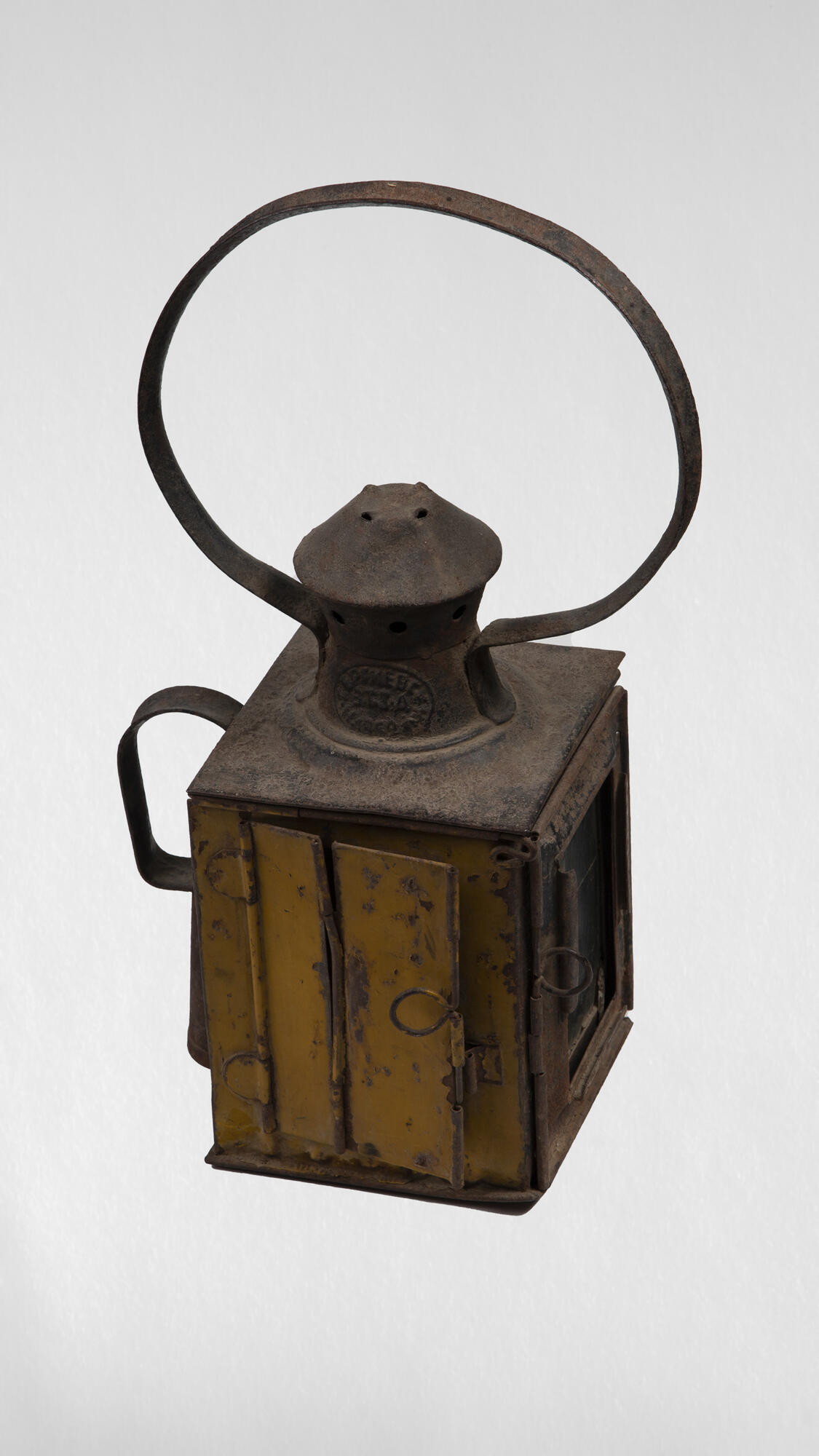


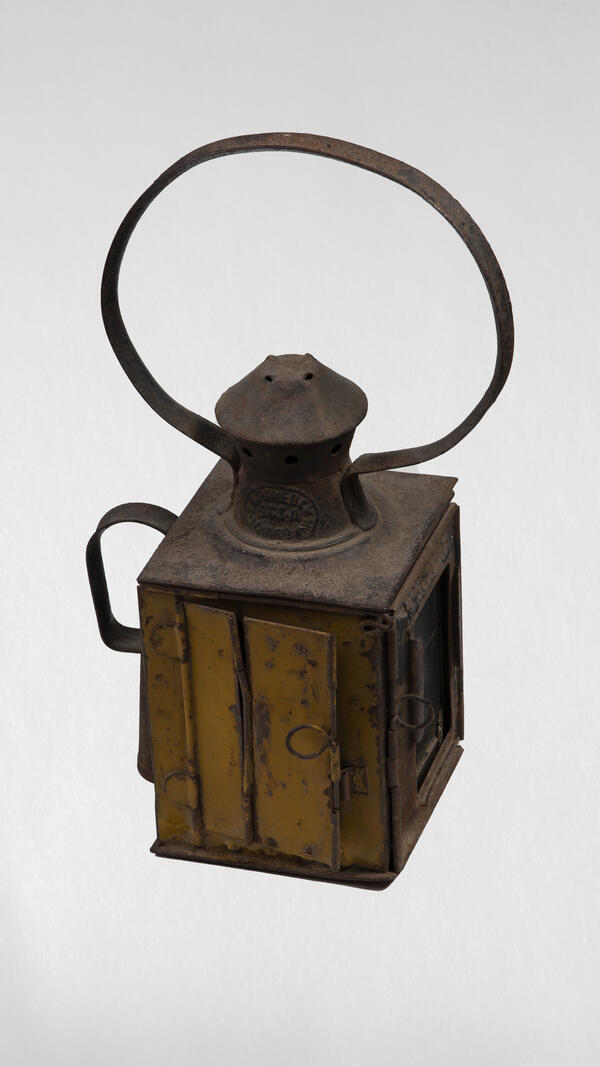
The village of Zimovniki appeared at the end of the 20th century, when the Tikhoretskaya–Tsaritsyn railway line was built there. The local railway workers had many auxiliary items, including railway lanterns. One of them is housed now in the collection of the Zimovniki Museum of Local History.
For the first lamps, candles or oil were used, so their light was not as bright. The main part of the railway lantern was made of tin, and a stearin candle was put inside. It was harder than a paraffin candle, burnt brighter and longer. On average, its burning time was up to 7.5 hours.
There were also railway gas lanterns. They could continuously operate for up to 36 hours, after which they had to be refueled again. To provide railway services with gas, special industrial factories were built next to the railway. Later, people began to use kerosene. It burnt much more intensely and gave more light. By the beginning of the 19th century, kerosene was used for lanterns, and then it was replaced by electricity.
Railway lanterns not only lit the railway tracks. Locomotive drivers, conductors, and workers who serviced the railway tracks gave signals to each other with the help of the lanterns.
The Tikhoretskaya–Tsaritsyn railway line was officially opened on July 1, 1899. Settlements began to appear around the railway stations. There lived the workers servicing the site with their families. Cabins, pumping plants, barracks, guardhouses, and residential barracks were built along the railway track.
The railway station in the village of Zimovniki was originally called Kalmytskaya; it was renamed only in 1904. The name comes from the term “zimovnik”. It was a temporary settlement for cattle breeders that was located in the vicinity. A fair was held nearby, cattle were sold there. The purchased cattle were sent to customers by rail.
Zimovniki grew rapidly. By 1907, there were 349 homesteads at the khutor and 1,342 people lived there. In the 1910s, the first parochial school as well as a cinema where silent films were shown were built in the village.
For the first lamps, candles or oil were used, so their light was not as bright. The main part of the railway lantern was made of tin, and a stearin candle was put inside. It was harder than a paraffin candle, burnt brighter and longer. On average, its burning time was up to 7.5 hours.
There were also railway gas lanterns. They could continuously operate for up to 36 hours, after which they had to be refueled again. To provide railway services with gas, special industrial factories were built next to the railway. Later, people began to use kerosene. It burnt much more intensely and gave more light. By the beginning of the 19th century, kerosene was used for lanterns, and then it was replaced by electricity.
Railway lanterns not only lit the railway tracks. Locomotive drivers, conductors, and workers who serviced the railway tracks gave signals to each other with the help of the lanterns.
The Tikhoretskaya–Tsaritsyn railway line was officially opened on July 1, 1899. Settlements began to appear around the railway stations. There lived the workers servicing the site with their families. Cabins, pumping plants, barracks, guardhouses, and residential barracks were built along the railway track.
The railway station in the village of Zimovniki was originally called Kalmytskaya; it was renamed only in 1904. The name comes from the term “zimovnik”. It was a temporary settlement for cattle breeders that was located in the vicinity. A fair was held nearby, cattle were sold there. The purchased cattle were sent to customers by rail.
Zimovniki grew rapidly. By 1907, there were 349 homesteads at the khutor and 1,342 people lived there. In the 1910s, the first parochial school as well as a cinema where silent films were shown were built in the village.