


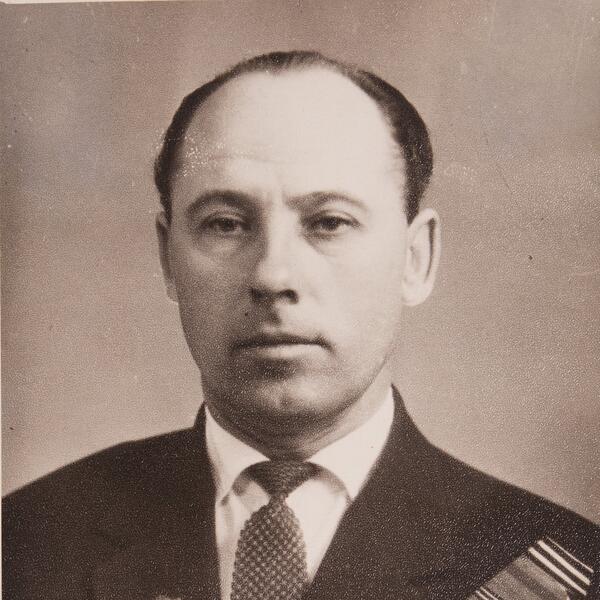
The photograph depicts Pyotr Gulyev — the Commander of the 98th Guards Separate Reconnaissance Company, a retired captain, and a full cavalier of the Order of Glory. There are state decorations on his chest: the Order of the Red Star, the Order of the Patriotic War, the Order of the Red Banner of Labor, three Orders of Glory, the Medal for Courage, the Medal for the Capture of Berlin, the Medal for the Liberation of Prague, and others.
Pyotr Gulyev was born in 1925 in the village of Blagoveshchenskoye, Kalachinsky District of Omsk Oblast. When he was five, his parents moved to Rostov Oblast and settled in Zimovniki village. Pyotr Gulyev finished school and went to work in the workshop where he repaired military equipment.
In January 1943, Pyotr Gulyev was called up to the Red Army, and six months later he went to the front. As a young soldier, he fought on the Mius River. Soviet troops were attacking German fortified positions known as the Mius-Front. During the battles for the Savur-Mohyla height on the territory of modern Donetsk Oblast, Pyotr Gulyev was wounded and sent to hospital. After the treatment, he was assigned to the 98th Reconnaissance Company, and served through the entire war, as a member of this unit.
Pyotr Gulyev received his first award, the Third class Order of Glory, in June 1944, when he was nineteen years old. Then he participated in the defeat of the headquarters of enemy troops near the village of Gustaya Dubrova. The reconnoiterers captured a German staff officer and found a map of minefields in his possession.
A month later, near the city of Wyszków in Poland, Pyotr Gulyev and a group of soldiers found out where the German artillery was located and passed this information to the Soviet troops. The enemy’s weapons were destroyed. During the battle, Pyotr Gulyev personally disarmed a German machine-gun detachment, and received the Second class Order of Glory for that.
In January 1945, the unit, in which Pyotr Gulyev fought, was located near the village of Kishen. Before the attack, the reconnoiterer checked the location of enemy positions, and found out how to bypass their engineering barriers. This battle brought Pyotr Gulyev the First class Order of Glory. He became a full cavalier of this award.
The war ended for Captain Pyotr Gulyev in Prague. He was demobilized in 1946 and returned to Zimovniki. Now one of the streets of the village bears the reconnoiterer’s name.
Pyotr Gulyev was born in 1925 in the village of Blagoveshchenskoye, Kalachinsky District of Omsk Oblast. When he was five, his parents moved to Rostov Oblast and settled in Zimovniki village. Pyotr Gulyev finished school and went to work in the workshop where he repaired military equipment.
In January 1943, Pyotr Gulyev was called up to the Red Army, and six months later he went to the front. As a young soldier, he fought on the Mius River. Soviet troops were attacking German fortified positions known as the Mius-Front. During the battles for the Savur-Mohyla height on the territory of modern Donetsk Oblast, Pyotr Gulyev was wounded and sent to hospital. After the treatment, he was assigned to the 98th Reconnaissance Company, and served through the entire war, as a member of this unit.
Pyotr Gulyev received his first award, the Third class Order of Glory, in June 1944, when he was nineteen years old. Then he participated in the defeat of the headquarters of enemy troops near the village of Gustaya Dubrova. The reconnoiterers captured a German staff officer and found a map of minefields in his possession.
A month later, near the city of Wyszków in Poland, Pyotr Gulyev and a group of soldiers found out where the German artillery was located and passed this information to the Soviet troops. The enemy’s weapons were destroyed. During the battle, Pyotr Gulyev personally disarmed a German machine-gun detachment, and received the Second class Order of Glory for that.
In January 1945, the unit, in which Pyotr Gulyev fought, was located near the village of Kishen. Before the attack, the reconnoiterer checked the location of enemy positions, and found out how to bypass their engineering barriers. This battle brought Pyotr Gulyev the First class Order of Glory. He became a full cavalier of this award.
The war ended for Captain Pyotr Gulyev in Prague. He was demobilized in 1946 and returned to Zimovniki. Now one of the streets of the village bears the reconnoiterer’s name.


