In the late 19th century, the pump organ, or harmonium, became widespread in middle- and upper-class households among music enthusiasts. In everyday speech and in the press of the time, the instrument was often simply called an “organ”, although it is a distinct instrument from the pipe organ. While today the harmonium is extremely rare, it was once a common fixture in many cultured homes across Europe and Russia.
It is believed that the harmonium’s origins trace back to the 1810s, although the first patent for such an instrument was granted only in 1840 to the French inventor Alexandre-François Debain. He patented it under the name “harmonium”. The instrument resembled a small piano or a large cabinet harmonica. Inside its case were metal reeds of varying lengths, which vibrated when air flowed through them via a system of metal strips. Air was supplied by two foot pedals, operated alternately to maintain a continuous sound.
The harmonium is known for its gentle, warm, and remarkably expressive timbre. A significant repertoire — ranging from sacred music to salon pieces — was composed specifically for it. Today, such instruments can be seen in museums, including the Unecha Local Lore Museum.
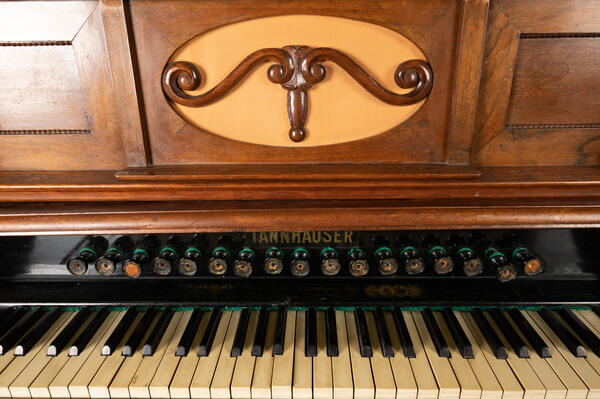
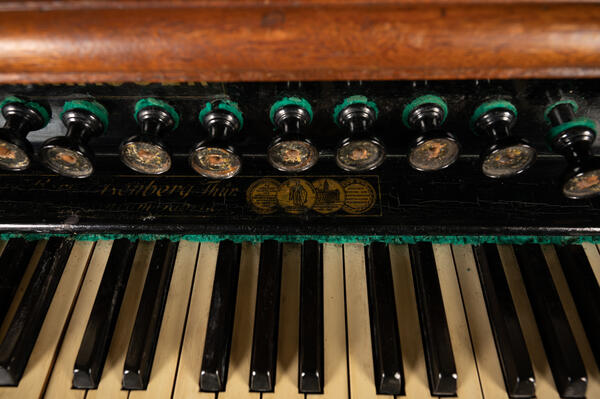
The harmonium on display was manufactured in 1903 by the German firm “Tannhäuser”. After the Soviet victory in the Great Patriotic War in 1945, it was brought to Unecha from Berlin as a war trophy by Soviet officer Zaitsev. However, the instrument was never used for its intended musical purpose; for many years, it served merely as a decorative piece of furniture. In the 1980s, deemed obsolete, it was moved to a barn. There it was rediscovered by a local history enthusiast, Ivan Yefimovich Kolbas. Recognizing its historical value, he purchased the harmonium from Zaitsev’s heirs for fifty rubles (a considerable sum at the time) and later donated it to the museum.
Today, harmoniums are produced only in very limited quantities, primarily for collectors, restorers, and specialists. The instrument remains valued by professional organists as a practical tool for rehearsing, studying new repertoire, and developing coordination between hands and feet. The harmonium thus holds a well-deserved place in the history of musical instruments.