#3
#9
#2
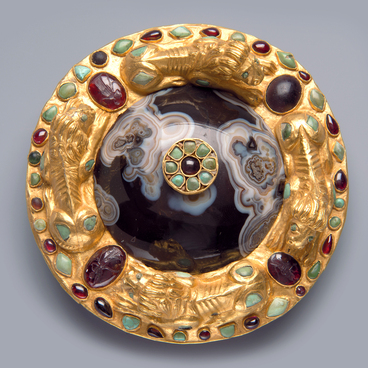
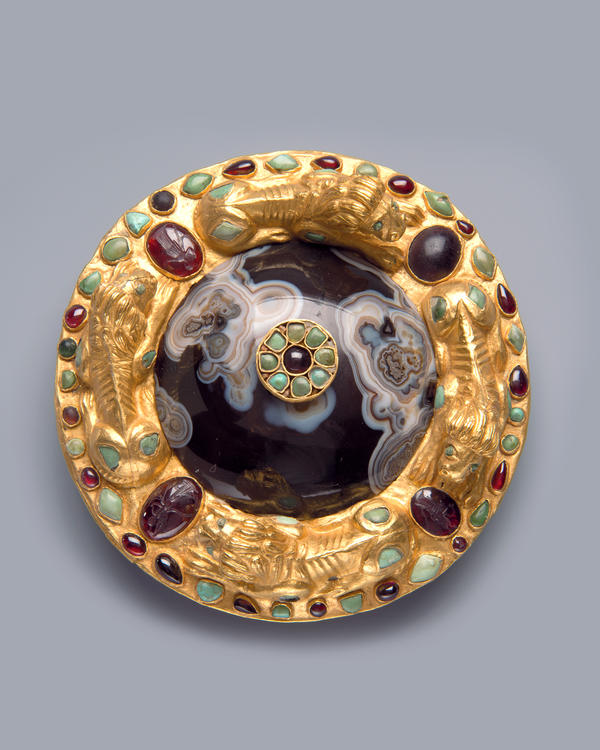
The two large round phalerae — horse harness decorations — were found on the outskirts of the city of Azov, in the burial ground of Dachi in 1986. Objects of this type would be fastened up in the area of the horse’s shoulder joints. However, there are no signs of wear on these burial phalerae. That means that they were used in ritual acts. The massive decorations should be attributed to the Bosporus jewellery tradition, which in that era was based on new oriental trends.
Each phalera is decorated with a relief ornament and inlay. In its central part is placed a patterned agate, attached to the bronze base with a through pin. On top of the stone is a gold medallion in the form of a rosette, which is decorated with a central rounded insert of almandine — a type of garnet of red or red-violet hue. There are turquoise beads in roundish bezels around it. The gaps between the bezels are filled with small inserts of pink coral.Each phalera is decorated with a relief ornament and inlay. In its central part is placed a patterned agate, attached to the bronze base with a through pin. On top of the stone is a gold medallion in the form of a rosette, which is decorated with a central rounded insert of almandine — a type of garnet of red or red-violet hue. There are turquoise beads in roundish bezels around it. The gaps between the bezels are filled with small inserts of pink coral.
The agate is surrounded by an ornamental composition — it is made on a gold leaf, which is fixed on a bronze base. It consists of four relief figures — lions lying one after another. The turquoise inlays emphasize the muscles of the hips and shoulders. Between the lions in the oval bezels are three almandine and one glass beads set in gold. The outer edge of the phalera is framed by a border of small turquoise, almandine and glass inserts of various shapes. The agate is surrounded by an ornamental composition — it is made on a gold leaf, which is fixed on a bronze base. It consists of four relief figures — lions lying one after another. The turquoise inlays emphasize the muscles of the hips and shoulders. Between the lions in the oval bezels are three almandine and one glass beads set in gold. The outer edge of the phalera is framed by a border of small turquoise, almandine and glass inserts of various shapes.
The garnets are decorated with images made in the intaglio technique — carving with an incised image. On the large oval inserts, the artist carved female figures, on the small one — a trefoil. All bezels, with the exception of those on the lion figures, are soldered separately.
During the restoration, it turned out that the patterns on the central agate inserts were identical. In other words, to make the decorations, the artist used one mineral, which he sawed into two parts. Each phalera is made of eight gold leaves, each lion figurine — of two. The soldering areas are covered with stone inserts. The back of each phalera has three extant loops for attaching harness reins.
The garnets are decorated with images made in the intaglio technique — carving with an incised image. On the large oval inserts, the artist carved female figures, on the small one — a trefoil. All bezels, with the exception of those on the lion figures, are soldered separately.
During the restoration, it turned out that the patterns on the central agate inserts were identical. In other words, to make the decorations, the artist used one mineral, which he sawed into two parts. Each phalera is made of eight gold leaves, each lion figurine — of two. The soldering areas are covered with stone inserts. The back of each phalera has three extant loops for attaching harness reins.
The garnets are decorated with images made in the intaglio technique — carving with an incised image. On the large oval inserts, the artist carved female figures, on the small one — a trefoil. All bezels, with the exception of those on the lion figures, are soldered separately.
During the restoration, it turned out that the patterns on the central agate inserts were identical. In other words, to make the decorations, the artist used one mineral, which he sawed into two parts. Each phalera is made of eight gold leaves, each lion figurine — of two. The soldering areas are covered with stone inserts. The back of each phalera has three extant loops for attaching harness reins.
#6
Full name: Paired horse harness phalera
Date: last quarter of the 1st century CE
Technique: gold, bronze, agate, turquoise, glass, garnet (almandine), chasing, inlaying, soldering, polishing
Dimensions: Diameter 13.7 cm. Overall height 4.5 cm. Agate diameter 8 cm
Collection: Azov Historical-Archaeological and Paleontological Museum-Reserve
Copyright: Azov Historical-Archaeological and Paleontological Museum-Reserve
Date: last quarter of the 1st century CE
Technique: gold, bronze, agate, turquoise, glass, garnet (almandine), chasing, inlaying, soldering, polishing
Dimensions: Diameter 13.7 cm. Overall height 4.5 cm. Agate diameter 8 cm
Collection: Azov Historical-Archaeological and Paleontological Museum-Reserve
Copyright: Azov Historical-Archaeological and Paleontological Museum-Reserve
#4
Pectoral phalera
#8
#5
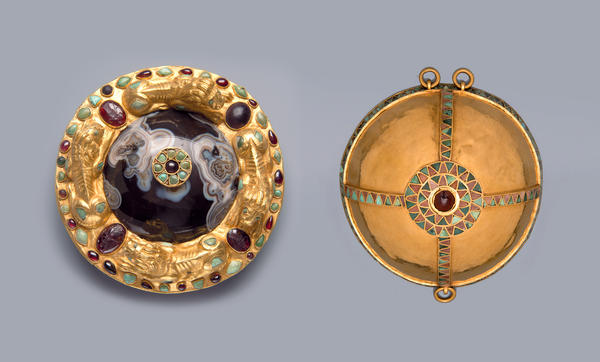
This phalera is an element of a horse harness, used to fixate and apportion leather belts. Similar metallic plates originally appeared on the helms and armor of warriors, and they later appeared on harnesses. Noble Sarmatians used phaleras to decorate their harnesses, which demonstrated the owner’s nobility and wealth.
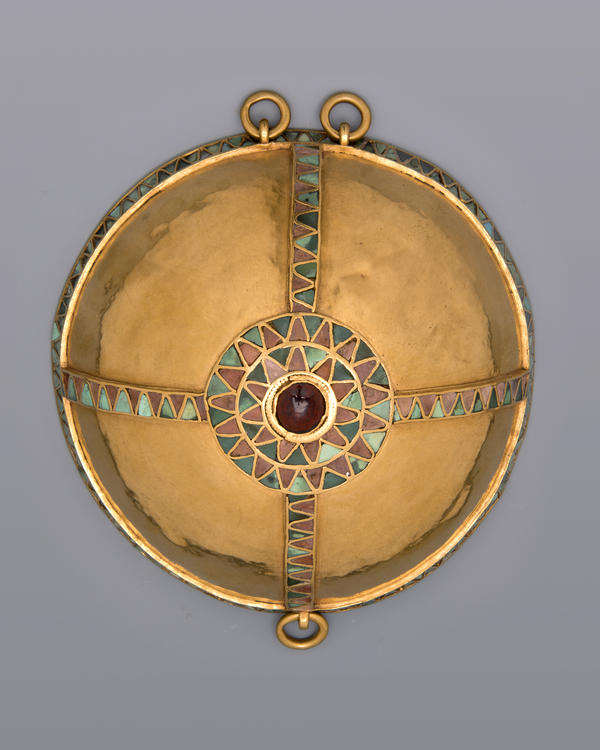
This massive golden pectoral phalera is from the collection of the Azov Historical-Archaeological and Paleontological Museum-Reserve. It was discovered by archeologists in 1986 during their excavations of the Dachi burial, located at the southeastern edge of the city of Azov. The object is daintily decorated. Its center is decorated by a medallion with a huge almandine gemstone, which is a red-purple form of garnet. The medallion is framed by false granulation, which refers to a cast element imitating a decoration made of small beads. Ancient jewelers sometimes replaced genuine granulation itself with this method, as actual granulation required a lot of time, in-depth work and great diligence from a master.
The medallion is surrounded by two ornamental belts made with the cloisonne incrustation technique, where insertions of flat turquoise and pink coral are fixated on cloisonnes, and brazed on a surface. The same decorative method is applied to the lower edge border of the phalera. Objects decorated with the usage of the cloisonne incrustation technique were rare among the Sarmatians in general, so only a few horse harness details in this technique exist.
This massive golden pectoral phalera is from the collection of the Azov Historical-Archaeological and Paleontological Museum-Reserve. It was discovered by archeologists in 1986 during their excavations of the Dachi burial, located at the southeastern edge of the city of Azov. The object is daintily decorated. Its center is decorated by a medallion with a huge almandine gemstone, which is a red-purple form of garnet. The medallion is framed by false granulation, which refers to a cast element imitating a decoration made of small beads. Ancient jewelers sometimes replaced genuine granulation itself with this method, as actual granulation required a lot of time, in-depth work and great diligence from a master.
The medallion is surrounded by two ornamental belts made with the cloisonne incrustation technique, where insertions of flat turquoise and pink coral are fixated on cloisonnes, and brazed on a surface. The same decorative method is applied to the lower edge border of the phalera. Objects decorated with the usage of the cloisonne incrustation technique were rare among the Sarmatians in general, so only a few horse harness details in this technique exist.
The ancient master attached the gems in a special way. He glued them with a glue made of tree sap and inserted them in holders called settings. The top part of the decoration was flattened with a special instrument. Right after that, the master polished the gems together with their settings. The notches of central medallion and lower edge borders were brazed directly on the handiwork.The ancient master attached the gems in a special way. He glued them with a glue made of tree sap and inserted them in holders called settings. The top part of the decoration was flattened with a special instrument. Right after that, the master polished the gems together with their settings. The notches of central medallion and lower edge borders were brazed directly on the handiwork.
The belts were fixated on a breastplate with the help of one surface loop and two inside rings. The phalera’s surface has scratches and deformation trails, and its inserts have cracks and voids. Twenty inserts were partially lost in ancient times. In 1991, the phalera was restored and its gems were fixated and reconstructed.The belts were fixated on a breastplate with the help of one surface loop and two inside rings. The phalera’s surface has scratches and deformation trails, and its inserts have cracks and voids. Twenty inserts were partially lost in ancient times. In 1991, the phalera was restored and its gems were fixated and reconstructed.
#7
Full name: Pectoral phalera from horse harness
Date: Last quarter of the 1st century A.D.
Technique: Gold, almandine, coral, turquoise, emboss, cloisonne inlay, brazing, polishing
Dimensions: 14,5 cm (diameter). 5,5 cm (height)
Collection: Azov Historical-Archaeological and Paleontological Museum-Reserve
Copyright: Azov Historical-Archaeological and Paleontological Museum-Reserve
Date: Last quarter of the 1st century A.D.
Technique: Gold, almandine, coral, turquoise, emboss, cloisonne inlay, brazing, polishing
Dimensions: 14,5 cm (diameter). 5,5 cm (height)
Collection: Azov Historical-Archaeological and Paleontological Museum-Reserve
Copyright: Azov Historical-Archaeological and Paleontological Museum-Reserve
#10
Ministry of Culture of the Russian Federation
read morehide
00:00
00:00
1x
Horse harness phalera and Pectoral phalera
Collection
Exhibition
7
 Point your smartphone camera to open in the app
Open in app
Share