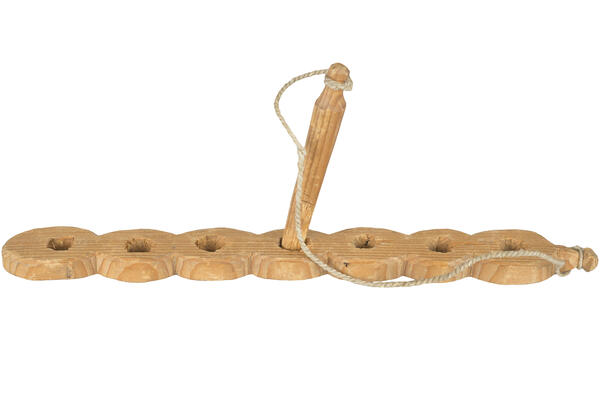
The Transbaikal Regional Museum of Local Lore houses an Evenk aksan. It was made in the 20th century. It is a version of the modern calendar. Seven holes correspond to the seven weekdays, from Monday through Sunday.
The set included a wooden stick on a string. Every morning it was moved to a new hole: that is how the Evenks kept track of when the week ended.
The Evenks used to be a nomadic people, so their life and perception of time depended on the seasons of the year, as well as on the hunting and gathering seasons. The ancient representatives of this people did not use the concepts of “24 hours”, “a week”, “a decade”, hours or minutes.
The Evenks traditionally divided the year into two separate seasons — summer (“dugani”) and winter (“tugeni”), as well as into thirteen lunar months. Their names indicated the seasonal changes in nature and the occupations that were associated with them. For example, “muchun” meant the time when needles appear on larches, the first grass and blooming buds. In the month of “irkin”, mosquitoes disappeared and deer hunting began. In the month of “giravun”, the month of winter ice hunting, a thick crust of snow appeared.
For the Evenks, the new year started in spring, which was the most important season with the nature coming back to life after the cold. Usually, folk festivals were held at this time and lasted for three days. Tribes from different districts gathered to welcome spring. Guests sang, danced khorovods (traditional round dances) and made treats.
A special ritual ceremony was performed at the festival: people saw off the old sun and welcomed the new one. To welcome the warm season, the guests, led by a shaman, did a circle dance.
The Evenks divided spring into three periods. During the “nelkeni” — early spring — deer began to calve. Then came the “nevkeni”. It was also called the “spring of water” — the snow melted and thawed patches appeared. In Transbaikal, it happened in May. During the “nennani”, grass appeared, leaves bloomed and birds usually came back from the south. This period corresponded to June.
Under the influence of Russian neighbors, the Evenk calendar became more similar to the modern one: the number of months decreased and the concepts of weeks and days appeared.
The set included a wooden stick on a string. Every morning it was moved to a new hole: that is how the Evenks kept track of when the week ended.
The Evenks used to be a nomadic people, so their life and perception of time depended on the seasons of the year, as well as on the hunting and gathering seasons. The ancient representatives of this people did not use the concepts of “24 hours”, “a week”, “a decade”, hours or minutes.
The Evenks traditionally divided the year into two separate seasons — summer (“dugani”) and winter (“tugeni”), as well as into thirteen lunar months. Their names indicated the seasonal changes in nature and the occupations that were associated with them. For example, “muchun” meant the time when needles appear on larches, the first grass and blooming buds. In the month of “irkin”, mosquitoes disappeared and deer hunting began. In the month of “giravun”, the month of winter ice hunting, a thick crust of snow appeared.
For the Evenks, the new year started in spring, which was the most important season with the nature coming back to life after the cold. Usually, folk festivals were held at this time and lasted for three days. Tribes from different districts gathered to welcome spring. Guests sang, danced khorovods (traditional round dances) and made treats.
A special ritual ceremony was performed at the festival: people saw off the old sun and welcomed the new one. To welcome the warm season, the guests, led by a shaman, did a circle dance.
The Evenks divided spring into three periods. During the “nelkeni” — early spring — deer began to calve. Then came the “nevkeni”. It was also called the “spring of water” — the snow melted and thawed patches appeared. In Transbaikal, it happened in May. During the “nennani”, grass appeared, leaves bloomed and birds usually came back from the south. This period corresponded to June.
Under the influence of Russian neighbors, the Evenk calendar became more similar to the modern one: the number of months decreased and the concepts of weeks and days appeared.