

The Transbaikal Regional Museum of Local Lore houses 12 kumalans. Those were rugs sewn from two hides from the head of a deer or a moose. It is believed that they were invented by Evenk craftswomen as no similar items were found in other cultures.
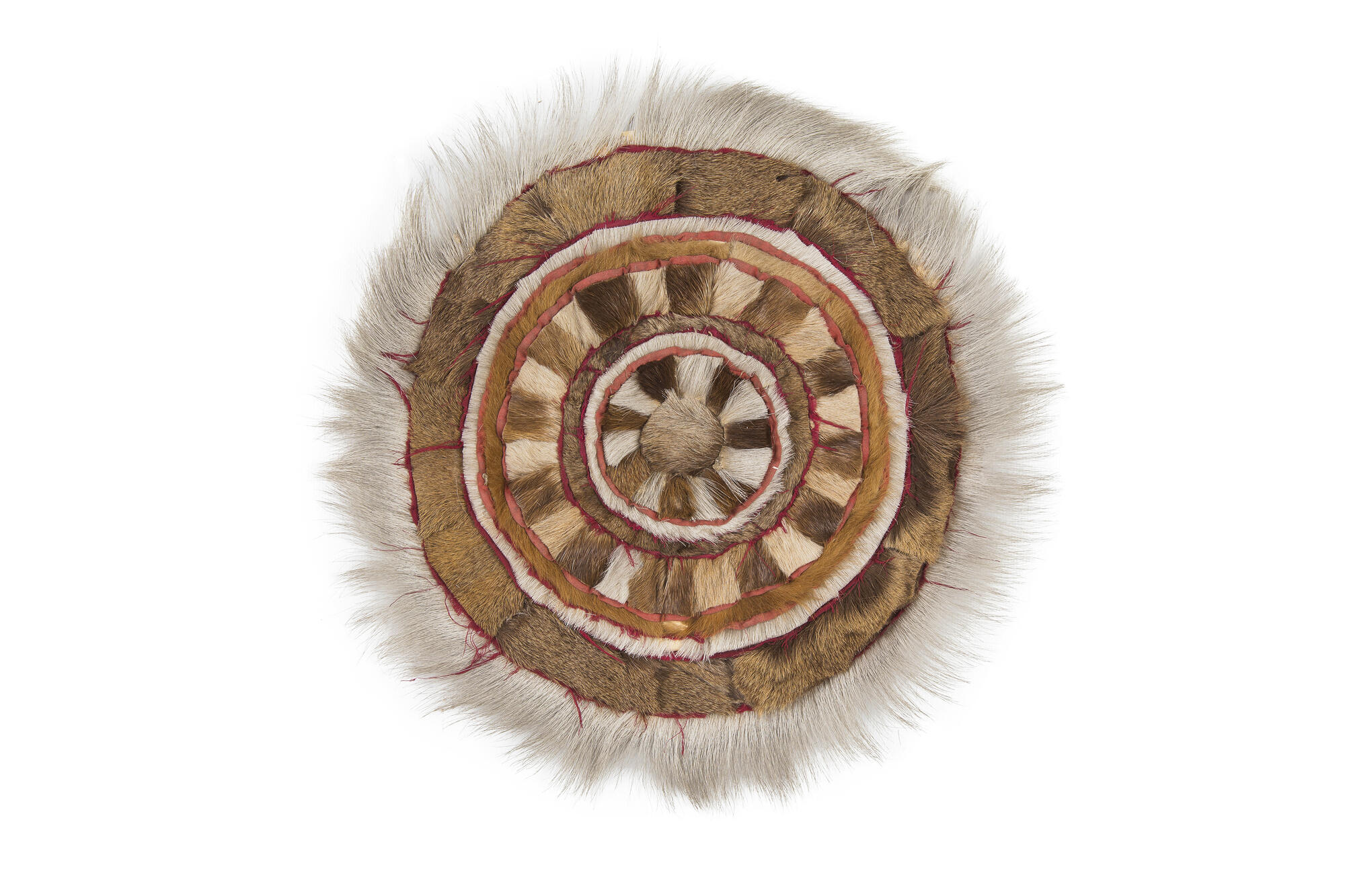
The displayed round rug was considered small as its diameter is 31 centimeters. The Sun, made of fur, is depicted in the center of the kumalan. The sun rays diverge in different directions. They are made of colored pieces of cloth and kamus (hide with coarse hair).
The circle was the most popular shape for the Evenk rugs. There were ones with a diameter from 30 up to 63 centimeters. The kumalans were made in the fur mosaic technique, with stripes of both white and dark fur. The edges of the kumalans were decorated with either leather or fabric.
For rug elements, craftswomen used strips of lynx, fox, and bear fur. Kumalans were often decorated with geometric figures, patterns made of leather, embroidery or floral ornaments.
The patterns were inspired by nature. Evenk craftswomen depicted what they saw around them on their clothes and household items. This is how the most common ornaments emerged: ikeker — “deer antlers”, udyakar — “animal tracks” or dukar — “small chums” and others.
Some kumalans had unusual shapes and forms, for instance, the shape of a star made of a whole piece of fur. One of such rare kumalans is housed in the museum as well. It is decorated with two small circles of white fur, which resemble the eyes.
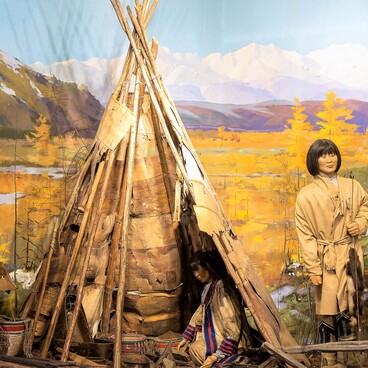
Kumalans were placed at the entrance to the chum — the traditional dwelling of the Evenks — and the Evenks covered with them sacks that were transported on reindeer. Large rugs were taken out when guests came. Not all local residents could afford to have such items. Fur rugs were considered a symbol of wealth and well-being of the family.
Furthermore, kumalans had a ritual purpose. Evenk shamans used them in almost all rituals: feeding the fire, welcoming a guest and others.
Often richly decorated kumalans were part of the dowry and were passed down from generation to generation. Nowadays, they can be seen only in museums.
The displayed round rug was considered small as its diameter is 31 centimeters. The Sun, made of fur, is depicted in the center of the kumalan. The sun rays diverge in different directions. They are made of colored pieces of cloth and kamus (hide with coarse hair).
The circle was the most popular shape for the Evenk rugs. There were ones with a diameter from 30 up to 63 centimeters. The kumalans were made in the fur mosaic technique, with stripes of both white and dark fur. The edges of the kumalans were decorated with either leather or fabric.
For rug elements, craftswomen used strips of lynx, fox, and bear fur. Kumalans were often decorated with geometric figures, patterns made of leather, embroidery or floral ornaments.
The patterns were inspired by nature. Evenk craftswomen depicted what they saw around them on their clothes and household items. This is how the most common ornaments emerged: ikeker — “deer antlers”, udyakar — “animal tracks” or dukar — “small chums” and others.
Some kumalans had unusual shapes and forms, for instance, the shape of a star made of a whole piece of fur. One of such rare kumalans is housed in the museum as well. It is decorated with two small circles of white fur, which resemble the eyes.
Kumalans were placed at the entrance to the chum — the traditional dwelling of the Evenks — and the Evenks covered with them sacks that were transported on reindeer. Large rugs were taken out when guests came. Not all local residents could afford to have such items. Fur rugs were considered a symbol of wealth and well-being of the family.
Furthermore, kumalans had a ritual purpose. Evenk shamans used them in almost all rituals: feeding the fire, welcoming a guest and others.
Often richly decorated kumalans were part of the dowry and were passed down from generation to generation. Nowadays, they can be seen only in museums.