

At the beginning of the 16th century, the monk Vassian Strokinsky founded the Transfiguration Monastery in Kargopol, known as Strokin’s Hermitage. It was famous for its library, which included liturgical books, works of Byzantine theologians and hagiographies. It grew thanks to donations, copying, purchases and transfers of books from abolished assigned monasteries. Abbot Euthymius (Evfimy), a scribe and patron of the Old Believers, played a big role in this.
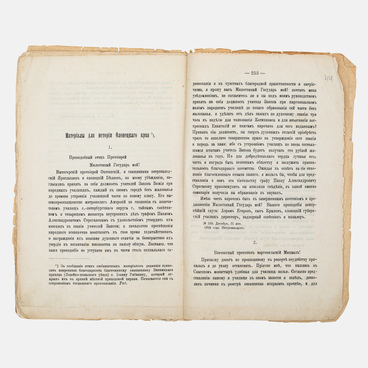
The names of Kargopol scribes whose works replenished Strokin’s library are known — Fedot Ivanov Prytkoi and Vasily Ivanov Popov.
It is established that Vasily Popov, a priest of the Trinity Church, owned a collection of printed and handwritten books; he copied and sold some of them.
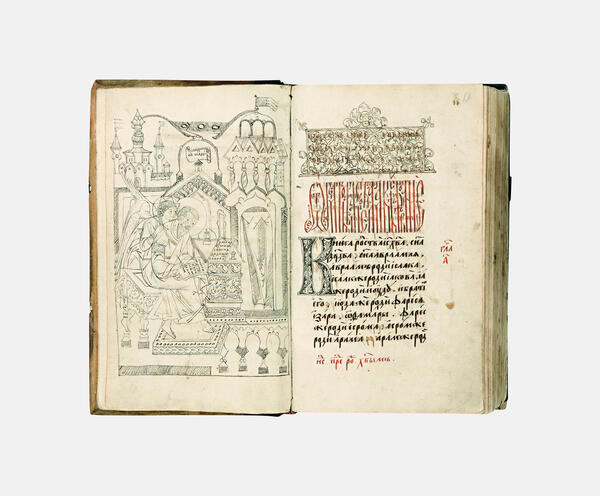
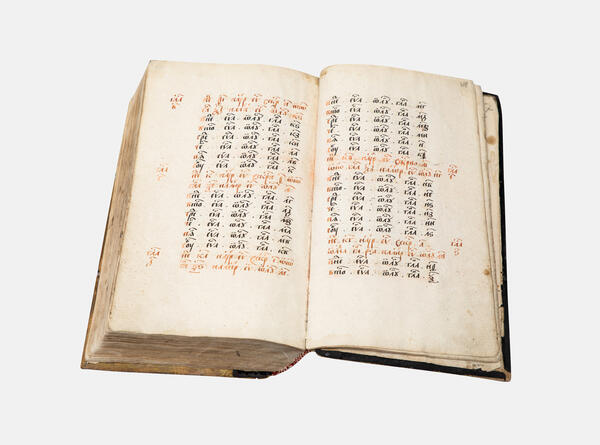
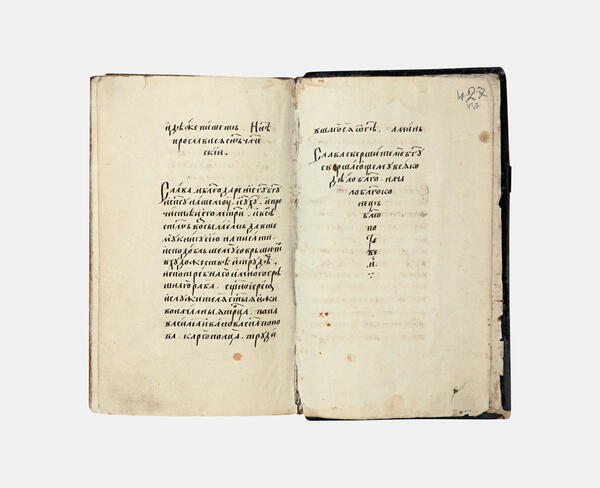
Among the contributions of Father Vasily is the Tetraevangelion (the Canonical gospels of the Four Evangelists), rewritten and given to the monastery in 1624. According to the monastery inventory of 1765, the Gospel was kept in the gate church consecrated in honor of the Kazan Mother of God.
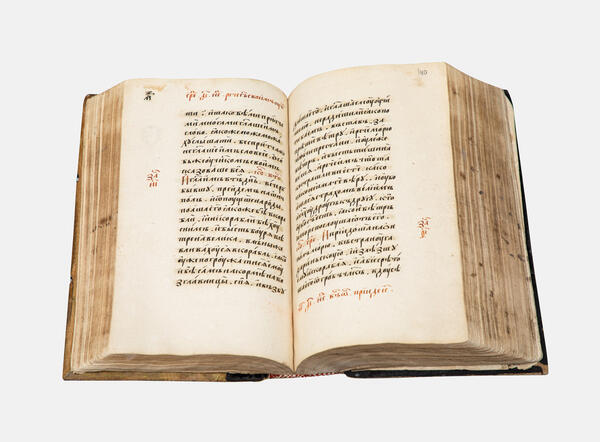
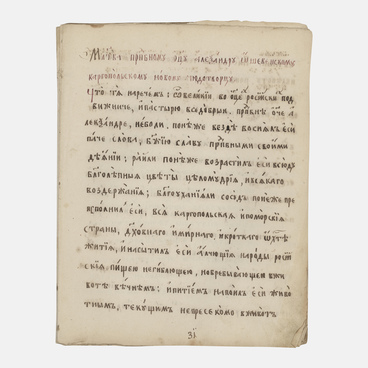
This Gospel is noteworthy as an example of a local scribe’s work: “it is written in a large semi-uncial script [poluustav], contains unpainted headpieces of the old printing style and four miniatures depicting the Evangelists” (Alexander Pigin, Olga Prigodina, “Library of the Transfiguration Monastery”, 2020). The last sheets feature an inscription — “the priest Vasily Ivanov, Popov’s son, a Kargopol resident”.
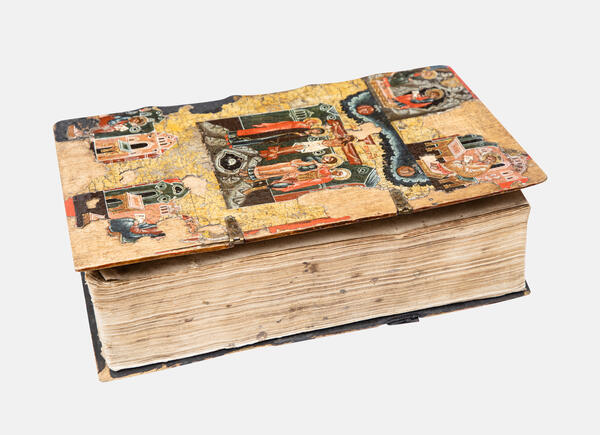
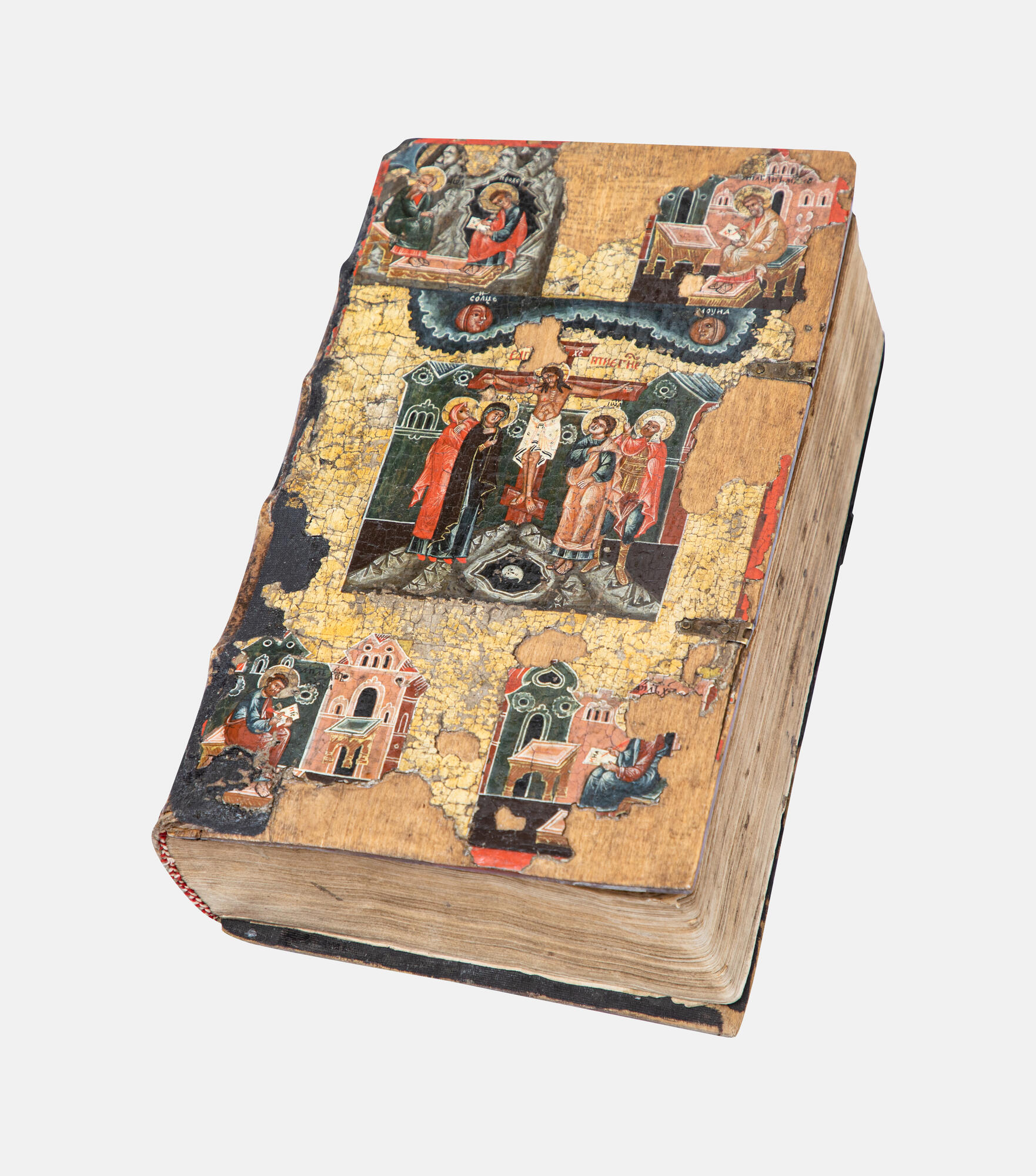
The lower cover of the binding is protected by a cloth, the upper one is an icon: the scene of the Crucifixion of Christ is depicted against the background of architectural structures. Christ is surrounded by witnesses; the evangelists are depicted in the corners, on a golden background. Probably, such a design echoes the Byzantine tradition: the altar Gospel was raised during the service and shown to the flock so that the faithful could see the sacred image. This design is known from the Pskov monuments of the 15th and 16th centuries and one Moscow artifact of the 17th century. This way of decorating Gospels is considered a rather rare phenomenon.
The composition and even the proportions of the board of the presented Gospel almost exactly copy a similar edition from the collection of Nikolay Petrovich Likhachev (Russian Museum), but the manner of painting indicates that it was created by local, rather than Pskov masters.
The museum received books “of various contents, in total 49 pieces” from the library of the Transfiguration Monastery in 1924 after its closure. The corresponding inventory mentions, in addition to the handwritten Gospel of Vasily Popov, the Gospels written during the reigns of tsars Peter and Fyodor Alekseyevich.