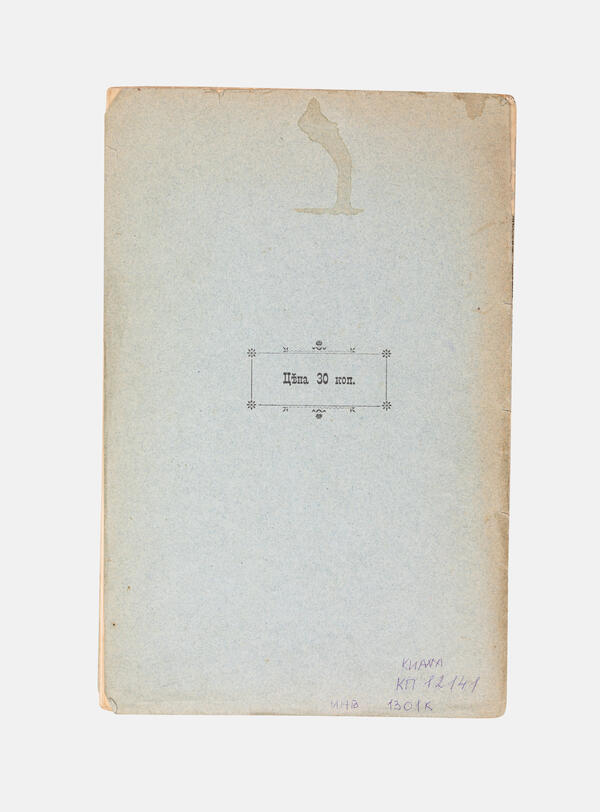
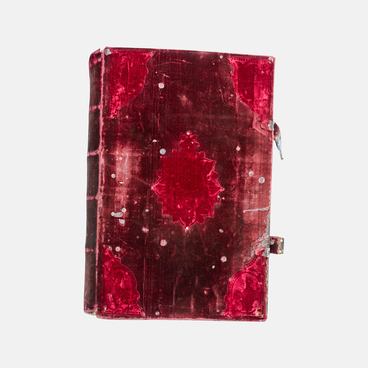
“The Legend of Miracles…” became known to the general reader thanks to the research of the Kargopol local historian Karp Andreevich Dokuchaev-Baskov.
In 1890, Dokuchaev-Baskov referred to this text while researching the history of the St. Macarius Khergozero Hermitage and working on a series of essays on northern ascetics and monasteries. In 1901, he published the manuscript, accompanied with a concise summary.
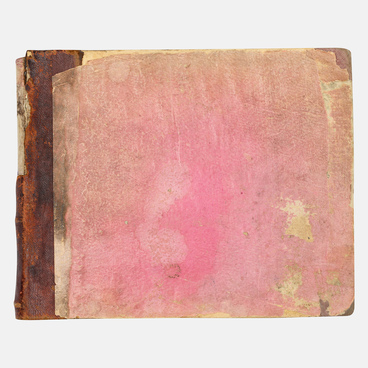
The “Legend” was known in a single copy made approximately in 1839, and its condition was such that it was not possible to fully restore the text: “<pages> were cut off… covered with wax stains and dirty spots, and torn.”
After publishing the manuscript, the researcher did not write down the time of its creation, nor left any information about the possible author. Presumably, it could be the icon painter and priest of the Intercession Church in the village of Lyadiny, Ioann, who also wrote the hagiography and painted the first icon of St. Kirill Chelmogorsky.
The text of the “Legend” recounts the origins of the Khergozersky Monastery. Its founders were the monks Sergius and Loggin (Longinus), who probably came from the Alexander Oshevensky Monastery. Sergius had with him the image of Macarius of the Yellow Water Lake and the Unzha, Loggin carried an icon of Tikhon the Wonderworker. When the monks settled on Khergozero, a layman named Stefan joined them. The aforementioned holy elders appeared to them in visions, commanding them to build a monastery there.
In the late 1630s — early 1640s, the Khergozero Hermitage was already quite crowded, the monks were actively engaged in farming, gradually displacing local peasants. Metropolitan Athonius of Novgorod gave Monk Sergius a certificate for the construction of the Trinity Church; the first building stood for 17 years, but then was destroyed in a fire. In the second half of the 17th century, two new churches were erected there: one in the Name of the Holy Trinity and another was consecrated in honor of the Presentation of the Most Holy Theotokos. Later, a side chapel in honor of Macarius of the Yellow Water Lake was added to the Trinity Church, while the Presentation Church was expanded by a lower side chapel of St. Nicholas the Wonderworker and two upper ones — of St. Alexander Svirsky and three Moscow saints Peter, Iona and Alexei.
It is known that the St. Macarius Chapel housed an icon of the monk with hagiographic scenes — in all probability, that image depicted the miracles, to which the presented brochure is dedicated.
The “Legend of Miracles” describes 41 miracles that
occurred between the 1630s and 1660s: the painting of the miraculous image of
St. Macarius and the healing and assistance in household matters, including the
resurrection of a calf. Many are associated with folk beliefs, for instance,
the healing properties of water from the Khergozero and grass growing along the
shores of the lake.