The reindeer harness is very simple: it is a strap consisting of a loop and a dragrope. The loop of the strap is made of strong rawhide, yuft, sea animal skin or hemp cord. The dragrope is made from stronger belts, using such materials as walrus skin, sea hare and the best varieties of rawhide. The loop covers the shoulder and withers and is passed between the front legs of the deer. Straps are the most affordable and convenient devices to harness deer in large caravans due to their simplicity, a small number of materials required and cheapness.
To harness a deer, one just needs to bring it to the sled, put a strap on its head, lift one of the front legs and push it through the loop. Preparation of reindeer for sledding begins at the age of one and a half years. For this purpose, the most healthy and hardy deer of medium build are selected. Reindeer are harnessed to the sled using a special harness. There are two types of such a harness: for traveling and for carrying cargo. The sleds are classified similarly. In a team, the leftmost deer is called the leading deer. A rein is tied to the halter on its muzzle on the left, which the driver, sitting on the sled, holds in his hands. With the help of the reins, the team is controlled by giving commands to its leader. A reindeer harnessed to the team can be adjusted by a wooden pole. The rest of the deer are called strapped-in.
Harnessing reindeer to sleds to travel and transport goods is characteristic of reindeer herders of tundra and forest tundra zones. It has a number of advantages over using pack saddles: when sleds are used, much more load can be taken, including large objects (for example, poles, floor boards, and furniture for the chum). Such things cannot be packed in bags loaded on the back of a deer. However, it is almost impossible to use sleds in the taiga, where reindeer herders have to pave the way between the thickets. Therefore, reindeer herders in taiga carry their possessions in bags on the back of the deer.
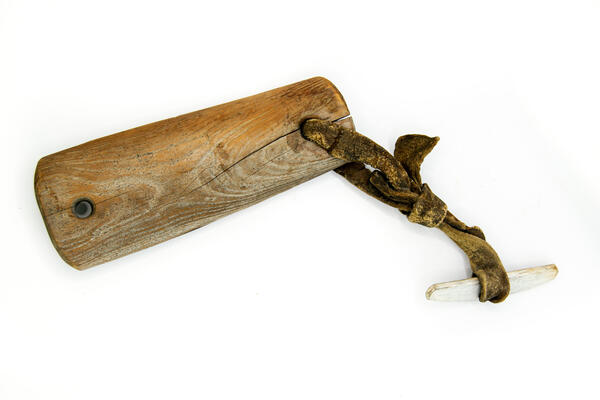
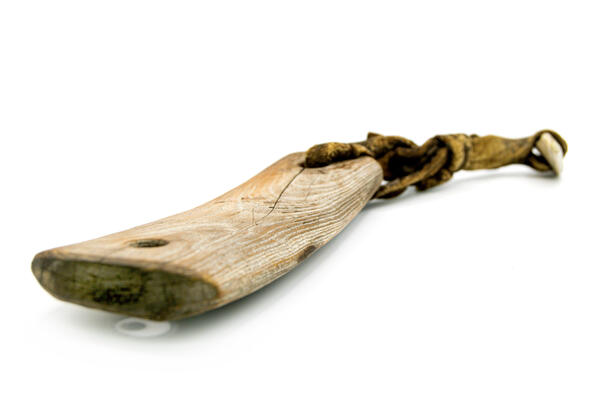
The exhibit is the frontal
part of a reindeer harness. Trapezoidal plates with a flat surface are located
on the sides of the deer’s head. Plates are made of wood or bone. They have two
or three holes for fixing on the back of the deer’s head.