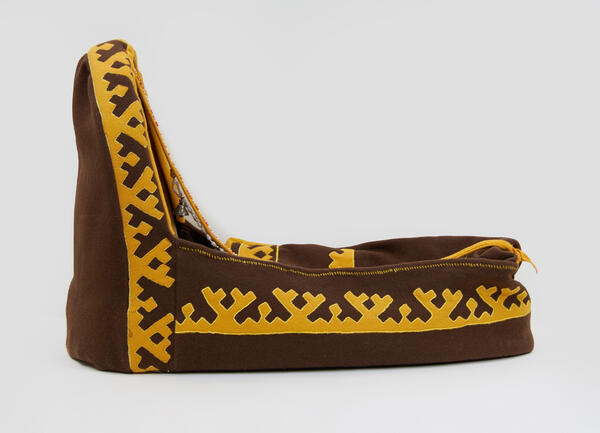
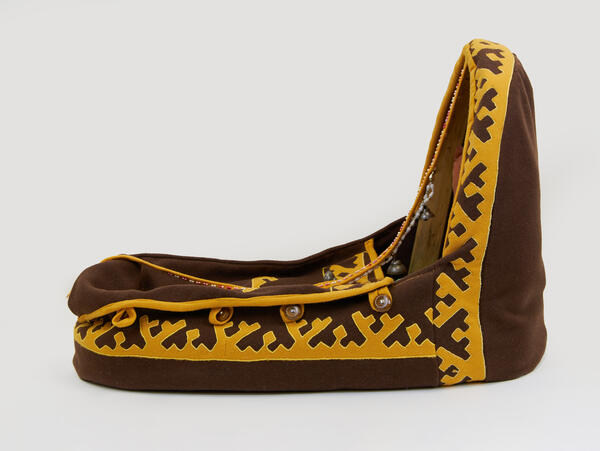
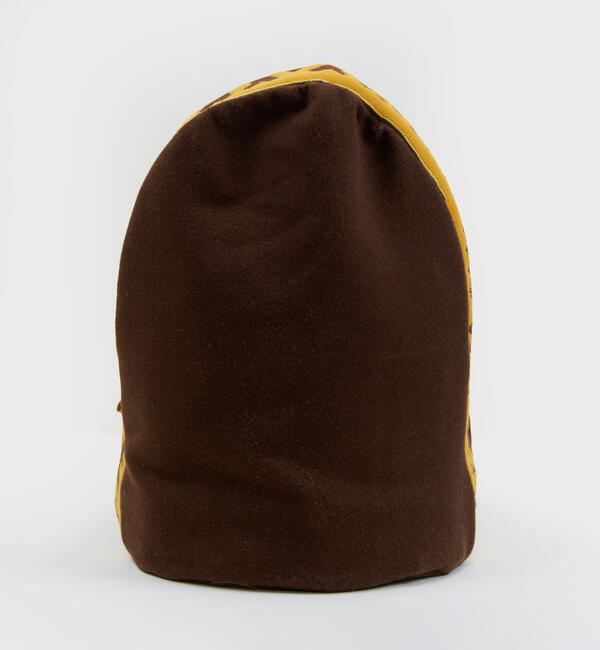
The indigenous peoples of the North celebrate a birthday only once in a lifetime — the very first one. Before a baby starts walking, it spends time in a cradle, either an ordinary or a hanging one. It serves as the first microhabitat for the child, who just begins to learn about the surrounding world. The Russian word for cradle is “lyulka” and it comes from the common Slavic “lyulyu” — an interjection used for soothing an infant — and goes back to the same base form as the Russian verb “leleyat” (to cherish). The main advantage of a hanging cradle was the option of suspending it either indoors, in the tundra, or in the woods. There is even an expression — “to raise children on the birch tree”, meaning keeping children in the hanging cradle while the mother is busy.
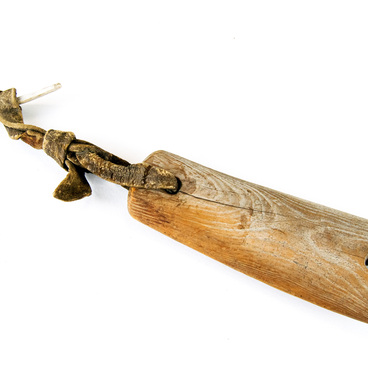
There are two kinds of cradles in the Khanty tradition: the day cradle called “khatl-evan ontyp” and the night cradle — “savun”. The baby stays in the cradle while being breastfed. The Nenets people have only one type of a hanging cradle called “ebts”, which is used both during the day and at night. A cradle is always made by a man. It can be the biological father or the “father of the belly button”, that is, the godfather. A cradle is suspended by its straps from one of the chum tent poles with the headboard facing the entrance. The cradle is carried in and out of the room only headfirst and is turned only clockwise, following the sun’s movement. The infant is not placed in the cradle until the umbilical cord falls off (which takes from seven to ten days). During that time, the baby rests on a sewing board, which is covered with buckskin that is believed to keep the baby’s back straight.
Children stay in the cradle
until the age of three. After that, the cradle is put away and stored in a
labaz (a lean-to for storing things). If an infant dies, the cradle is left on
its grave. A new cradle is made for the next child. If a baby grows up healthy,
the cradle is passed to the next one. It was believed that a baby was
vulnerable when not in the cradle and
could not be left on the bare floor or the ground, otherwise the spirits from
the lower world would immediately possess the child. Various amulets served as
protection for the infant. Matches (a symbol of fire), a knife or scissors, and
a piece of rock crystal were put in the night cradle, while the day cradle had
only matches, a knife or scissors. Bracelets made of beads of various colors
were placed on a baby’s arms and legs. On hikes, the cradle was carried behind
the back by adjusting the belt loops on the chest. When traveling with
reindeer, mothers put the cradle on a sled.