

Eeren is a shamanic doll (idol), which was considered the receptacle of a spirit-helper. As a rule, eerens were made from chalama — ribbons of different colors.
The basis of a simple eeren is a braid of three, four, or five ribbons (sometimes more), into which various symbols are woven. By these symbols, one could understand what kind of spirit the idol was a repository for and what purpose it served. For example, a bear claw or a piece of bearskin was tied to an eeren, which a shaman would use to address a bear spirit (Adyg eeren), and an eeren to attract money was decorated with Chinese coins.
Almost all idols had eyes and mouths, and a bell was attached to them. The upper part of the idol, the ‘head, ” was stuffed with wheat, tobacco, or coins. This served as an offering to the spirit-helper that lived inside.
All eerens could be divided into several groups depending on their purpose. The most common were guardian spirits-helpers that a shaman summoned to protect a person or dwelling. Among them, amulets for home, family, and children were the most common. To perform a ritual, a shaman first consecrated the place and then made an eeren for it right away. Modern Tuvans still use this type of eeren to protect cars.
Idols for attracting wealth, health, and good luck were made immediately after the shamanistic ritual of communication with spirits. People usually ordered them for a specific purpose, which could also dictate the color of the future eeren. White was used to attract good luck, red provided the owner with wealth, and yellow promised good health.
The idols could also be complemented with additional symbols associated with good luck or wealth, such as horseshoes, jewels, coins, or bags of wheat.
Spirit-helpers were treated in a special way and considered sacred objects. They were regularly “fed” with milk, melted butter or fat, fumed with juniper smoke (artysh). Also, as a sign of gratitude, people tied colored ribbons or other attributes to them.
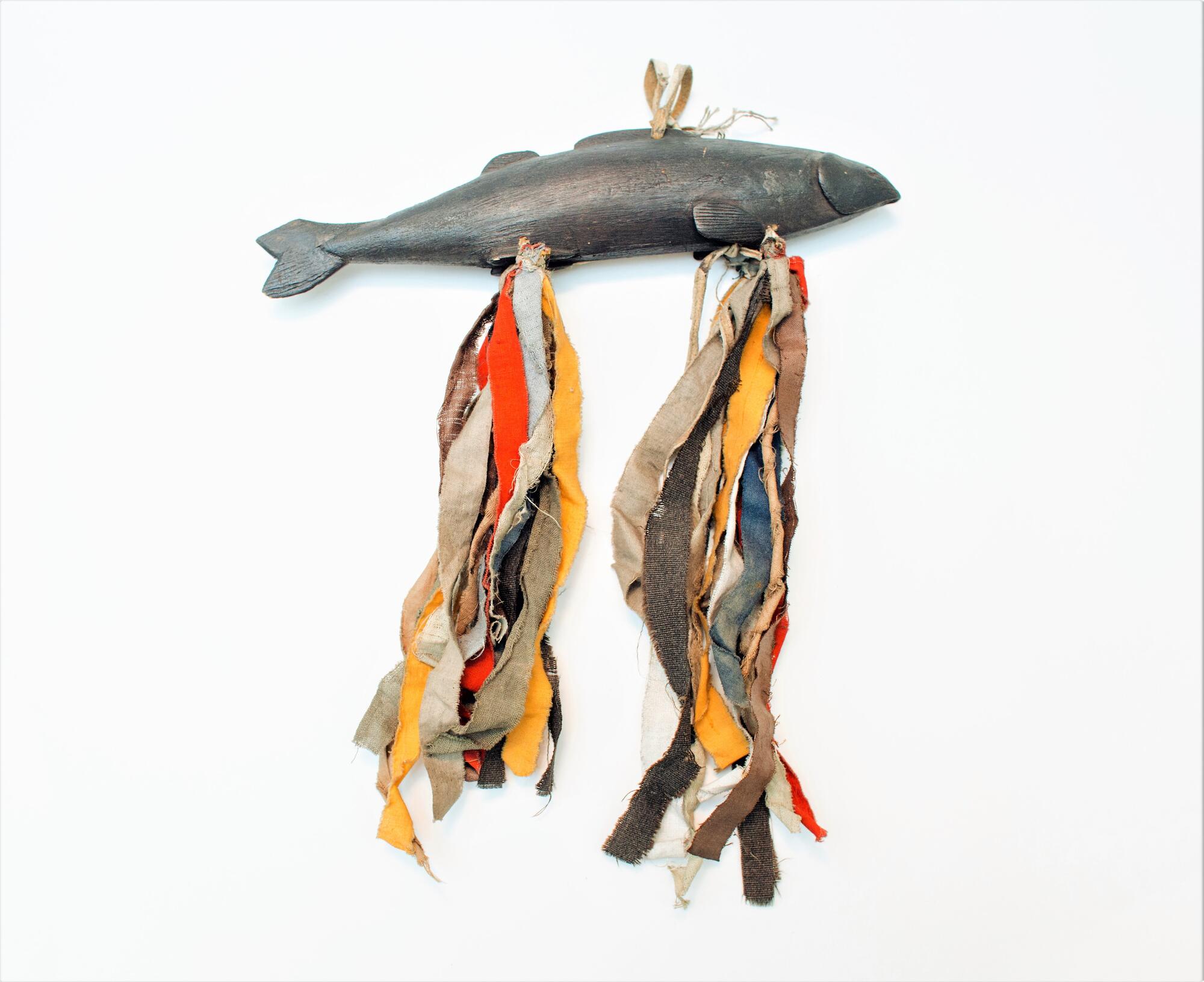
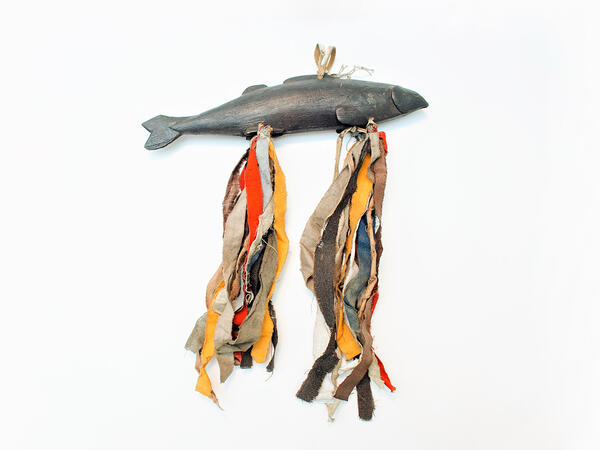
The museum collection houses an eeren shaped as a perch. According to beliefs, this idol guarded the yurt. The spirit-helper also has an ethnic name — Balyk eeren (fish).
The eeren is made of a solid piece of wood and painted black. The pronounced gills, eyes, tail, two upper and two lower fins are made in the relief carving technique. There is a round slot in the upper fin, and a ribbon of rawhide is led through it, with suspends the eeren. Two bundles of cotton ribbons of red, yellow, blue, brown, black, green, gray, and white are tied to the slots in the lower fins.
The basis of a simple eeren is a braid of three, four, or five ribbons (sometimes more), into which various symbols are woven. By these symbols, one could understand what kind of spirit the idol was a repository for and what purpose it served. For example, a bear claw or a piece of bearskin was tied to an eeren, which a shaman would use to address a bear spirit (Adyg eeren), and an eeren to attract money was decorated with Chinese coins.
Almost all idols had eyes and mouths, and a bell was attached to them. The upper part of the idol, the ‘head, ” was stuffed with wheat, tobacco, or coins. This served as an offering to the spirit-helper that lived inside.
All eerens could be divided into several groups depending on their purpose. The most common were guardian spirits-helpers that a shaman summoned to protect a person or dwelling. Among them, amulets for home, family, and children were the most common. To perform a ritual, a shaman first consecrated the place and then made an eeren for it right away. Modern Tuvans still use this type of eeren to protect cars.
Idols for attracting wealth, health, and good luck were made immediately after the shamanistic ritual of communication with spirits. People usually ordered them for a specific purpose, which could also dictate the color of the future eeren. White was used to attract good luck, red provided the owner with wealth, and yellow promised good health.
The idols could also be complemented with additional symbols associated with good luck or wealth, such as horseshoes, jewels, coins, or bags of wheat.
Spirit-helpers were treated in a special way and considered sacred objects. They were regularly “fed” with milk, melted butter or fat, fumed with juniper smoke (artysh). Also, as a sign of gratitude, people tied colored ribbons or other attributes to them.
The museum collection houses an eeren shaped as a perch. According to beliefs, this idol guarded the yurt. The spirit-helper also has an ethnic name — Balyk eeren (fish).
The eeren is made of a solid piece of wood and painted black. The pronounced gills, eyes, tail, two upper and two lower fins are made in the relief carving technique. There is a round slot in the upper fin, and a ribbon of rawhide is led through it, with suspends the eeren. Two bundles of cotton ribbons of red, yellow, blue, brown, black, green, gray, and white are tied to the slots in the lower fins.


