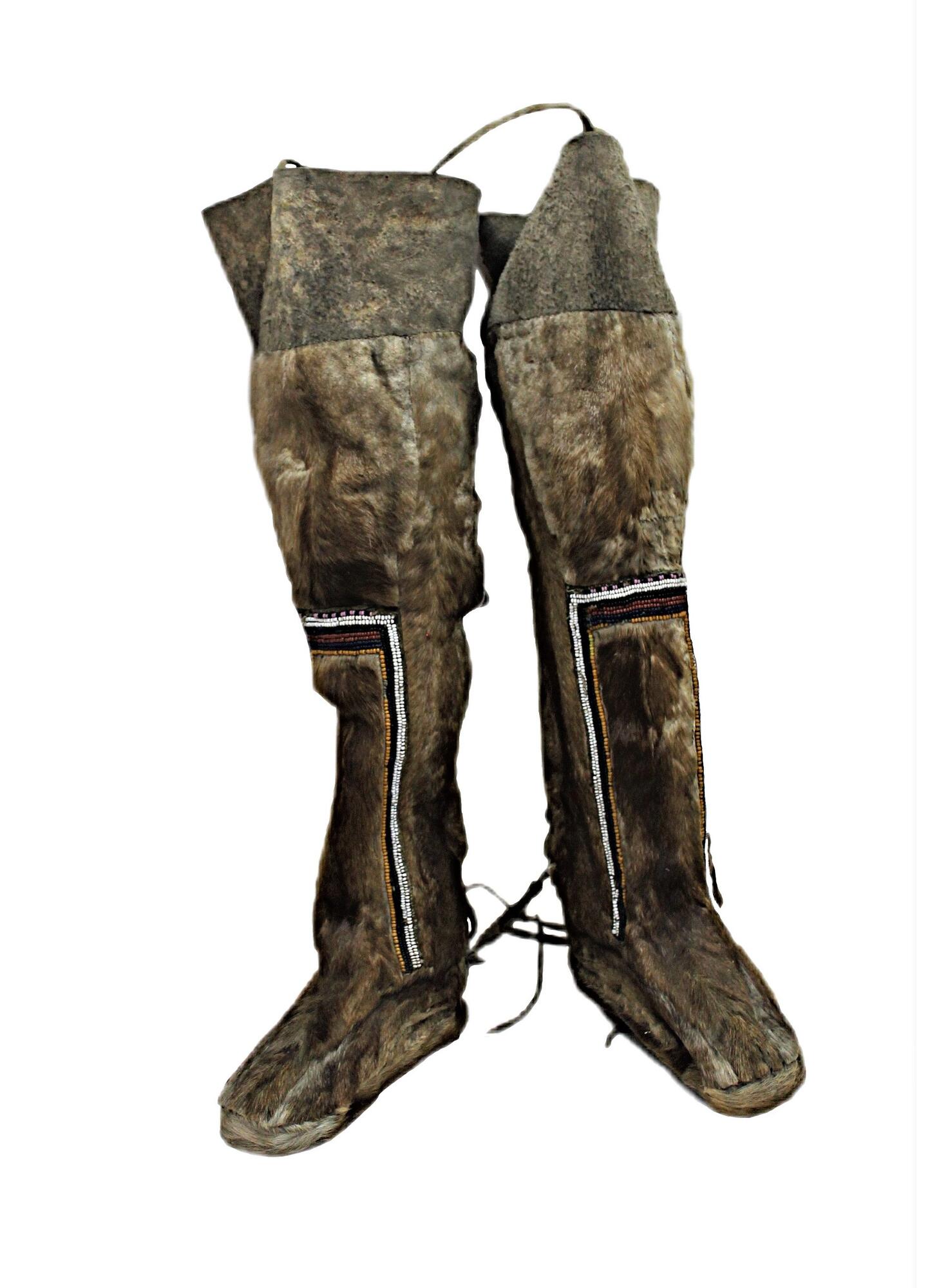


Bokari or dyshiki (unty evenkov)— men’s long shoes, up to the groin, fur boots.
They sewed deer or elk from camus. At the level of the ankles and above the knees, leather ties are sewn to fix on the leg. Leather lapels, lint-free, 13 cm wide, are sewn on the upper fur edge of the dyshek.
On the front, the dyshiki are decorated with sewn stripes, trimmed with colored beads. Traditional Evenk clothing stands out among the garments of other peoples of Siberia for its colorfulness and elegance. Shoes were decorated with fringes of fur, leather straps, and ornaments of multicolored fur stripes.
Most often, fur boots were made on leather soles. Such shoes had an everyday character. They wore fur boots with woolen or fur stockings, as well as stockings made of cloth.
On hunting in the Yenisei province since the middle of the XIX century, they wore dyshiki.
They sewed deer or elk from camus. At the level of the ankles and above the knees, leather ties are sewn to fix on the leg. Leather lapels, lint-free, 13 cm wide, are sewn on the upper fur edge of the dyshek.
On the front, the dyshiki are decorated with sewn stripes, trimmed with colored beads. Traditional Evenk clothing stands out among the garments of other peoples of Siberia for its colorfulness and elegance. Shoes were decorated with fringes of fur, leather straps, and ornaments of multicolored fur stripes.
Most often, fur boots were made on leather soles. Such shoes had an everyday character. They wore fur boots with woolen or fur stockings, as well as stockings made of cloth.
On hunting in the Yenisei province since the middle of the XIX century, they wore dyshiki.