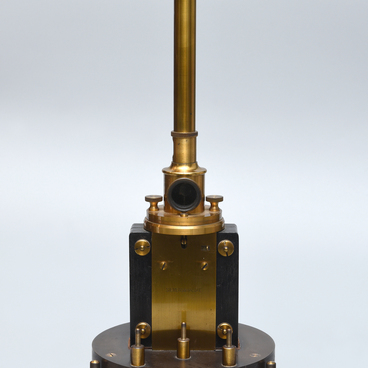
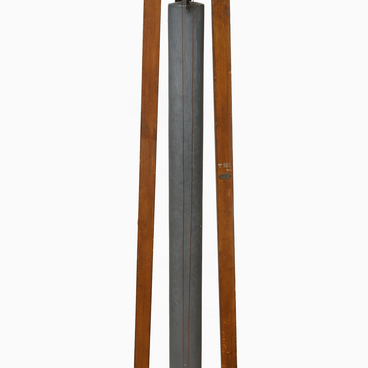
A dynamo, or electric generator, is a device that transforms thermal, mechanical, or chemical energy into electric power. It generates direct current through electromagnetic induction.
Dynamos were among the first electric power generators used in industry. In 1832, the English scientist Michael Faraday put forward the first model of an electromechanical direct current generator, known as the Faraday disk, based on his discovery of the law of electromagnetic induction. However, it took another three and a half decades for the German inventor and industrialist Werner von Siemens to successfully develop and begin mass production of dynamos.
A dynamo machine consists of an electromagnetic rotor with a considerable number of wires wound into a coil, a commutator, and electrical contacts called brushes. Unlike modern generators, such a machine utilizes not one but two commutators with a unique shape.
The phenomenon of electromagnetic induction is used in dynamo machines in the following way: a magnetic field is generated using a magnet (or an electromagnet). A rotor frame rotates within this field. As the frame rotates through a uniform magnetic field, the magnetic flux passing through its surface will continuously change in both magnitude and direction. As a result, in accordance with the law of electromagnetic induction, an electromotive force of induction, varying in magnitude and direction, is generated in the coil. The electric current generated by electromagnetic induction is extracted by brushes connected to a commutator in the form of a ring.
The main output of a dynamo machine is the
generation of an electrical current. It should be noted that this type of
generator, with a fixed magnet system (inductor) and a rotating coil
(armature), in which electromotive force is induced, is used relatively
infrequently. This is because, due to the use of moving contacts, it is nearly
impossible to extract high-voltage current from the generator without causing
severe sparking at the moving contacts.