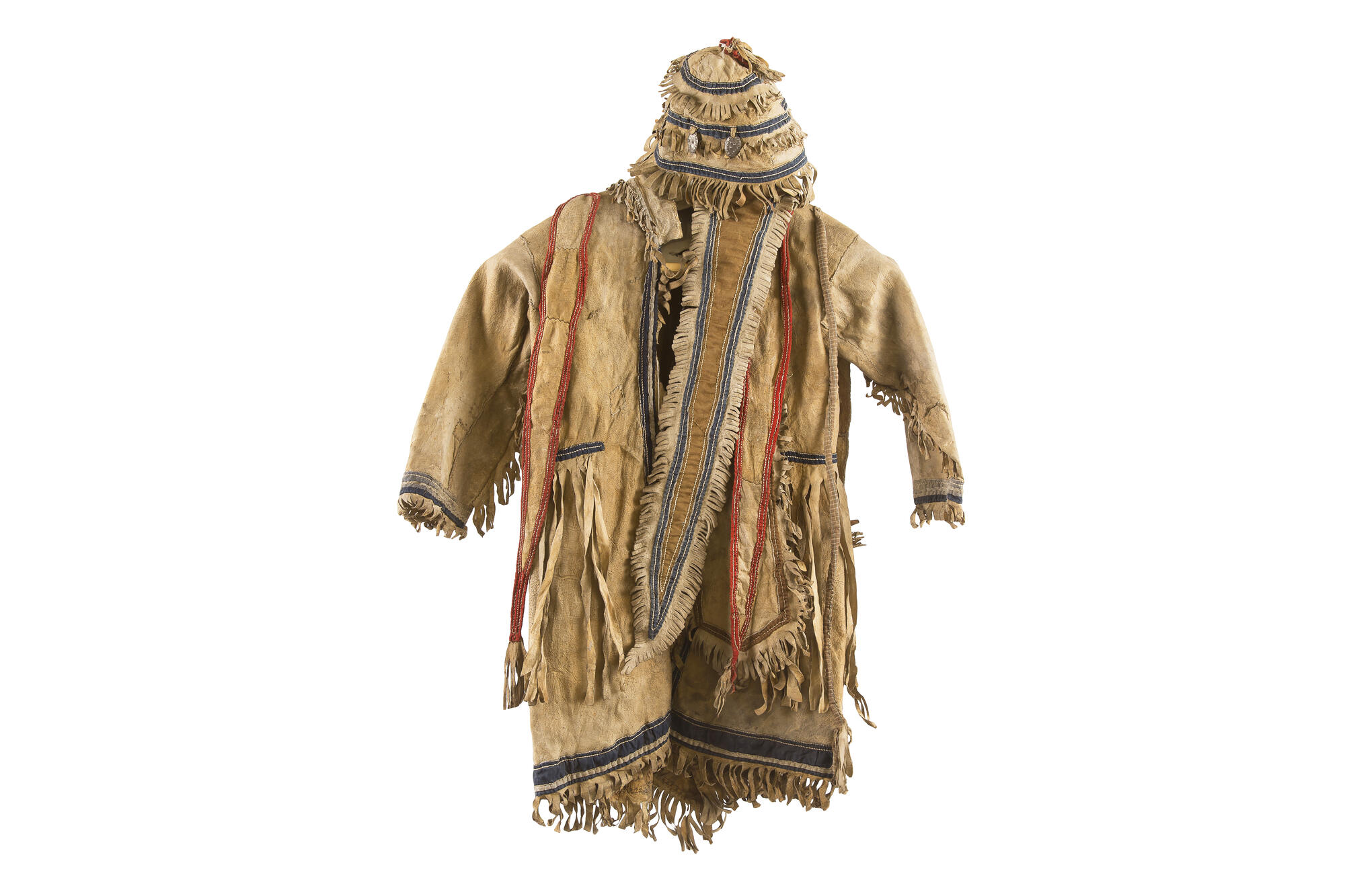


The Transbaikal Regional Museum of Local Lore houses an Evenk costume for a child, created at the end of the 19th century. It was made of beige suede — fine skin of a deer or an elk. Due to a special manufacturing technology, the material was soft and supple, and its surface had a velvet-like texture.
The Evenks are an indigenous people of Eastern Siberia who live in the Transbaikal area. Before the 1930s, they were also called the Tungus people.
In summer and early autumn, children of the Evenk tribes did not wear clothes and walked barefoot. In the 19th century, people began to import cloth into the region, thus, women started sewing shirts and dresses for children. These garments were similar to those of adults, the only differences being in jewelry and pendants, which were taken from the child’s cradle. In colder weather, they wore unty — warm boots with a wider calf at the top. In front, they were sewn to the waistband of the shirt.
In winter, during migrations, children were dressed in fur clothing with the sleeves sewn underneath and a capor — a wide hood. Children wore a second pair of high fur boots over thin and short unty for better protection from severe frost.
The Evenks had strict cultural traditions for infants. For example, children didn’t have their hair cut until they were two years old, and didn’t wash it until three. Later, after each haircut, the hair was preserved. In some tribes, a special order was established of how one should cut their hair, including, pre-soaking it in water with ashes.
Children were given names related to their birthplace, the weather on their birthday, or their character traits. For example, Kayocha was a name for a boy born near Lake Kayo, Garpakcha — for someone who was born at dawn. Garpan in the Evenk language means “ray”.
Babies who cried a lot were called Sonocho. If a child was born with the first wet snow — “libae”, a baby girl was called Libgerik.
Their costumes were decorated with small human figures. The Evenks believed that the soul goes on a journey while sleeping. The ornaments on their clothes protect the child and guard their body from evil spirits.
The Evenks are an indigenous people of Eastern Siberia who live in the Transbaikal area. Before the 1930s, they were also called the Tungus people.
In summer and early autumn, children of the Evenk tribes did not wear clothes and walked barefoot. In the 19th century, people began to import cloth into the region, thus, women started sewing shirts and dresses for children. These garments were similar to those of adults, the only differences being in jewelry and pendants, which were taken from the child’s cradle. In colder weather, they wore unty — warm boots with a wider calf at the top. In front, they were sewn to the waistband of the shirt.
In winter, during migrations, children were dressed in fur clothing with the sleeves sewn underneath and a capor — a wide hood. Children wore a second pair of high fur boots over thin and short unty for better protection from severe frost.
The Evenks had strict cultural traditions for infants. For example, children didn’t have their hair cut until they were two years old, and didn’t wash it until three. Later, after each haircut, the hair was preserved. In some tribes, a special order was established of how one should cut their hair, including, pre-soaking it in water with ashes.
Children were given names related to their birthplace, the weather on their birthday, or their character traits. For example, Kayocha was a name for a boy born near Lake Kayo, Garpakcha — for someone who was born at dawn. Garpan in the Evenk language means “ray”.
Babies who cried a lot were called Sonocho. If a child was born with the first wet snow — “libae”, a baby girl was called Libgerik.
Their costumes were decorated with small human figures. The Evenks believed that the soul goes on a journey while sleeping. The ornaments on their clothes protect the child and guard their body from evil spirits.