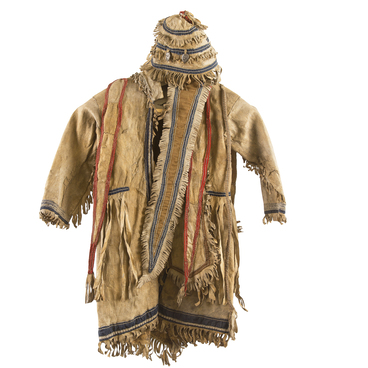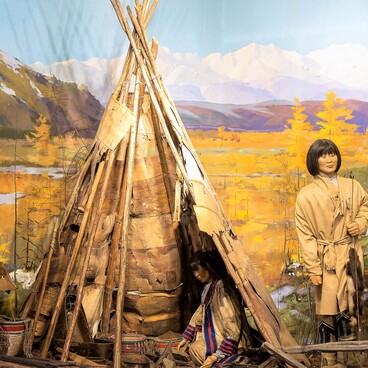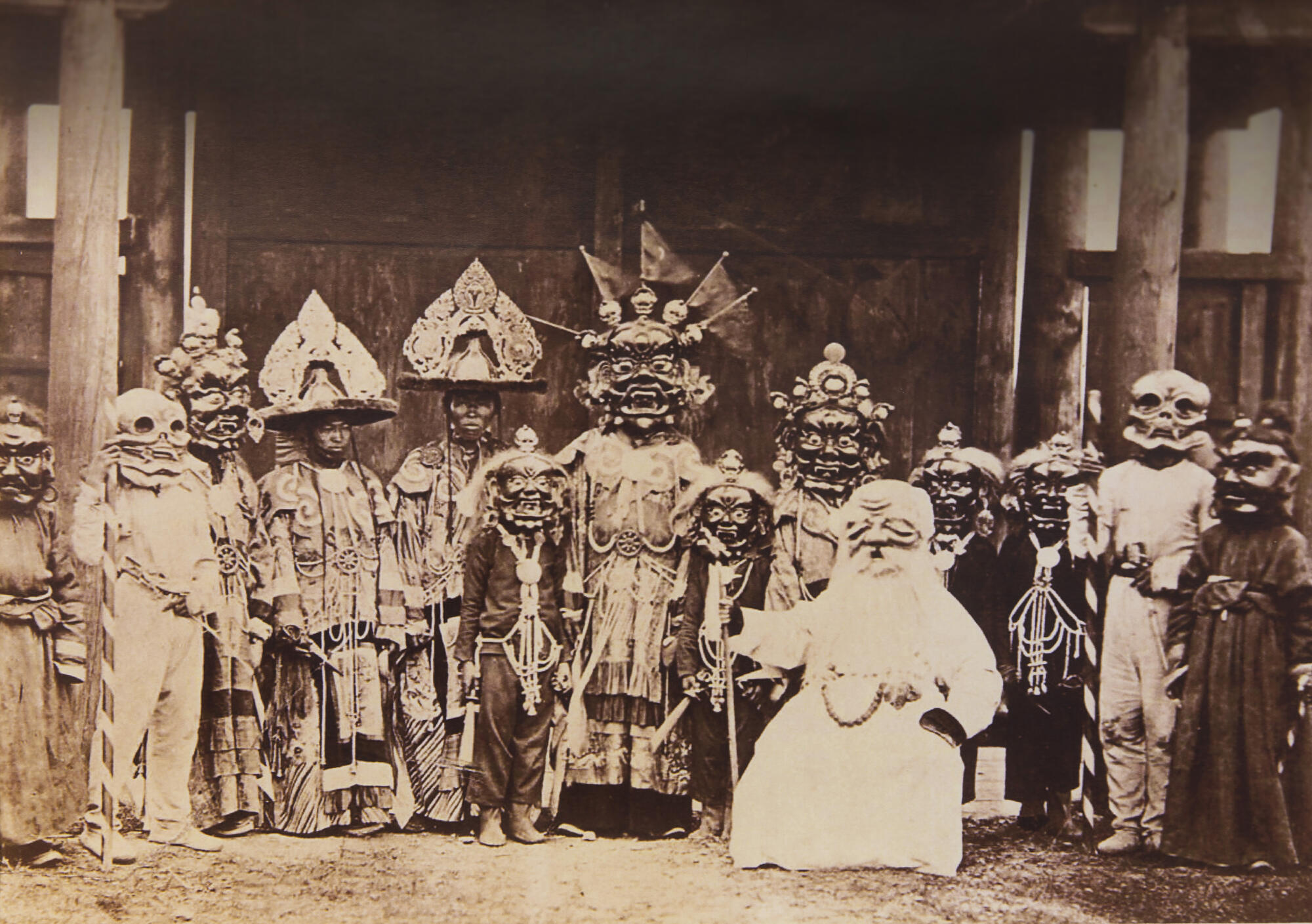


The photograph displayed in the museum shows the Cham dance — a bright theatrical rite in Tibetan Buddhism. The costumes of the participants of the ceremony are presented in the display case nearby. The attire of the “White Old Man” consists of a white mask and robe, while the one of the evil spirit — of a blue robe and a black mask representing a fantastic beast.
The word “Cham” comes from the Tibetan word meaning “dance”. Rhythmic expressive movements were the main elements of the ceremony.
The Cham theatrical performance with dances and pantomimes lasted many hours and followed a strict script. Monks and lamas from Buddhist monasteries took part in it. They wore colorful costumes and ritual masks to portray various deities, spirits and heroes.
The main roles in the mystery played “Dokshits” — wrathful deities and devils — and “lamas”, Buddhist abbots who confronted evil. The performance showed the audience how Buddhist teachings help tame spirits, purify the human mind and soul, and lead to reincarnation — rebirth in the next life.
The Cham dance appeared in Transbaikal monasteries at the end of the 19th century. The abbots assumed that vivid and unusual performances would attract new people to the datsans.
The Cham was performed in summer, and only in those Buddhist monasteries which had a Duynhor school: it was responsible for special astronomical and astrological Buddhist worship. Its poems and incantations contained comments on the movements of the Sun, the Moon, stars and planets, sun and moon eclipses, and the needs of parishioners.
In Transbaikal, the first Duynhor school appeared in 1878 at the Aninsky datsan. Later it was opened at 6 more Buddhist monasteries — the Aginsky, Tamchinsky, Tsezhinsky, Egituysky, Zugalaysky and Khuzhirtaysky datsans.
The photo from the collection was taken at the Tamchinsky datsan. The Cham ceremony has been performed on the site in front of the monastery since the 1870s. At first it was the Cham of the “Dokshits”, the angry gods, and then, since the beginning of the 20th century, the Cham of Duynhor (Kalachakra). It was organized during the festival of Duynhor Khural, which was celebrated on the 15th day of the lunar calendar, in April or May.
The word “Cham” comes from the Tibetan word meaning “dance”. Rhythmic expressive movements were the main elements of the ceremony.
The Cham theatrical performance with dances and pantomimes lasted many hours and followed a strict script. Monks and lamas from Buddhist monasteries took part in it. They wore colorful costumes and ritual masks to portray various deities, spirits and heroes.
The main roles in the mystery played “Dokshits” — wrathful deities and devils — and “lamas”, Buddhist abbots who confronted evil. The performance showed the audience how Buddhist teachings help tame spirits, purify the human mind and soul, and lead to reincarnation — rebirth in the next life.
The Cham dance appeared in Transbaikal monasteries at the end of the 19th century. The abbots assumed that vivid and unusual performances would attract new people to the datsans.
The Cham was performed in summer, and only in those Buddhist monasteries which had a Duynhor school: it was responsible for special astronomical and astrological Buddhist worship. Its poems and incantations contained comments on the movements of the Sun, the Moon, stars and planets, sun and moon eclipses, and the needs of parishioners.
In Transbaikal, the first Duynhor school appeared in 1878 at the Aninsky datsan. Later it was opened at 6 more Buddhist monasteries — the Aginsky, Tamchinsky, Tsezhinsky, Egituysky, Zugalaysky and Khuzhirtaysky datsans.
The photo from the collection was taken at the Tamchinsky datsan. The Cham ceremony has been performed on the site in front of the monastery since the 1870s. At first it was the Cham of the “Dokshits”, the angry gods, and then, since the beginning of the 20th century, the Cham of Duynhor (Kalachakra). It was organized during the festival of Duynhor Khural, which was celebrated on the 15th day of the lunar calendar, in April or May.