Font
Color
Graphics
Изображение точки

To see AR mode in action:

1. Install ARTEFACT app for iOS or Android;

2. Find the exhibition «The Ethnography of Transbaikal»

3. Push the «Augmented reality» button and point your phone's camera at the exhibit;

Скрыть точки интересаПоказать точки интереса
Показать в высоком качестве

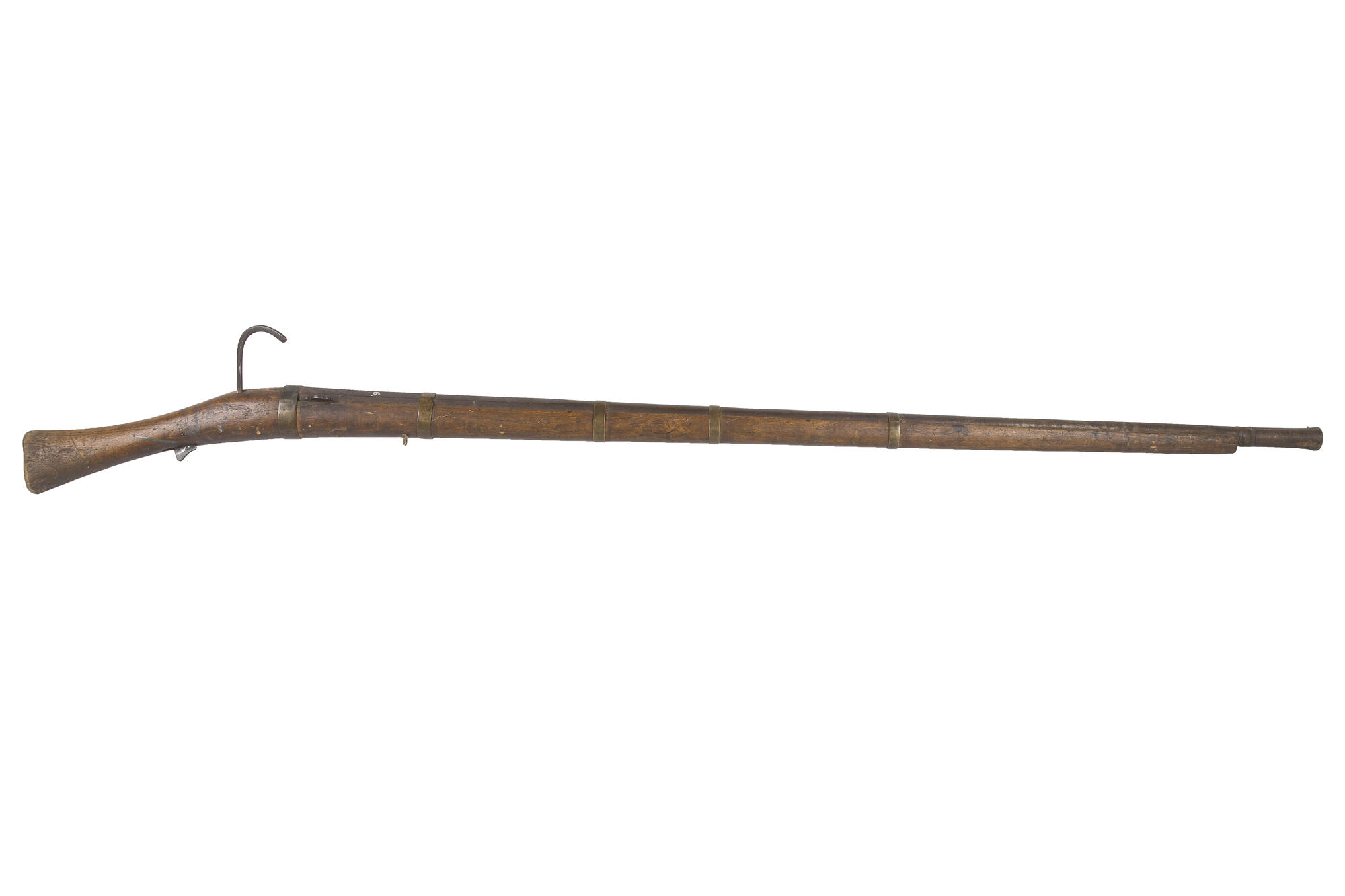
Matchlock gun

Creation period
the end of the 18th century
Place of сreation
China
Dimensions
219x20 cm
Caliber – 17.5 mm
Technique
metal, casting, forging, woodcarving
0
Open in app
#1
Matchlock gun
#2
The Transbaikal Regional Museum of Local Lore houses a matchlock gun made at the end of the 18th century. There is a special hole on its body to which a burning rod was brought in order to ignite the powder and make a shot.

Another type of gun was called a flintlock gun, which had a piece of flint inside. When the trigger was pulled, the flint struck a steel plate and the sparks ignited the gunpowder.

In the European part of Russia, matchlock muskets were most common. The first Russian explorers of Siberia used both types. It was not always possible to find the match cord in cold and damp climates, so the locals and the military installed flintlock mechanisms into the matchlock guns which were sent to them.

In 1658, the Siberian Cossacks took part in the battle with Manchurian and Korean armies. General Shin Ryu in his diary described the captured trophies — Russian weapons — and marveled at the flintlock mechanisms in the rifles:

#7
We captured 300–400 guns from the enemy… the squad leader sent me one gun. The enemy guns, unlike ours, do not use matchlock. There is a frizzen inside them and a short metal hammer on the outside. Between them is a piece of flint. When it comes down, the metal and the stone hit each other and produce a spark. That is amazing.
#6
The rifles were sent to the first Russian explorers from the central regions of the country. Towns and ostrogs (small fortresses) tried to always have spare ones. In case of shortage, voivodes (local military governors) had to “write about it to the tsar in Moscow… and from Moscow they would send them arquebuses, as many as possible.”

In practice, however, it was not possible to build up stocks: almost all guns were distributed to servicemen, and the ones left in storage were usually in poor condition. In 1682, the Nerchinsk voivode Fyodor Voyeikov wrote to Moscow that “in the town of Nerchinsk… all guns are rusty, and some other weapons are damaged and broken. These guns are useless for shooting … and in Albazinsk… the arquebuses are bad and unreliable. They blow up during shooting and hurt people”. In addition, most Siberian towns and islands did not have gunsmiths who could repair old and broken guns.

Each serviceman was financially responsible for his gun. Thus, they always handled their weapons with extra care.
#5
read morehide
00:00
00:00
1x

Matchlock gun

Creation period
the end of the 18th century
Place of сreation
China
Dimensions
219x20 cm
Caliber – 17.5 mm
Technique
metal, casting, forging, woodcarving
0
Point your smartphone camera to open in the app
Share
VkontakteOdnoklassnikiTelegram
Share on my website
Copy linkCopied
Copy
Open in app
To see AR mode in action:
  1. Install ARTEFACT app for 
  2. iOS or Android;
  3. Find and download the «Paintings in Details» exhibition
  4. Push the «Augmented reality» button and point your phone's camera at the painting;
  5. Watch what happens on your phone screen whilst you flip through the pictures.
 
We use Cookies
Cookies on the Artefact Website. We use cookies to ensure that we give you the best experience on our website. If you continue without changing your settings, we'll assume that you are happy to receive all cookies on the Artefact website. However, if you would like to, you can change your cookie settings at any time.
Learn more about useHide
Content is available only in Russian

X

Нашли опечатку?...

%title%%type%