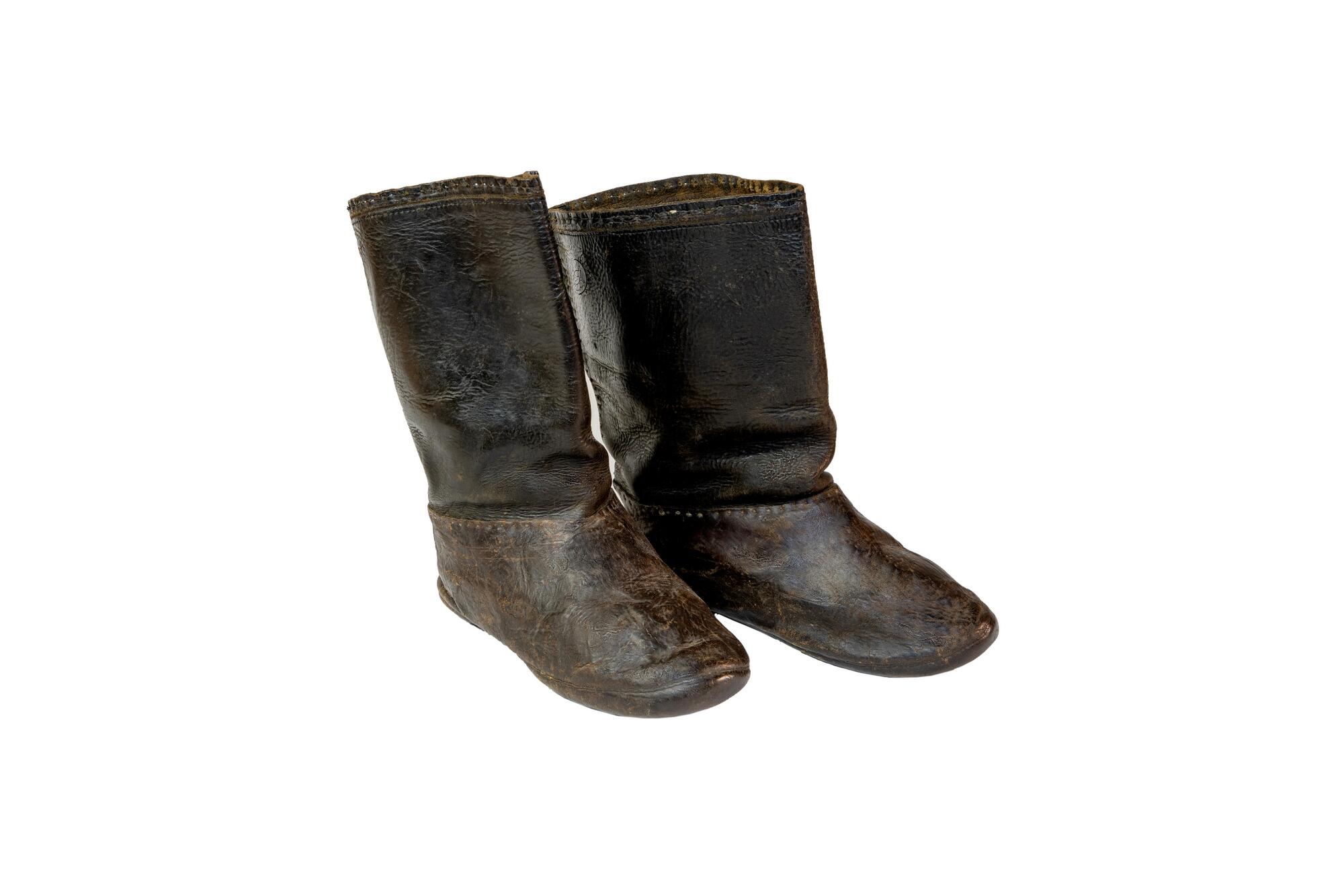


Bast shoes were the most common peasant shoes in central Russia. However, in Siberia, they were rarely worn because of swampy soils and cold climate. Most often, peasants who lived there made their footwear of leather. On holidays, they wore boots or high shoes. However, in everyday life they used to work in soft and light chirki, which were comfortable, did not rub against skin, and protected from moisture and cold. Such footwear was made on a straight shoe. It means that both left and right shoes did not have any difference in shape. After connecting the top and the bottom parts, the finished shoe was turned out in such a way for the seams to be inside. The cloth trim was placed along the edge. A thin leather cord or a strap was put through it and was tied around the ankles.
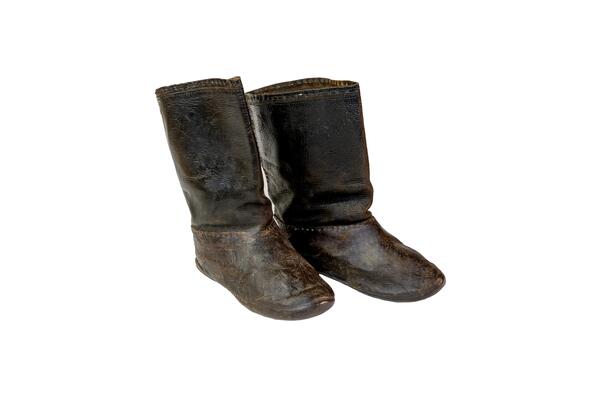
Sometimes chirki had bootlegs. Those shoes looked like high shoes, which were called “brodni”. Nizhnevartovsk Museum of Local History displays exactly this model. “Golyashki” (consonant with Russian word “golenishcha” — “bootlegs”) most often were made of leather or tarpaulin. Poor families used canvas. Brodni were worn in autumn and winter, in cold, rainy or snowy weather. Peasants used to wear knitted or fur stockings under them, and sometimes they wrapped their legs with a semblance of footcloths.
Shoes were made both by professional shoemakers and self-taught craftsmen. The main material for chirki and other kinds of footwear was soft rawhide. It was made mostly of cow skins. First, it was necessary to remove an inner side of hide — an inside layer of subcutaneous tissue. Then, the skin was cleared from wool. In case if it was necessary, the skin was impregnated with special substances that loosen the fibers. After it, the skin was dried and kneaded. Sometimes the impregnation was replaced by freezing. After that, the skin was covered with oil.
The skin was kneaded in different ways: by hand, by feet and by special devices. The choice of necessary method depended on density of material. The finished leather was smoked. It protected the leather from hardening and did not allow it to deteriorate over time, gave a dark color. To make a fire, craftsmen mostly used rotten woods. They did not choose resinous woods, because those could make the fire too strong and burnt hard.
Sometimes chirki had bootlegs. Those shoes looked like high shoes, which were called “brodni”. Nizhnevartovsk Museum of Local History displays exactly this model. “Golyashki” (consonant with Russian word “golenishcha” — “bootlegs”) most often were made of leather or tarpaulin. Poor families used canvas. Brodni were worn in autumn and winter, in cold, rainy or snowy weather. Peasants used to wear knitted or fur stockings under them, and sometimes they wrapped their legs with a semblance of footcloths.
Shoes were made both by professional shoemakers and self-taught craftsmen. The main material for chirki and other kinds of footwear was soft rawhide. It was made mostly of cow skins. First, it was necessary to remove an inner side of hide — an inside layer of subcutaneous tissue. Then, the skin was cleared from wool. In case if it was necessary, the skin was impregnated with special substances that loosen the fibers. After it, the skin was dried and kneaded. Sometimes the impregnation was replaced by freezing. After that, the skin was covered with oil.
The skin was kneaded in different ways: by hand, by feet and by special devices. The choice of necessary method depended on density of material. The finished leather was smoked. It protected the leather from hardening and did not allow it to deteriorate over time, gave a dark color. To make a fire, craftsmen mostly used rotten woods. They did not choose resinous woods, because those could make the fire too strong and burnt hard.