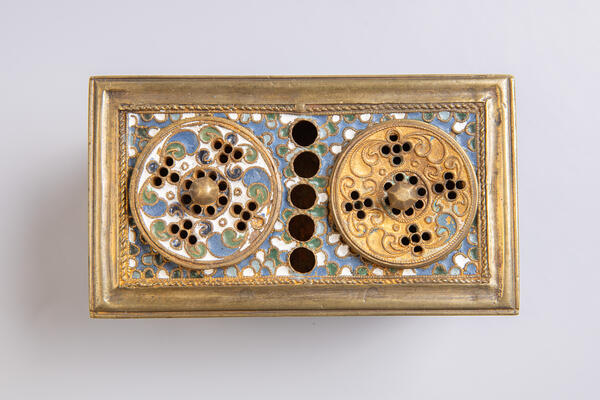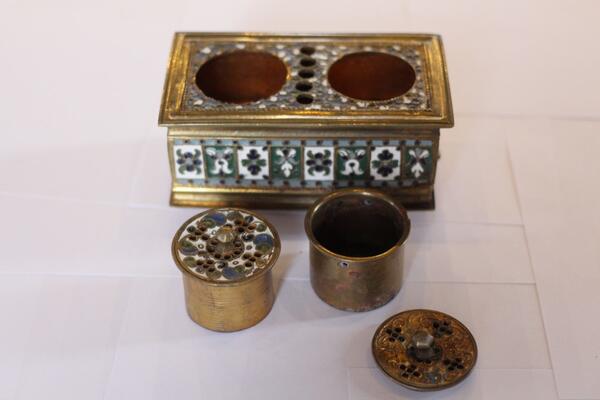
As official correspondence became more complicated, Russian artisans started paying more attention to the attributes of literacy. This is evidenced by the popularity of ink stands that combined an inkwell, a sand container, and holes for storing pens.
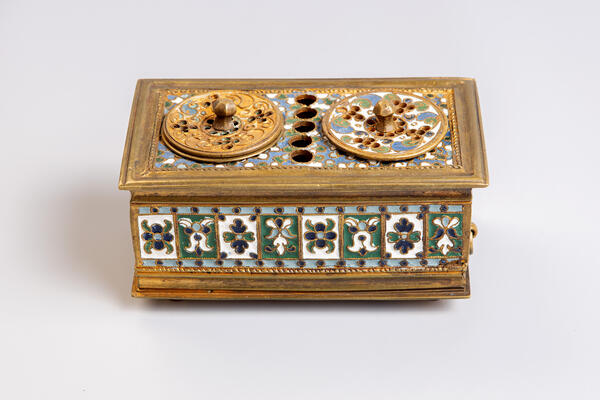
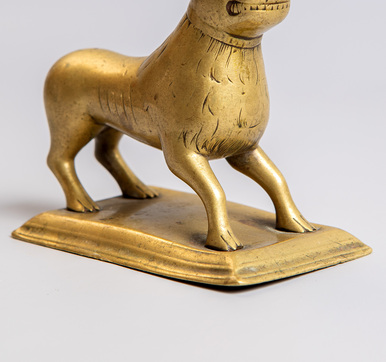
One of these items is presented in the exhibition “The World of the Streltsy” of the Museum “The Smolensk Fortress”. The ink set illustrates the theme of teaching children to read and write and is complemented by a whole collection of metal inkwells.
This copy is an example of everyday urban culture of the 17th century. The brightness of the color palette suggests its use as a symbol of high social status.
It was decorated in the style of “Russian openwork pattern”, which was typical of the 17th–18th centuries, and also popular in the early 20th century, when artisans interpreted the Russian style in their artworks.
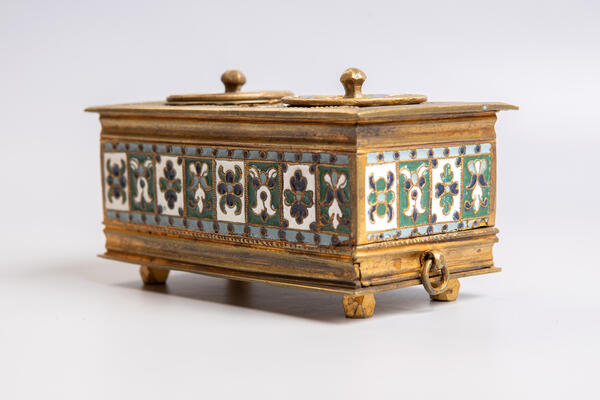
A striking difference of the ink device presented in the exhibition is the extensive use of cloisonné enamel. To create the design, the craftsman chose blue, white, green and black enamel colors. This technique of creating a vitreous coating on metal has been known in Rus since the 10th century. Researchers claim that it came from Byzantium.
Artisans soldered patterns from thin metal wire on a solid metal base. Then the spaces formed by this method were filled with a special vitreous mixture. As a result, a bright pattern was formed.
The artisan decorated the set with a floral ornament, which was popular in pre-Petrine Russia. Repeating decorative patterns made up a wide frieze that covered the sides of the inkstand. Museum staff suggest that this item was created in one of the leading workshops in Russia.
The condition of the object is close to the standard. The polishing is well preserved. However, there is a slight loss of enamel coating. Such items are extremely rare in museum collections in Russia.
One of these items is presented in the exhibition “The World of the Streltsy” of the Museum “The Smolensk Fortress”. The ink set illustrates the theme of teaching children to read and write and is complemented by a whole collection of metal inkwells.
This copy is an example of everyday urban culture of the 17th century. The brightness of the color palette suggests its use as a symbol of high social status.
It was decorated in the style of “Russian openwork pattern”, which was typical of the 17th–18th centuries, and also popular in the early 20th century, when artisans interpreted the Russian style in their artworks.
A striking difference of the ink device presented in the exhibition is the extensive use of cloisonné enamel. To create the design, the craftsman chose blue, white, green and black enamel colors. This technique of creating a vitreous coating on metal has been known in Rus since the 10th century. Researchers claim that it came from Byzantium.
Artisans soldered patterns from thin metal wire on a solid metal base. Then the spaces formed by this method were filled with a special vitreous mixture. As a result, a bright pattern was formed.
The artisan decorated the set with a floral ornament, which was popular in pre-Petrine Russia. Repeating decorative patterns made up a wide frieze that covered the sides of the inkstand. Museum staff suggest that this item was created in one of the leading workshops in Russia.
The condition of the object is close to the standard. The polishing is well preserved. However, there is a slight loss of enamel coating. Such items are extremely rare in museum collections in Russia.