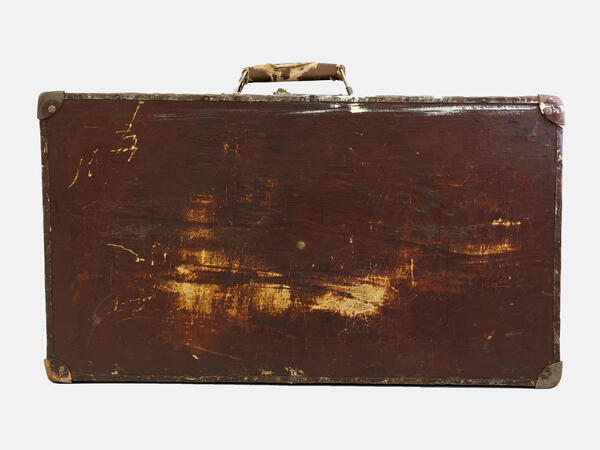
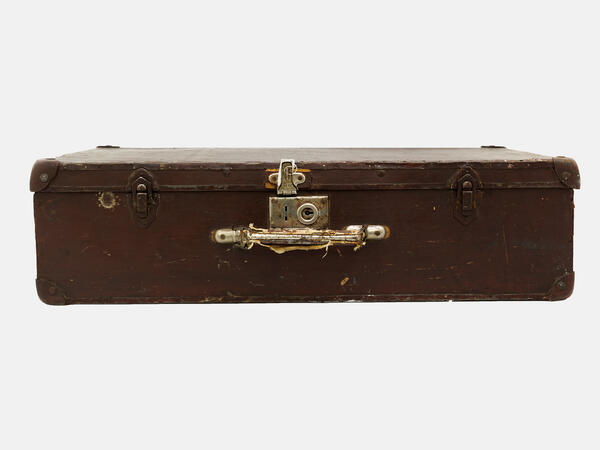
The suitcase from the museum’s collection belonged to the family of Anton Chekhov’s nephew. Before the advent of suitcases, people used to carry their belongings in bindles, sacks, baskets, and trunks. As the traveling culture evolved, more convenient, practical, and aesthetically pleasing types of luggage began to appear.
During the golden age of American railroading, the first traveling bags were made of old carpets, hence their name “carpet bags”. Later, luxurious suitcases appeared, made of expensive leather.
In the 17th–19th centuries, the roads were dangerous, and travelers rarely brought along a lot of luggage. Those who could afford a larger carriage placed trunks, suitcases, and boxes at the back. When Anton Chekhov was traveling through Siberia in the direction of Sakhalin in 1890, he was almost killed in a road accident after being hit by a mail coach. He described the accident in his letter to his family in May 1890,