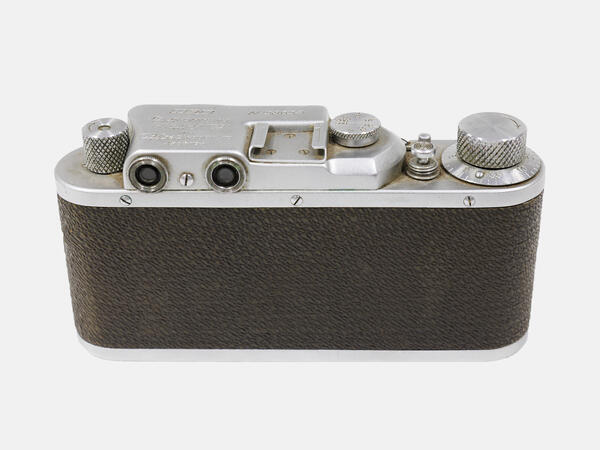
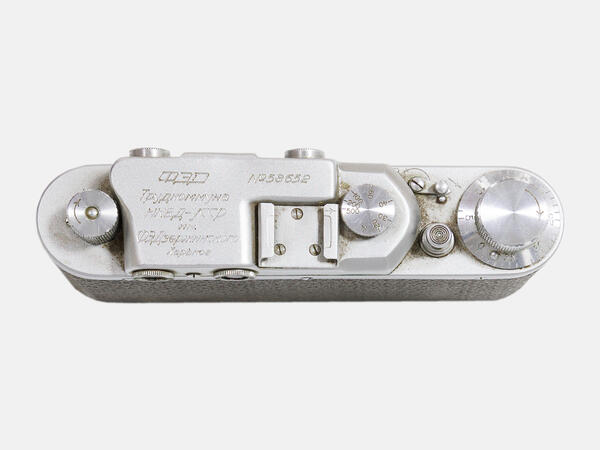
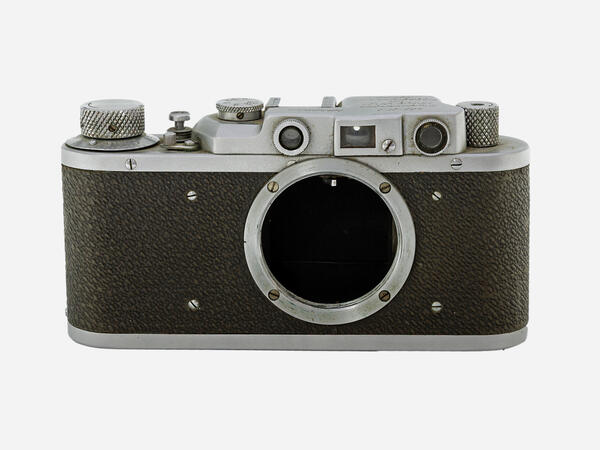
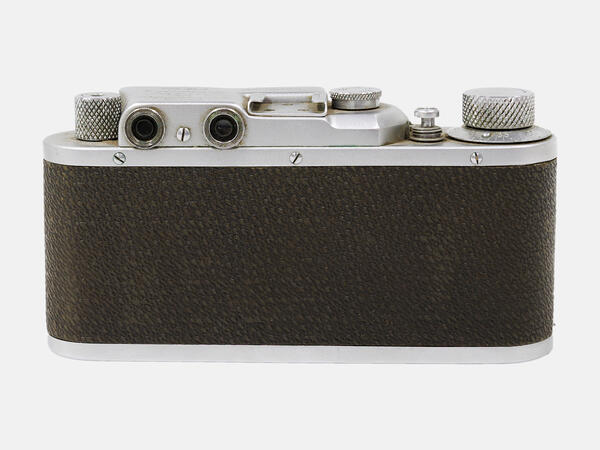
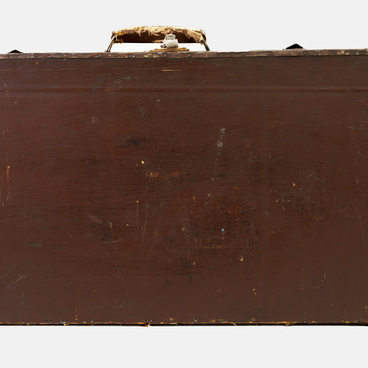
According to the legend, this camera used to belong to the Chekhov family. It was donated to the museum by the widow of Sergey Chekhov, the writer’s nephew. The FED camera from the museum’s collection does not have a lens. There is an engraved inscription at the top that reads, “The FED Labor Commune of the NKVD of the USSR named after Felix Dzerzhinsky No. 58652”.
The FED, the first Soviet rangefinder compact camera, appeared in 1934. Soviet engineers came up with a more convenient design compared to earlier models: even an amateur photographer could load a film by removing the back cover. The Soviet camera, built in the children’s labor commune, was named FED, after the statesman Felix Edmundovich Dzerzhinsky. The first successful cameras of this model were presented to the country’s senior officials.
By the end of 1934, 1800 cameras of this type were available, and a year later, there were more than 15,000 FED cameras. The device consisted of 80 parts that were assembled by hand. Later, the commune was transformed into an industrial enterprise of the NKVD, and an automatic assembly line production was established. The first FED cameras had their serial number and assembly location engraved, but with the rapid increase in production output, the numbering was abandoned. This convenient, compact, extremely reliable, and inexpensive camera became the nation’s favorite, replacing the bulky earlier cameras.
With a slight improvement in shutter speed and lens, the FED-S entered production in 1938. The FED-2 camera was fully developed by Soviet designers in 1955, which is why that model is of more interest to collectors. The last model in the legendary camera family was the FED-5, which went into production in 1977. The total number of all FED cameras produced by the beginning of the 1990s exceeded 765 million.
Anton Chekhov’s nephew Sergey was an avid traveler.
He visited all the places associated with the name of the famous writer. In
1958, he and his son Sergey repeated Anton Chekhov’s journey to Sakhalin
Island, traveling to places that the writer visited in 1890. During the trip,
they made sketches and took photographs with a FED camera.