The Chinese tea tradition dates back many centuries. It is believed that the tea plant was first cultivated in Southwest China where the climate was perfect for tea leaf growth and maturation. According to Chinese tales and legends, tea and its useful properties were discovered by Emperor Shennong.
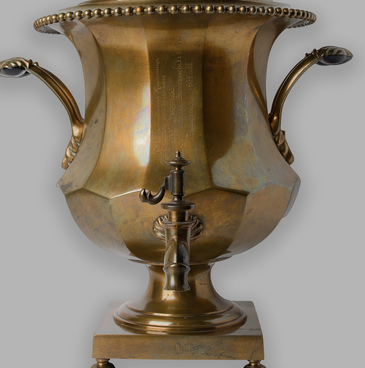
The Kyakhta Museum of Local Lore takes great pride in its collection exploring the history of the tea trade. This collection was formed over more than a century. It includes not only teaware, cast iron, copper, iron, and porcelain utensils but also tea samples.
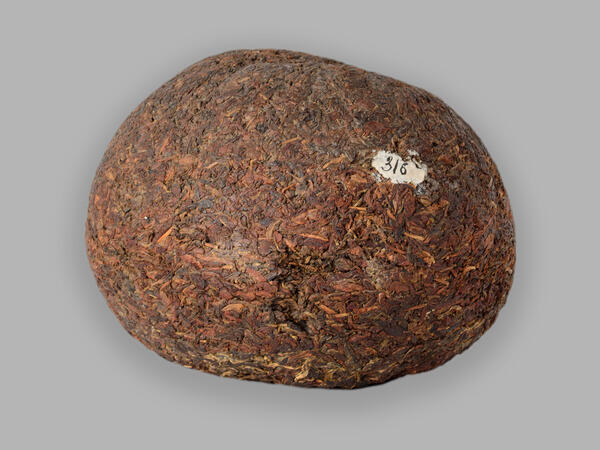
A wide variety of teas was delivered to Kyakhta: loose, brick, bohea, compressed tea, and many other types. Traditionally, Russian merchants received from their Chinese partners samples of tea from a new harvest. Some of these samples are still kept in the collection of the Kyakhta Museum of Local Lore. They were donated by the merchant Yakov Nemchinov.
Compressed tea was first produced in the 8th century. Tea was pressed to make its transportation more convenient and to increase its shelf life. Even then compressed tea was classified into green, red, and white, and its shape varied from ordinary bricks to nests, disks, and balls. Leaves of different varieties and growing regions were used for compressed tea.
The advantage of compressed tea is that its flavor and aroma improve over time as fermentation continues long after the bricks are shaped. Compressed tea is valued for its aftertaste which depends on the variety.
In 1890, when the
Kyakhta Museum of Local Lore was established, eight tea samples in lead Chinese
teapots were donated by Matryona Dmitriyevna, the wife of Mikhail Nemchinov, a
famous Kyakhta merchant of the first guild. Between 1891 and 1893, another
merchant of the first guild, Alexey Lushnikov, and his family also donated more
than 30 tea samples from their collection.