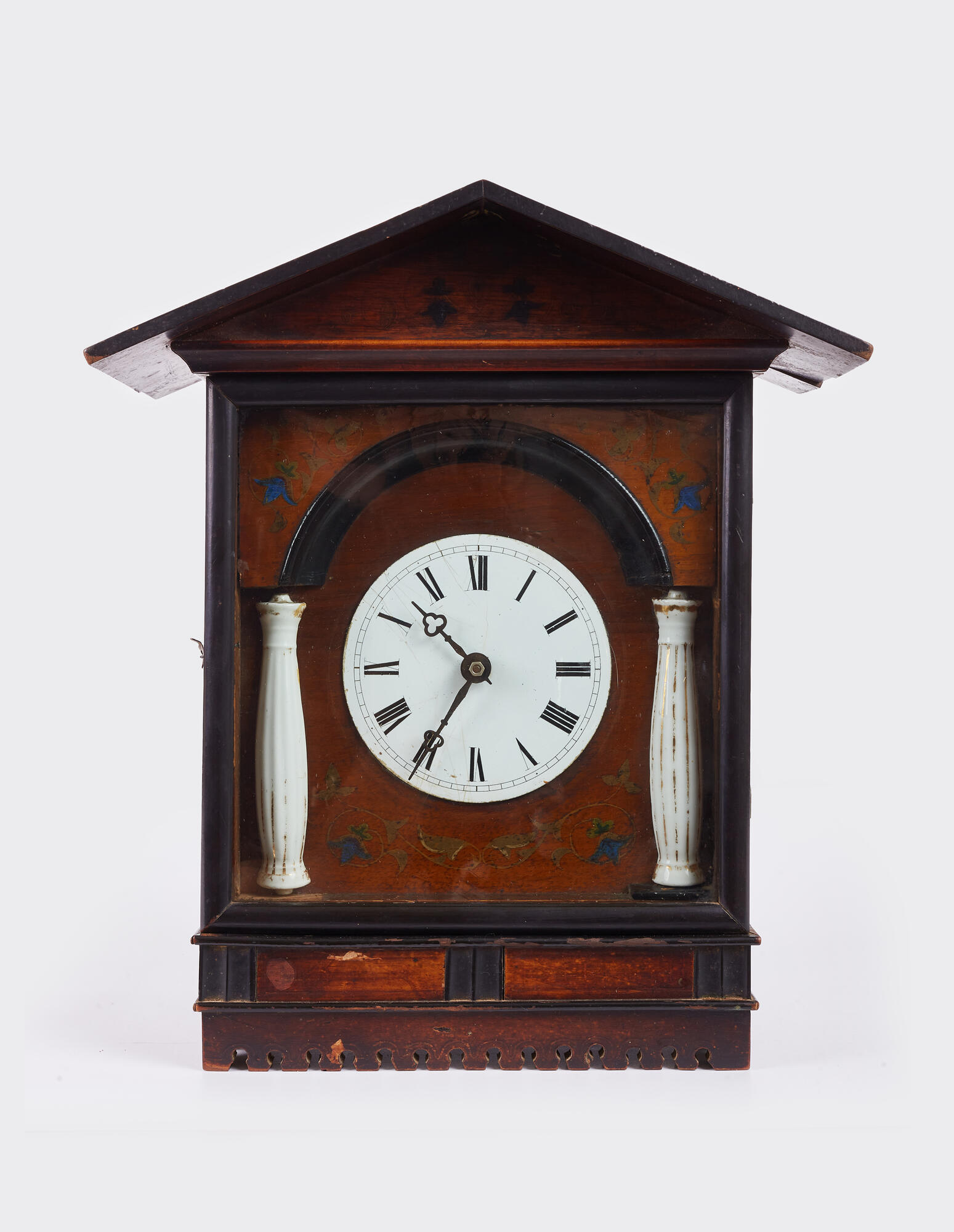


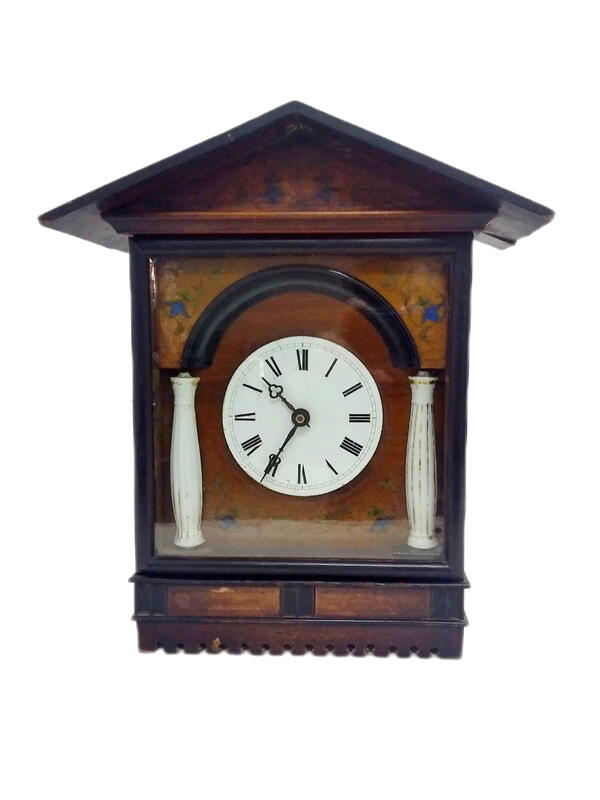
The Zheleznodorozhny Local Lore Museum has a small yet unique collection of various clocks, including a wall clock made by the German company Philipp Haas (PHS).
Philipp Haas & Söhne was founded by Philipp Haas in 1867 in Sankt Georgen, Germany. By 1871, they were the first to open a representative office in London, starting international trade. The first trademark that Philipp Haas & Söhne officially registered was the Teutonia Clock Manufactory in 1876, which exported a huge number of clocks to the United States and Europe. In 1920, the company went bankrupt, and then, after being reorganized in 1927, it opened its doors again and worked until 1935. From the very beginning, the company’s logo was a hare. Originally, the hare fixed the axis of the pallet fork in Schwarzwald clocks. It can be seen on clocks dated 1870. The first hare logo was registered in 1883, and it was then that the more familiar running hare with the letters PHS appeared. In 1895, the logo was re-registered, and the hare was slightly modified.
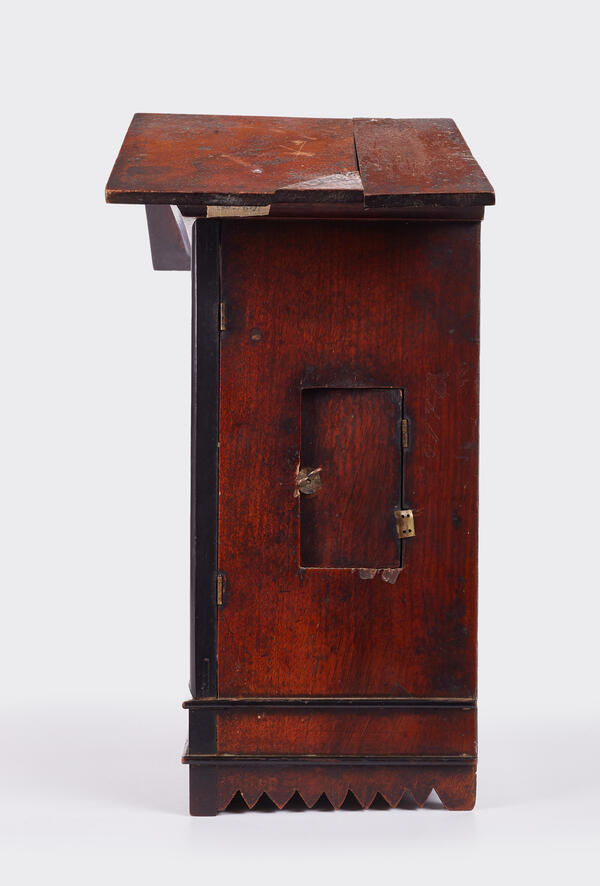
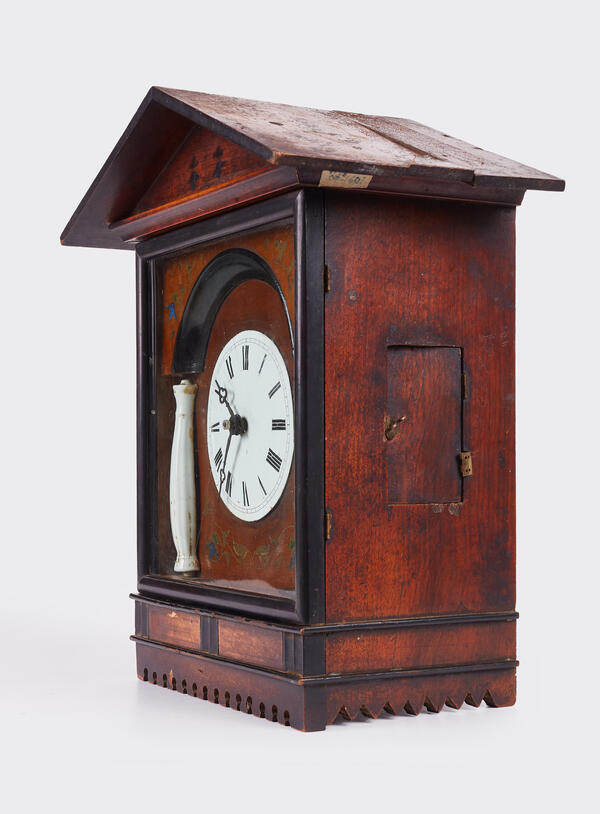
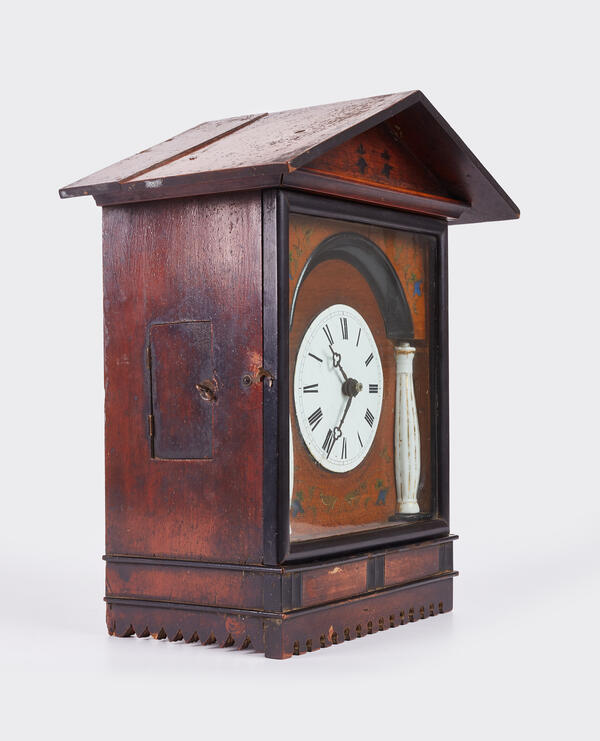
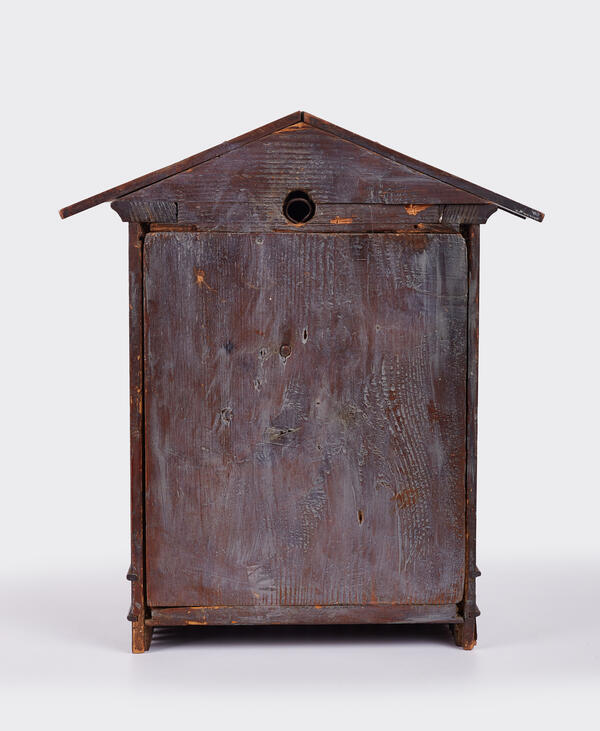
The clock from the museum’s collection had the brand mark of the hare that fixed the axis of the pallet fork, but, unfortunately, it was lost. The pendulum and weights are also missing. The clock mechanism has a wooden frame with metal gears. The number “25” is indicated on the mechanism itself. The relatively small rectangular brown clock case is made of pine. The item is distinguished by a characteristic feature of the German company — delicate floral patterns on the wooden body.
The front part of the clock under the glass door is
flanked by white porcelain columns with gilded flutes. The face was enclosed in
a bronze hoop, which, unfortunately, has been lost. The face with openwork
hands and Roman numerals is covered with white enamel. The clock was wound
daily, and every hour was marked by a simple chime. The principle of such
clocks was reflected in the familiar Soviet cuckoo clocks.