In 1928, the gallery received a collection of decorative and applied arts of the 18th–19th centuries, transferred from the State Museum Fund. In total, the collection featured about 250 items of French, English, German, Italian and Danish production that once were kept in noble and merchant estates: faience and porcelain, crystal and glass, biscuit (a type of ceramics, unglazed porcelain) and decorative bronze.
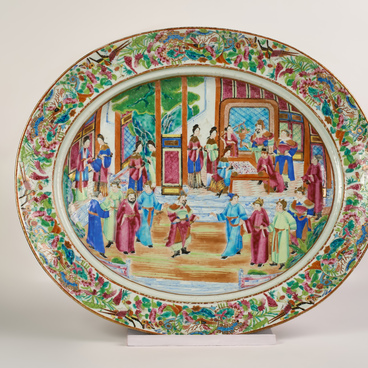
Collectible labels have been preserved on some items, indicating the value of the objects. Most of the collection consisted of fine Sèvres ceramics, faience from private factories in France, Meissen porcelain and products from the English Wedgwood faience factory.
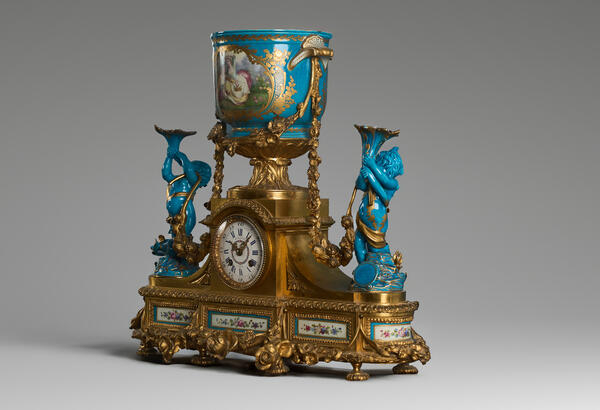
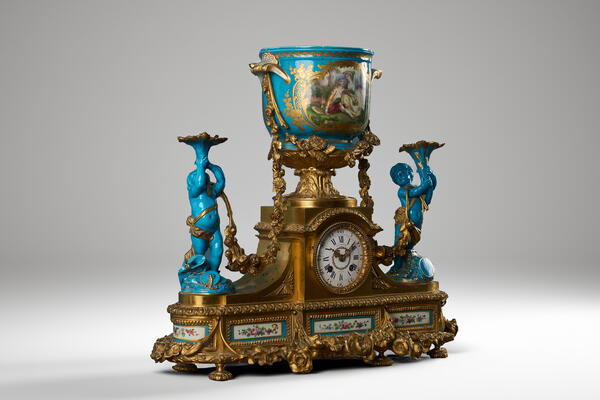
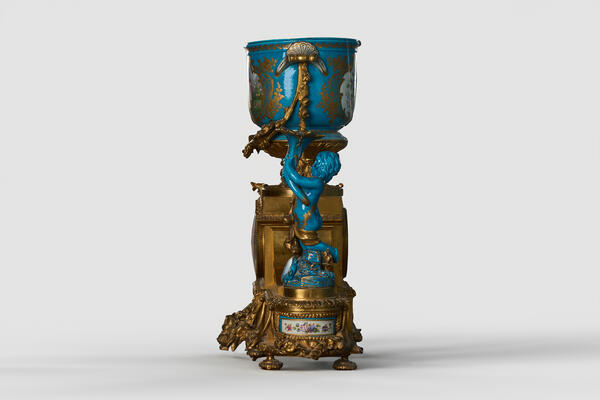
Among other items in the collection, the mantel clock is rather noteworthy. It is made in the late Rococo style. The decorative case of the clock is made of bronze in the technique of cold gilding. The putti figures with rhytons and the flower bowl crowning the composition are made of blue glazed porcelain with painting and gilding. The theme of triumph and transience of love served as inspiration for the plot of the exquisite composition and painting of the clock.
Ceremonial table clocks and mantel clocks were traditionally made of gilded bronze, and decorated with medallions depicting gods and goddesses. Decorators included clocks in furniture sets, combined them with dressers, corner cabinets, and console tables. Baroque, Rococo, and Classicism motifs and elements of the Empire style, which was developing at that time, were often used in clock decoration. Like the furniture sets, the clock cases featured inlaid brass, tin, and turtle shell elements. The clock, made in the classical style, was abundantly decorated with the attributes of ancient temples, columns, vases, and lamps.
A number of artists greatly influenced the production of clocks, for example, Falconet (sculptor and fashion designer), Thomire (gilded bronze), and the clockmakers Dupont and Lepaute.
Decorative bronze in interior design came into fashion in France in the mid-18th century. French mantel clocks, candelabra, floor lamps, chandeliers, sconces, and table decorations made of gilded and patinated bronze were highly appreciated in all European countries.