Font
Color
Graphics
Изображение точки

To see AR mode in action:

1. Install ARTEFACT app for iOS or Android;

2. Find the exhibition «The Art of the Peoples of the World in Astrakhan»

3. Push the «Augmented reality» button and point your phone's camera at the exhibit;

Скрыть точки интересаПоказать точки интереса
Показать в высоком качестве

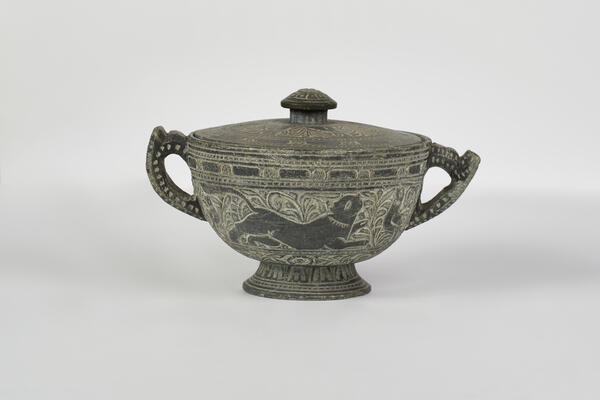
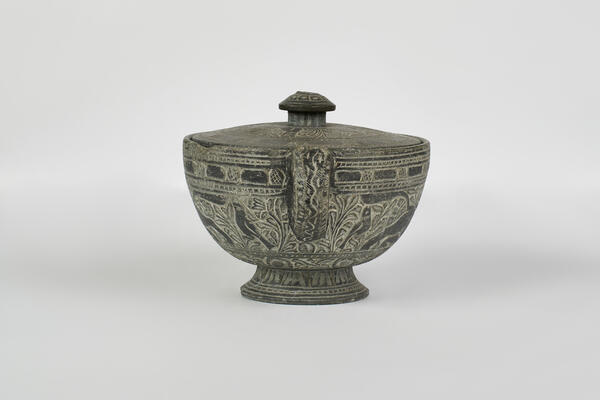
Cup with a lid

Creation period
the 19th century
Place of сreation
Persia
Dimensions
12x20x20 cm
Technique
soapstone; carving, polishing
2
Open in app
#5

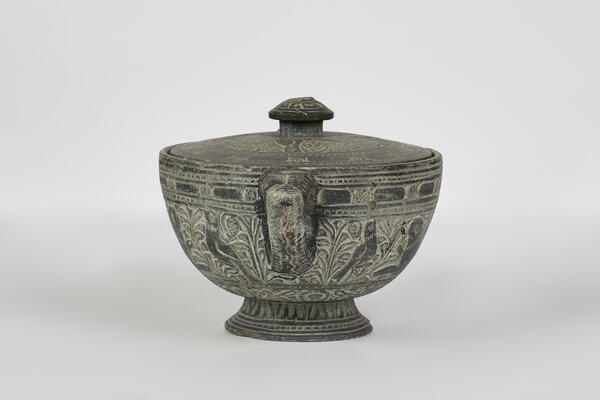
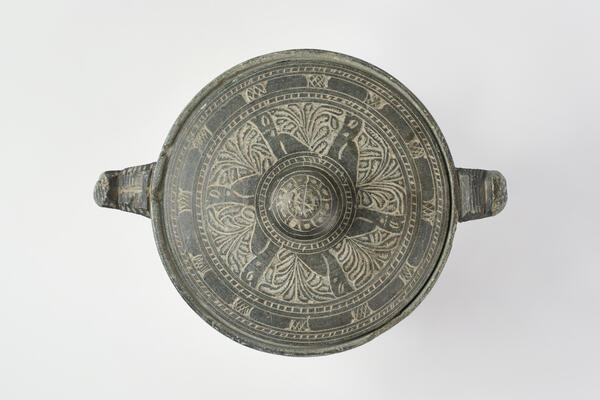
The collection of artworks from Asia and the East housed in the Astrakhan Art Gallery named after Pavel Mikhailovich Dogadin includes works of art made of soapstone. Among them, there is a cup with two handles and a lid that is rather noteworthy. It is covered with carved patterns of plants and animals.

Soapstone is a mineral, a kind of talc. The name soapstone is derived from its strikingly smooth surface: soapstone is so oily to the touch that it resembles a bar of soap. This mineral is commonly known by various names, such as wax, soap, ice, and stove stone. It is not surprising that it has been given such descriptive names, as it has low heat conduction.

Natural stone is a product of nature, so no two stones are the same. Many items made of soapstone are distinguished by a special artistic expressiveness and a peculiar style in which realistic images of animals are combined with images of supernatural beings.

There are three types of decorative motifs popular for soapstone items. They depict humans, plants and animals. Anthropological motifs include scenes of hunting, feasts, sports competitions and religious ceremonies. Botanic motifs feature images of lotus flower, cypress, flowers and shrubs, arabesques and hatai. Animal imagery includes depictions of lions, bulls with wings, birds, double-headed bulls, and horses.

In India, Sumer, and ancient Egypt, this natural material was endowed with magical properties. In ancient times, amulets, bracelets, brooches, and magical figurines were made of soapstone.

Geologists call soapstone talcochlorite, because it contains 40–50% talc. A distinctive feature of the stone is its heat resistance. It heats up quickly and cools down slowly, which is why it is widely used in the decoration of fireplaces and stoves. Talcochlorite is such a clean and eco-friendly stone that in Finland and the Baltic States people used it to make dishes for cooking and serving food.
It is also used as a material for carving due to its softness: talc is considered the standard of the lowest hardness for minerals. The stone is resistant to water, acids and alkalis, so it is suitable for making kitchen countertops and floor coverings, as well as for cladding columns and window sills, stairs and walls. It is easy to dye it, so tinted soapstone is often passed off as jade.

#7
Cup with a lid
#6
View in the State Catalogue
read morehide
00:00
00:00
1x

Cup with a lid

Creation period
the 19th century
Place of сreation
Persia
Dimensions
12x20x20 cm
Technique
soapstone; carving, polishing
2
Point your smartphone camera to open in the app
Share
VkontakteOdnoklassnikiTelegram
Share on my website
Copy linkCopied
Copy
Open in app
To see AR mode in action:
  1. Install ARTEFACT app for 
  2. iOS or Android;
  3. Find and download the «Paintings in Details» exhibition
  4. Push the «Augmented reality» button and point your phone's camera at the painting;
  5. Watch what happens on your phone screen whilst you flip through the pictures.
 
We use Cookies
Cookies on the Artefact Website. We use cookies to ensure that we give you the best experience on our website. If you continue without changing your settings, we'll assume that you are happy to receive all cookies on the Artefact website. However, if you would like to, you can change your cookie settings at any time.
Learn more about useHide
Content is available only in Russian

X

Нашли опечатку?...

%title%%type%